Honoring Native heritage means investing in Indigenous-led recovery: Typhoon Halong’s impact demands action
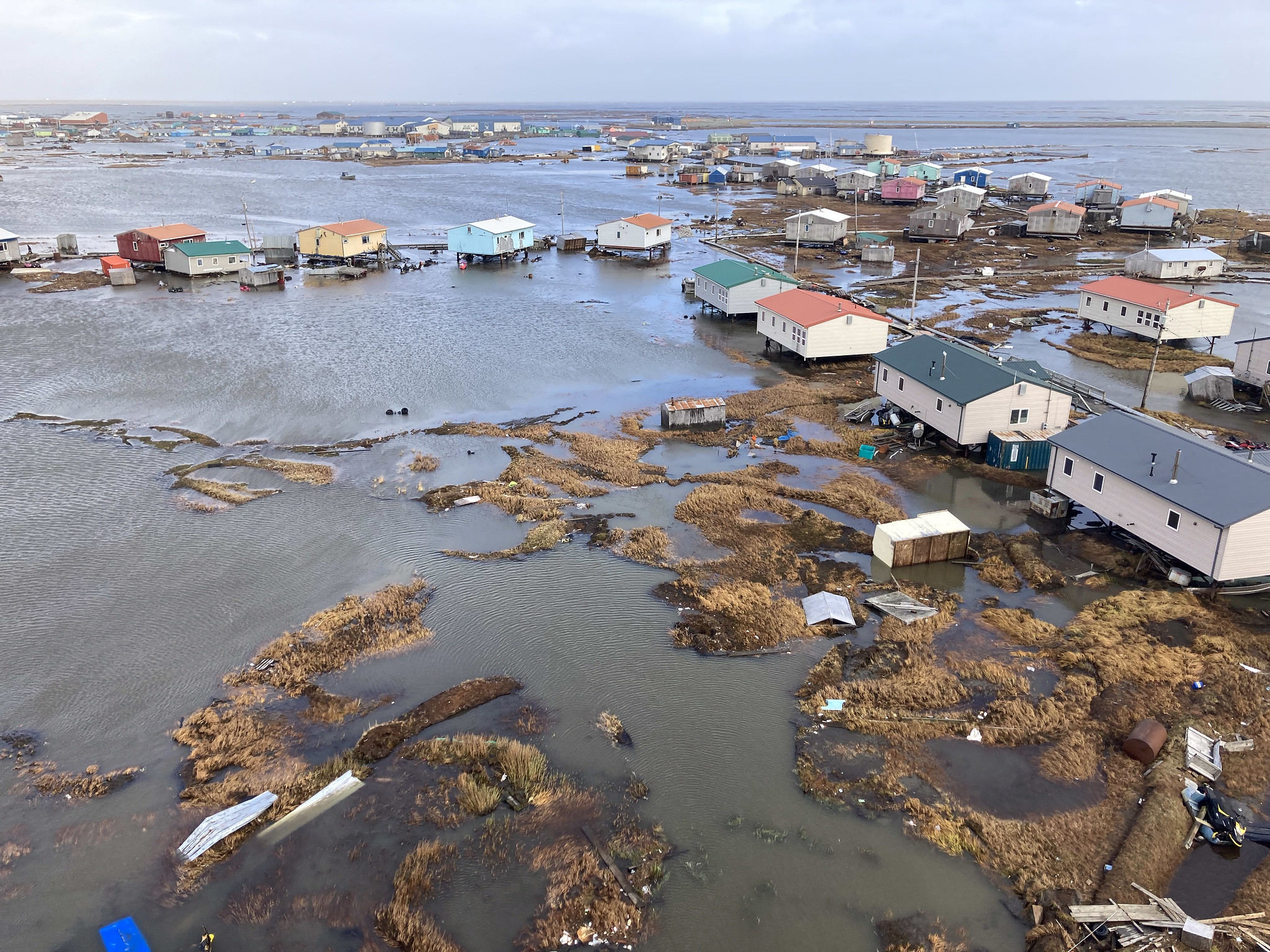
In October 2025, Typhoon Halong battered Alaska’s western coast, leaving a trail of destruction across rural, coastal Alaska Native communities. Villages like Kipnuk and Kwigillingok were nearly wiped out. In Kipnuk alone, 90 percent of homes were destroyed, displacing hundreds of residents.
Climate-driven catastrophes rarely make national headlines, but they carry devastating consequences. For these Alaskan communities, the loss of homes, businesses, transportation access and food supplies has triggered long-term displacement, with many evacuees relocated to Anchorage.
These disasters remind us of the urgent need for philanthropic investments in Indigenous-led recovery initiatives and self-determined climate action that supports long-term sustainability, cultural continuity and community well-being.
Coastal Indigenous communities are uniquely vulnerable
A convergence of geographic, structural and systemic factors places these Alaska Native communities and other coastal Indigenous communities at the frontlines of climate change impacts. Many are in low-lying remote areas where rising sea levels and intensifying storms pose immediate threats to their safety and stability. Infrastructure in these regions – homes, roads and public buildings – was not built to withstand such conditions, and when damage occurs, rebuilding is often slow due to isolation and limited resources. Ancestral ties to the land make relocation traumatic, threatening traditions, language and community cohesion.
This disaster is not isolated. Alaska Native villages, such as Newtok and Shishmaref, have long grappled with relocation due to rising seas and erosion. Across the United States, the Isle de Jean Charles in Louisiana—a mostly Indigenous community—became the first federally funded climate relocation site. Years later, residents report broken promises and substandard housing. In the Pacific Northwest, 13 coastal tribes are navigating relocation plans amid bureaucratic hurdles and limited resources.
Recovery must be community-led
Indigenous communities need support to understand their risks, build resilience and develop preparedness plans before disasters strike. Sovereignty and self-determination must be central to rebuilding efforts.
Systemic inequities further compound the risks, as Indigenous groups often lack access to funding, representation in climate policy and decision-making authority. Despite being on the frontlines, they receive disproportionately little support for adaptation and resilience planning.
Addressing these vulnerabilities requires not just emergency response but long-term investment in Indigenous-led solutions that honor sovereignty, cultural continuity and the right to remain rooted in place.
Going beyond celebration
As we mark Native American Heritage Month, honoring Indigenous heritage must go beyond celebration; it must include action. Funders and allies have a responsibility to support both the immediate and long-term recovery of Indigenous communities disproportionately impacted by climate disasters. This means investing in Indigenous-led planning, housing and infrastructure solutions that reflect cultural values and community priorities. It means removing barriers to funding and decision-making so that communities can identify risks, reduce vulnerabilities and adapt to a changing climate on their own terms.
We must look beyond the numbers for rural and isolated communities. When a headline says “121 homes lost,” remember that in Kipnuk, that is 90 percent of the village. Imagine 90 percent of your neighborhood gone. These are not just statistics; they are families, traditions and futures uprooted. For these communities, this is not a silent disaster. For us, it is a call to action. Now is the time to listen, uplift and invest in the resilience and sovereignty of Indigenous peoples in Alaska and across the globe.

Cari Cullen
Program Officer, Domestic Funds