What we’re watching: Weekly disaster update, April 13
Some disasters make headlines; others do not. Here at the Center for Disaster Philanthropy (CDP), we monitor the status of disasters worldwide and compile a list of the ones we’re tracking weekly.
Here’s what we’re watching for the week of April 13, 2026.
New or Emerging Disasters
Flooding – Angola: At least 39 people died, and more than 50,000 have been affected by catastrophic flooding following heavy rains in Angola’s capital, Luanda. Bridges, roads and other public infrastructure have been damaged or destroyed, along with thousands of homes. Many people remain missing.
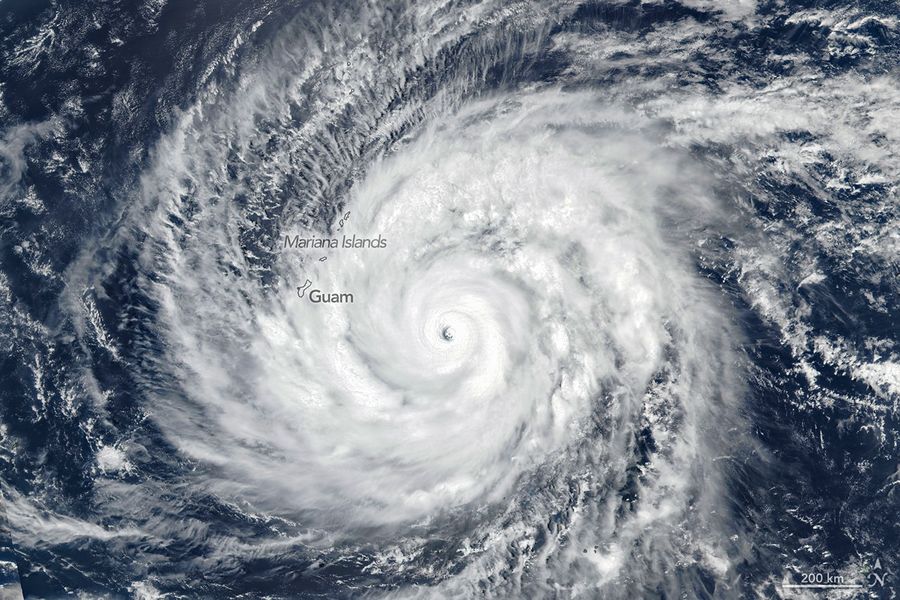
Super Typhoon Sinlaku – Mariana Islands, Guam: A catastrophic Category 5 cyclone made landfall in Saipan, Tinian and Guam this past weekend, bringing torrential rainfall and wind speeds of up to 130 mph. Super Typhoon Sinlaku is the strongest storm globally in 2026 and will usher in the forthcoming El Niño weather pattern.
The storm is slow-moving and expected to pass the islands by Wednesday, April 15. The forecast is predicting 15 to 25 inches of rain and storm surges of 10 to 15 feet above sea level. The remote location of these islands will make disaster recovery especially difficult.
Tropical Cyclone Maila – Papua New Guinea, Solomon Islands: At least 11 people died in Papua New Guinea this past weekend, after the Category 3 storm caused strong winds, flooding and deadly landslides. Seven people are missing, and approximately 120,000 have been affected. By April 11, Maila had weakened into a tropical storm and dissipated.
Previous/Ongoing Disasters
Measles – United States: Last year, the U.S. recorded a total of 2,213 cases of measles, the highest annual total since 1993. In just the first three months of 2026, the U.S. recorded 1,728 cases. In 2025, 11% of measles cases resulted in hospitalization, with 242 people hospitalized and three deaths reported. Unvaccinated children under five accounted for the majority of the most severe cases.
South Carolina saw the largest outbreak, but new cases have slowed in the last month. Utah is currently the largest growing outbreak with 600 new cases reported this year. People have been exposed to the disease at grocery stores, elementary schools, sporting events and other places.
Complex Humanitarian Emergencies – Yemen
Many places worldwide are experiencing conflict, climate change, drought, famine, economic challenges and other conditions which, when combined, create complex humanitarian emergencies (CHEs). CDP spotlights one CHE each week to spread awareness and develop a philanthropic response.
The ongoing civil war in Yemen has caused economic collapse and the devaluation of Yemeni currency. Climate shocks have also worsened food production and driven more than 80% of new displacements. The humanitarian crisis is characterized by mass hunger nearing famine, severe child malnutrition, collapsed public services and shrinking humanitarian aid.
Key facts:
- More than 22 million people in Yemen need humanitarian assistance in 2026.
- At least 5.2 million people have been displaced by the conflict.
- At least 18.5 million people face food insecurity and 2.2 million children under five are acutely malnourished.
- Children and women are among the most affected groups, with severe malnutrition and limited access to healthcare and clean water.
- A quarter of all displaced families are headed by women, up from 9% since 2015.
- The conflict and economic crisis helped to create the country’s food crisis, while climate shocks, such as severe flooding, have further damaged crops, infrastructure and rural livelihoods.
- According to UN OCHA, “A highly challenging operational environment in de facto authorities (DFA)-controlled areas in 2025… led to UN scaling back critical life-saving programmes in the final months of the year.”
Millions of people in Yemen live in dire conditions amid an ever-worsening humanitarian emergency. As coping mechanisms erode and access to essential services becomes even more strained, households are more exposed to hunger, preventable diseases and protection risks, with vulnerable and marginalized groups disproportionately affected.
What We’re Reading
- In war-torn Lebanon, migrants and LGBTQ+ people face hard path to safety – The Washington Post
- Why even after close to two years, it will still be the early days of Hurricane Helene recovery – Georgia Public Broadcasting
- Water conservation works, but climate change is outpacing it: Phoenix, Denver and Las Vegas offer a glimpse of the future – The Conversation
A moment of hope… CDP is proud to support the North Georgia United Methodist Conference’s Hurricane Helene recovery work with a $336,541 grant from the Atlantic Hurricane Season Recovery Fund. The grant will help fund three long-term recovery groups (LTRGs) in Augusta, Valdosta and Vidalia, Georgia, comprised of disaster case managers, contractors and volunteers. The LTRGs will identify survivors of Hurricane Helene who face barriers to home reconstruction and provide the repair and rebuild services those households need to recover.

Gina DeLuca
Content Development Associate