
What we’re watching: Weekly disaster update, June 29
Some disasters make headlines; others do not. Here at the Center for Disaster Philanthropy (CDP), we monitor the status of disasters worldwide and compile a list of the ones we’re tracking weekly.
Here’s what we’re watching for the week of June 29, 2026.
New or Emerging Disasters
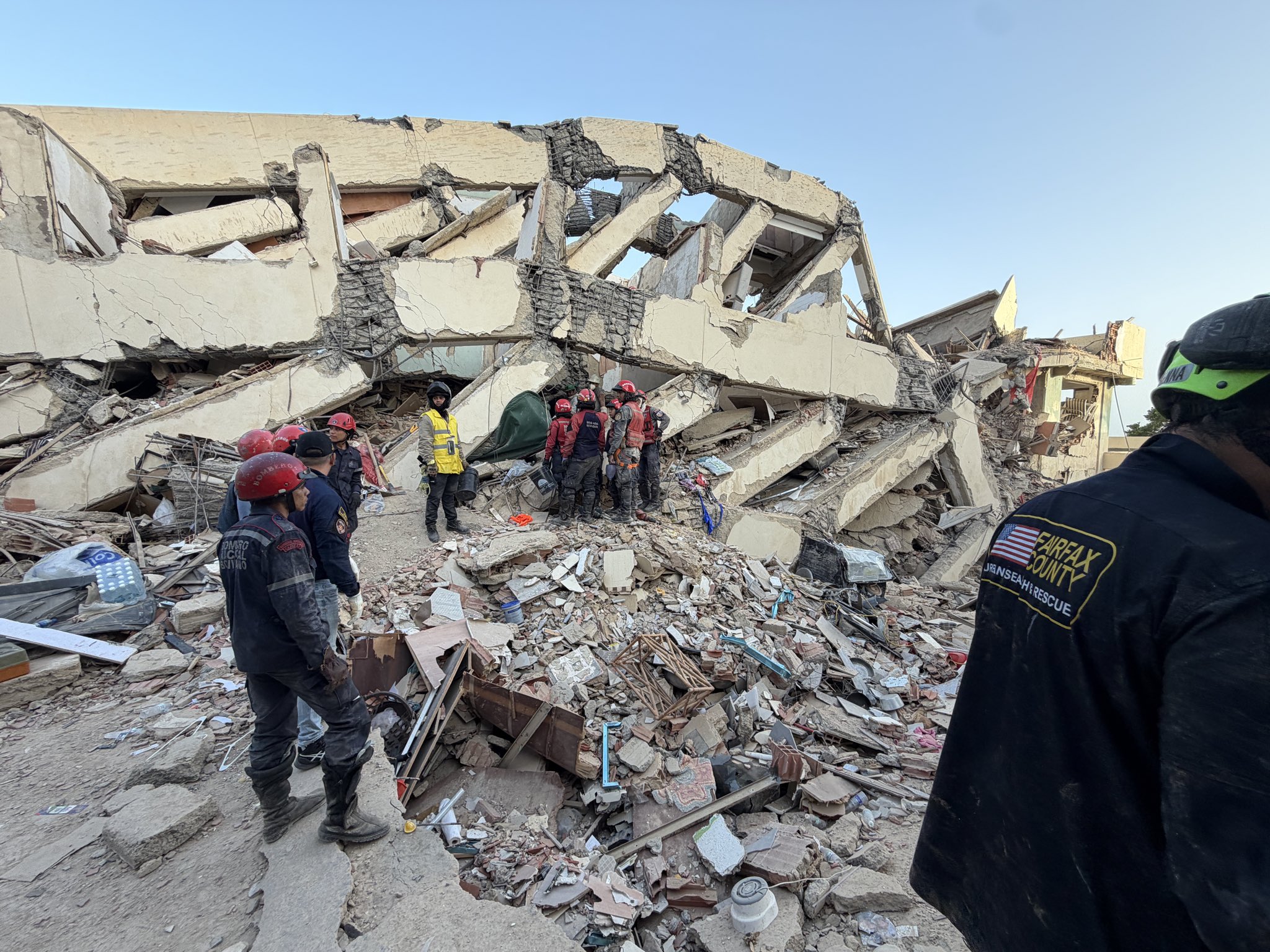
Earthquakes – Venezuela: On Wednesday, June 24, a pair of powerful earthquakes struck northern Venezuela just 39 seconds apart, in a rare phenomenon known as a “doublet.” The devastation is catastrophic.
The first 7.2 magnitude earthquake hit San Felipe, and the second 7.5 magnitude earthquake struck just three miles north in Yumare. The ground shook violently in nearby Caracas, and aftershocks were felt more than 1,000 miles south in Brazil’s Amazon rainforest.
As of June 29, officials have recorded 1,790 deaths with approximately 50,000 people still missing. Approximately 2,500 structures collapsed. Volunteers have poured in from across the world to help with search and rescue, but a lack of machinery to clear roads and debris has made rescue efforts extremely difficult during the most critical time to find survivors.
Previous/Ongoing Disasters
Flooding – Kentucky, Tennessee: Catastrophic flash flooding has devastated communities in Kentucky and Tennessee this past week after 10 inches of rain fell in the worst hit areas. The floods killed at least five people and another 63 people required water rescues.
Madison County, Kentucky was hardest hit, with 320 homes without water and families in 17 homes displaced. Kentucky Gov. Andy Beshear declared a state of emergency on Saturday, June 27.
Wildfires – Utah: The Cottonwood Fire on the Utah-Colorado border is the largest wildfire in the country, burning 92,000 acres so far. The situation is particularly dangerous given the difficult terrain and 45 mph winds. Tragically, three firefighters were killed.
The Colorado and Utah governors have both declared states of emergency, authorizing the National Guard to support firefighting efforts. At least three million acres have burned across the country so far in 2026.
Flooding – Ghana, Ivory Coast: Extreme flooding submerged much of Ghana’s capital city, Accra, on Monday morning, trapping thousands of commuters and inundating homes and businesses. The heavy downpours caused power outages, and floods caused major road closures. People swam through neck-deep water to rescue neighbors. At least 12 people died.
In Abidjan, Ivory Coast, another 12 people died in devastating floods, and hundreds have been displaced in both countries, with more rain forecast in the coming days.
Complex Humanitarian Emergencies – The Sahel: Niger
Many places worldwide are experiencing conflict, climate change, drought, famine, economic challenges and other conditions which, when combined, create complex humanitarian emergencies (CHEs). CDP spotlights one CHE each week to spread awareness and develop a philanthropic response.
Niger faces one of the world’s most complex humanitarian emergencies, driven by armed conflict, widespread displacement, climate shocks, food insecurity, disease outbreaks and chronic poverty. Insecurity along the borders with Burkina Faso, Mali and Nigeria has intensified humanitarian needs, while funding shortages have reduced the ability of aid organizations to respond.
Key facts:
- Approximately three million people, or 9% of the population, need humanitarian assistance.
- Armed groups linked to the Islamic State and al-Qaeda continue attacks in western Niger near the borders with Mali and Burkina Faso, while violence associated with Boko Haram and the Islamic State West Africa Province (ISWAP) persists in the southeast near Nigeria.
- During the June-August 2026 lean season, approximately 2.4 million people are expected to require emergency food assistance.
- Conflict prevents many farming families from cultivating their land, while climate shocks and high food prices further reduce household food access.
- Across the central Sahel, more than 825,000 children are projected to face life-threatening severe acute malnutrition in 2026, with Niger among the hardest-hit countries.
- Niger is one of the world’s most climate vulnerable countries: Recurrent droughts, extreme heat, desertification and increasingly destructive floods damage crops, kill livestock and displace thousands of people each year.
- Environmental degradation has reduced agricultural productivity and increased competition over water and grazing land, contributing to local conflict.
- Ongoing insecurity has forced the closure of numerous schools, leaving many children without access to education.
- Armed attacks, insecurity and damaged infrastructure frequently prevent humanitarian organizations from reaching communities in need. Entire villages can become isolated for weeks, delaying the delivery of food, health care and nutrition assistance.
Funding shortfalls are reducing people’s access to life-saving assistance. Food assistance, nutrition programs and protection services have been scaled back or prioritized only for the most vulnerable households despite increasing displacement and hunger.
Join us Thursday, July 23
Before disasters strike: Rethinking philanthropy for a changing climate
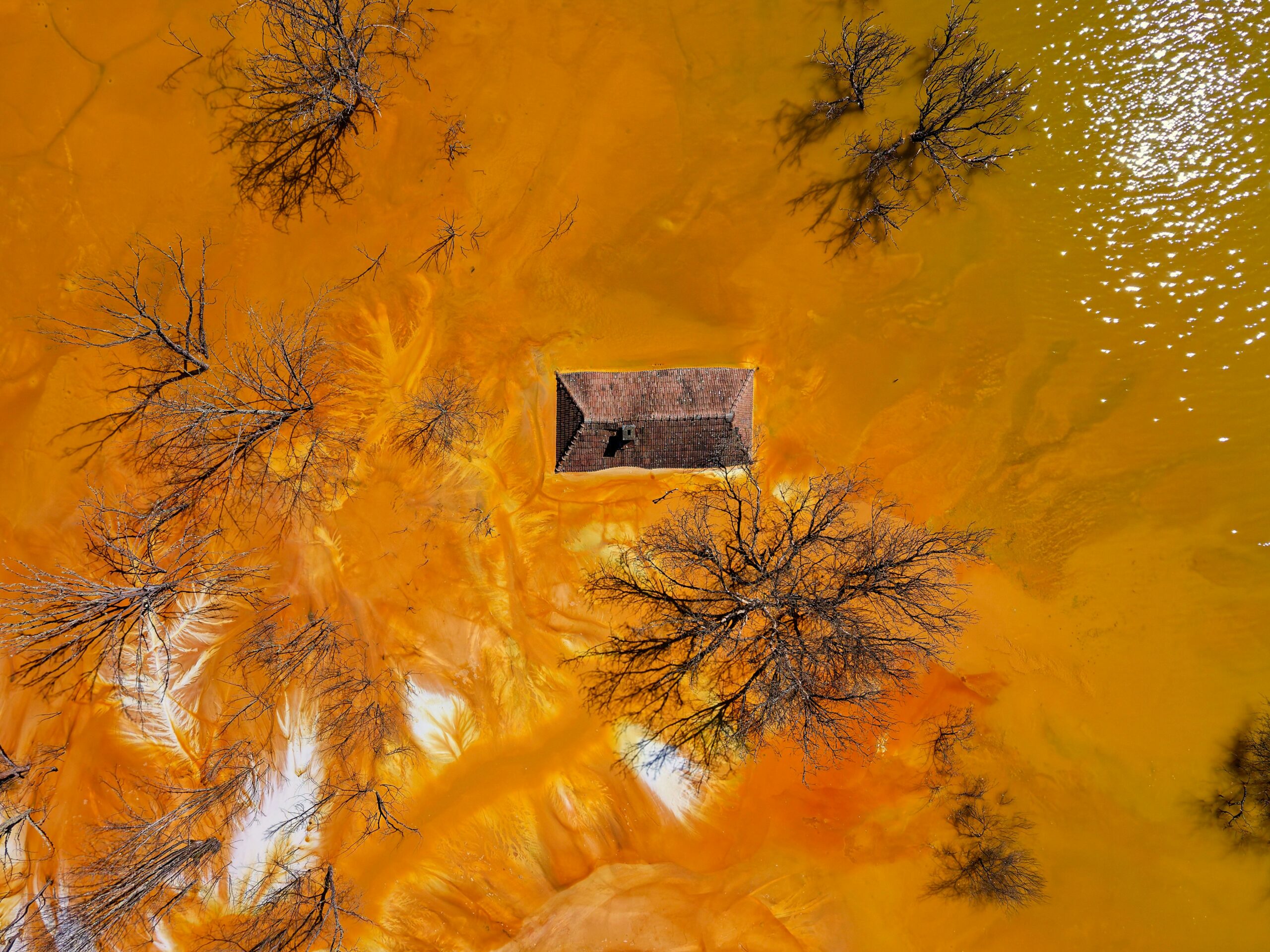 House submerged in orange, polluted water in Romania, May 2026. (Photo credit: iuliu illes on Unsplash.)
 What We’re Reading
- Venezuela quake: Key services crippled and health workers missing – UN News
- When climate pressures deepen, the fight against violence becomes harder – The Conversation
- Bird nests of fiber optic cables show war’s impact on Ukraine – Reuters
A moment of hope… Dayana Patino and her 18-day-old newborn, Juan David, were rescued from the rubble of their apartment building in La Guaira, Venezuela, four days after the earthquakes struck. Dayana was holding her baby in their eighth floor apartment when the building collapsed, trapping them in a pit of rubble after a long fall. Her legs were pinned under concrete and her head was pressed against a rock, but she managed to hold on to Juan David in the fall.
“I’m not going to waste my energy – I’m going to scream when it’s needed, when I hear voices or steps nearby,” she said. After she heard her brother calling her name, she began screaming, and rescuers pulled her and Juan David to safety after a careful rescue operation. Dayana suffered wounds to her legs but fortunately, baby Juan was treated only for minor injuries. Dayana’s husband survived the quake as well, and the family has been reunited.

Gina DeLuca
Content Development Associate