
Across the Caribbean, CDP supports community-led rebuilding after Hurricane Melissa
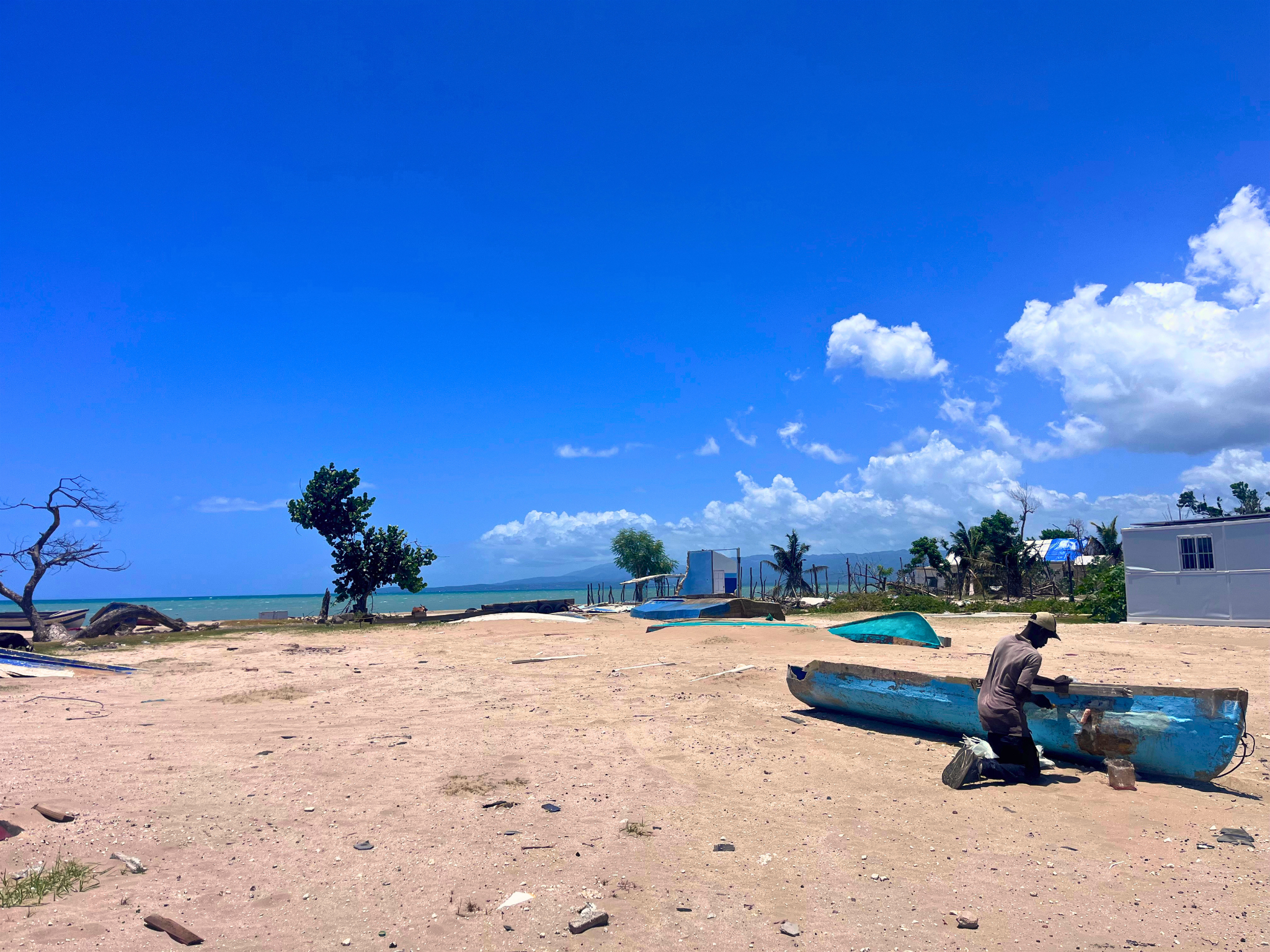
Long after headlines fade, recovery continues.
One year after Hurricane Melissa, communities across the Caribbean are still rebuilding homes, restoring livelihoods and addressing needs that evolve long after emergency responders and media leave. For many families, recovery will be measured in years.
Through more than $1.2 million in grants to locally or regionally based organizations in Haiti, Jamaica, the Bahamas and the Dominican Republic from our Atlantic Hurricane Season Recovery Fund, CDP is supporting work that helps communities recover from Hurricane Melissa while preparing them for future disasters. These grants focus on a range of long-term needs, such as community-based mental health and psychosocial support, livelihood restoration, climate-resilient infrastructure and strengthening protection against gender-based violence.
Meet our new grantee partners
Grantmaking continues across the region, and so far, CDP has awarded grants to the following 15 organizations:
- Caribbean Gender Alliance received $60,000 to strengthen the institutional capacity of civil society organizations across the Caribbean (Jamaica, the Bahamas and Trinidad and Tobago) by training and deploying skilled Business Support Personnel (BSPs) to address critical operational, governance, financial and organizational capacity gaps. The Business Operations Support Services (BOSS) Initiative is a pilot program that aims to improve civil society organizations’ ability to prepare for, respond to and manage resources for disaster response, relief and recovery, while strengthening their operational resilience, enhancing high-impact programming and advancing sustainable, community-led development across the region.
- Fondation Nouvelle Grand’Anse received $100,000 to support resilient and inclusive recovery for vulnerable individuals in Jeremie and Roseaux communes in Haiti’s Grand’Anse Department through diversified agroforestry, climate-resilient water infrastructure and household emergency planning. The project will also strengthen social cohesion and protection for women and girls through participatory governance, microgrants and gender-based violence prevention training.
- GirlsCare received $50,000 to deliver a psychosocial recovery program for girls and young women affected by Hurricane Melissa in western Jamaica. The initiative will provide trauma-informed mental health support and mentorship to 15 directly affected participants, strengthen GirlsCARE’s organizational capacity for safe and accountable disaster-recovery programming and engage caregivers and communities to support household resilience and long-term wellbeing for girls and young women impacted by the disaster.
- Bahamas Resilience Center received $100,000 to strengthen community-based mental health systems in Jamaica and the Bahamas. In the Bahamas, the project will reengage providers trained in the World Health Organization’s Problem Management Plus (PM+) through refresher training, supervision, transportation support and modest stipends. It will also train a new cohort of pastors and community nurses in Long Island to deliver PM+. In Jamaica, volunteers trained through Multiplying Resilience serve as Wellness Ambassadors, promoting emotional wellbeing, reducing stigma, leading community wellness activities and connecting people with professional support. Complementary investments in supervision, staff wellbeing, infrastructure and fundraising capacity will help BRC sustain and expand this work.
- Guakía Ambiente received $100,000 to strengthen climate resilience, water security and agricultural recovery in the El Higuito community in the Dominican Republic by rehabilitating a critical section of the aqueduct system. As a result, water access will be restored to approximately 200 people and 100 hectares of agricultural land, helping lay the foundation for long-term recovery.
- Fondation Communautaire Haïtienne received $100,000 to support Phase II of the MuSo PLUS project and the institutionalization of a community-led mutual aid ecosystem in Haiti’s Grand’Anse and Sud Departments. Phase II of the MuSo Plus project supports community-based solidarity savings and lending groups (Mutuelle de Solidarité, or MuSo) to help low-income communities build resilience, savings and local economic power outside traditional banking systems. CDP’s grant also supports FCH’s breadfruit processing center in Moron, which makes use of a crop that is often 80% wasted, and improves the income and purchasing power of thousands of local farmers.
- Haitian Women’s Collective received $125,000 to lead and coordinate a community-led recovery and resilience initiative following the devastating impacts of Hurricane Melissa in Haiti. Building upon existing partnerships, HWC will strengthen emergency preparedness, expand access to mental health and psychosocial support, build the capacity of local women’s organizations and help coordinate recovery efforts in the heavily affected, rural communities of Piton, Petit-Goâve, Léogâne and Fonfrede, Les Cayes.
- Fondation SEROvie received $100,000 to strengthen the protection and socioeconomic recovery for survivors of Hurricane Melissa and gender-based violence in Haiti. By integrating shelter, psychosocial support and economic empowerment into a single, community-rooted response, the project will provide immediate relief and longer-term recovery support for communities in Haiti’s Sud department.
- Jamaica Network of Rural Women Producers received $150,000 to scale long-term disaster recovery and climate resilience for rural women farmers in Jamaica through targeted livelihood restoration, trauma-informed care and the establishment of a community-led, climate-resilient agro-processing facility.
- Gwoup Konbit, a national social movement in Haiti, with Roots of Development as its strategic partner and fiscal sponsor, received $100,000 to strengthen climate resilience and community preparedness in Haiti’s Grand Sud region through locally led training, community sensitization and collective action grounded in the Konbit model of mutual aid and solidarity. The project will also expand the reach of the national Konbit Guide campaign by mobilizing local organizations and leadership networks to support equitable recovery and long-term resilience in communities recovering from Hurricane Melissa.
- Social Transformation and Renewal (STAR) Foundation received $60,000 to strengthen community-led recovery and long-term resilience in hurricane-affected Salt Spring and Savanna-la-Marin in Jamaica. The foundation did this by building local disaster preparedness and coordination systems and strengthening the capacity of schools, families and communities to maintain education and support children through future climate-related disruptions. The project builds on STAR’s established community-development infrastructure in both communities, using existing Community Transformation Boards and relationships among residents, CBOs, schools, public agencies and service providers to embed disaster preparedness and recovery into existing local structures.
- The Praxis Project (as the fiscal sponsor of Free Hearts) received $50,000 to support the work of the International Network of Formerly Incarcerated Women (INFIW). Through the network’s community groups, INFIW will work to restore basic needs, livelihoods, household stability and access to health, education and recovery services for hurricane-impacted communities in Haiti and Jamaica, with particular attention to formerly incarcerated women and other underserved households.
- TransWave Jamaica received $50,000 to strengthen the disaster resilience, protection and recovery of transgender and gender non-conforming (TGNC) communities in Jamaica by developing community-led disaster risk management systems, strengthening local leadership and preparedness and advancing inclusive disaster response mechanisms following Hurricane Melissa.
- Violence Prevention Alliance received $40,000 to provide support to hurricane-affected men and boys in Salt Spring and Savanna-la-Mar in Jamaica to recover safely through psychosocial support, positive masculinity and resilient livelihood recovery, while also strengthening VPA’s own organizational capacity to sustain locally led recovery efforts.
- Women’s Resource and Outreach Center received $50,000 to host a Community Town Hall and Preparedness Fair for the Belmont and Mount Airy Communities in Jamaica. The initiative will promote collaborative disaster risk reduction, showcase lessons learned from Hurricane Melissa recovery efforts, strengthen partnerships among community stakeholders and equip vulnerable households with essential preparedness resources to enhance long-term resilience and readiness for future climate-related emergencies.
Across the Caribbean, communities are leading the hard work to rebuild stronger after Hurricane Melissa.
Join us in supporting locally led recovery efforts in areas affected by Atlantic hurricanes. Your contribution to CDP’s Atlantic Hurricane Season Recovery Fund can help us continue to address unmet needs, strengthen local organizations and boost communities’ abilities to recover and thrive.

Kelli Schmitz
International Funds Program Manager