
What we’re watching: Weekly disaster update, August 31, 2026
Some disasters make headlines; others do not. Here at the Center for Disaster Philanthropy (CDP), we monitor the status of disasters worldwide and compile a list of the ones we’re tracking weekly.
Here’s what we’re watching for the week of Aug. 31, 2026.
New or Emerging Disasters
Flooding – Nepal: On Wednesday, Aug. 26, a massive block of ice broke off a glacier in the Himalayan Mountains and fell 3,900 feet to the valley floor on the Nepal-Tibet border. The glacial avalanche was so massive that it registered as a 5.2-magnitude earthquake on seismographs.
This caused an extremely powerful deluge of mud, rocks and water in the Lhende Khola river, submerging entire communities and public projects, killing more than 1,000 people, with about 4,400 people still missing. Communities on both sides of the border were affected. Bridges were destroyed, and about 25 miles of roads were damaged, making rescue efforts difficult. Officials are continuing to assess the damage.
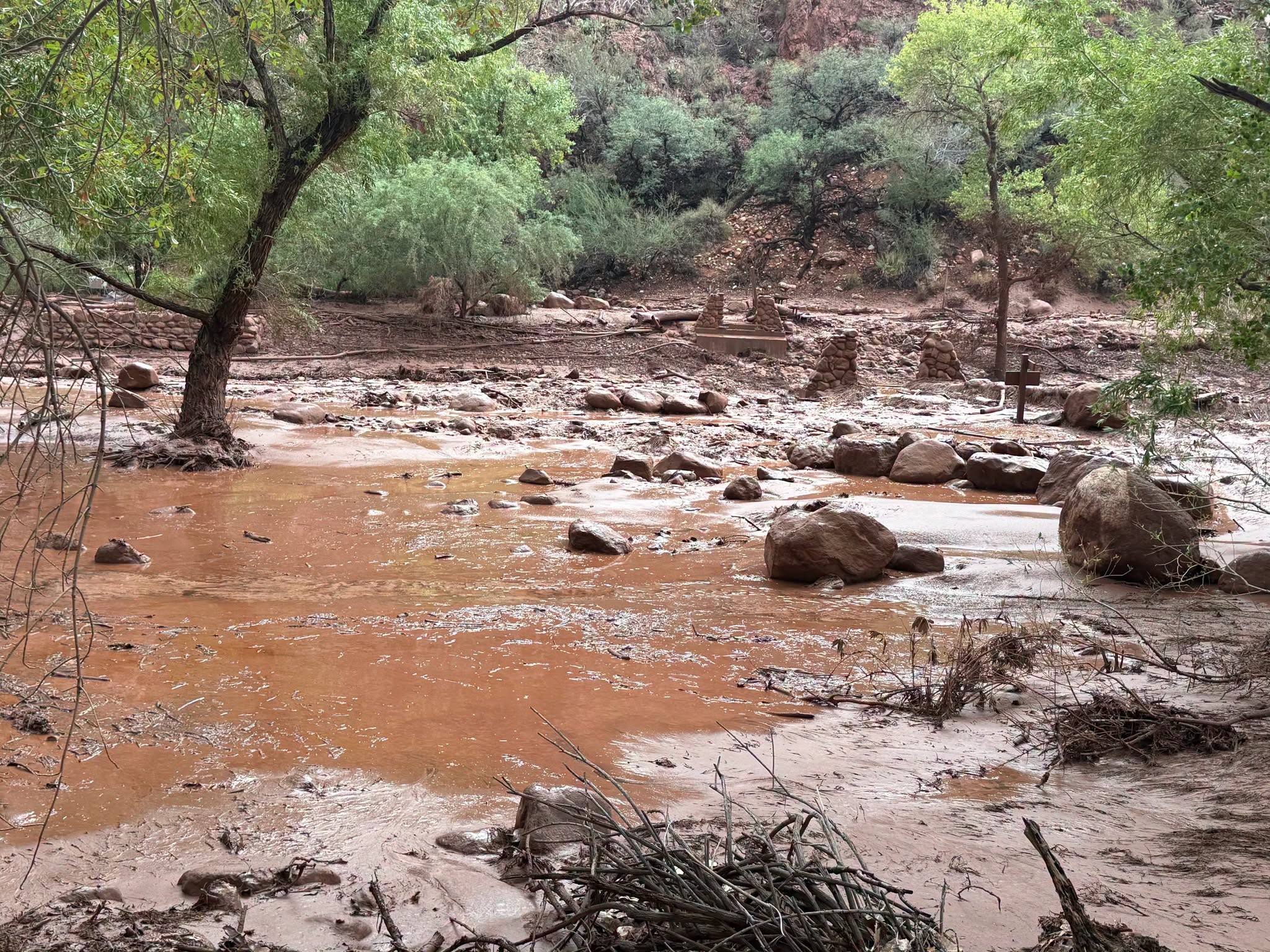
Flooding – Grand Canyon, United States: At least two people have died, and one person is missing after a flash flood swept through the Grand Canyon on Sunday. Floodwater and debris flows submerged hiking trails and washed away footbridges, forcing the evacuation of 62 people by helicopter. More rain and thunderstorms are forecast this week.
Wildfires – Algeria: On Aug. 21, an outbreak of dozens of wildfires spread in Algeria over 24 hours, killing 12 people and injuring 54 people. Officials counted 154 wildfires across the country due to a heat wave and extreme winds. The fires caused mass evacuations and shut down major highways. Farmland was damaged, and 400 animals were killed.
Previous/Ongoing Disasters
Water shortage – Puerto Rico: About 25% of Puerto Rico is facing extreme drought, while another 36% is experiencing moderate drought. Along with failing infrastructure, the drought has caused a severe water shortage on the island for more than 100 days.
Hundreds of thousands of customers have been experiencing 48–72-hour water outages on an alternating schedule since Aug. 7. Residents face long wait times in lines at water trucks, low water pressure and challenges doing daily tasks. The water shortage is especially devastating for older, disabled, chronically ill or bedridden people.
Complex Humanitarian Emergencies – Horn of Africa (Somalia)
Many places worldwide are experiencing conflict, climate change, drought, famine, economic challenges and other conditions which, when combined, create complex humanitarian emergencies (CHEs). CDP spotlights one CHE each week to spread awareness and develop a philanthropic response.
Somalia’s humanitarian crisis has continued to deepen through 2026, driven by a combination of drought, conflict, displacement and sharply reduced international funding.
Key facts:
- Northern Somalia is facing a fourth consecutive failed rainy season, the driest conditions recorded in the country since 1981. Extreme heat has accelerated water loss, dried rangelands and depleted water points.
- Widespread water infrastructure failures have pushed water prices to USD $12–15 per 200-liter barrel in some areas.
- Conflict and the climatic effects of El Niño are expected to trigger significant displacement later in the year.
- As of June 30, 2026, Somalia is hosting roughly 4 million internally displaced people, making the country home to one of the largest displaced populations in the world.
- Women and children make up more than 80% of Somalia’s internally displaced population and face heightened exposure to discrimination, child rights violations and gender-based violence (GBV).
- Severe funding shortfalls have forced the closure of critical health and protection facilities, undermining access to reproductive health services along with GBV prevention and response programs.
- About 6.5 million people were projected to face crisis levels of hunger or worse (IPC Phase 3/4) by March 2026, nearly double the levels seen in mid-2025, with more than 2 million people facing emergency levels of food insecurity (IPC Phase 4). Access to essential health services remains limited, particularly in rural and underserved areas, leaving displaced communities especially vulnerable. Maternal health risks are rising as drought-affected populations struggle to access antenatal care, safe delivery services and emergency obstetric and referral care.
The 2026 funding requirement stands at USD $852 million, a 40% reduction from 2025, reflecting a narrower scope under severe funding constraints.
What We’re Reading
- Extreme heat is taking a toll on firefighters as wildfires stretch crews to the limit – The Conversation
- Inside Afghanistan’s Secret Schools for Girls – The New York Times
- The Role of Climate Change in Nepal’s Floods – NPR
A moment of hope…Six-year-old Manisha Magar was rescued from a collapsed building in Nepal 60 hours after the floods tore through her village. Rescuers found her about 600 feet down from a mountain outpost where she lived with her family and pulled her from the rubble.
She was flown to Kathmandu for treatment and is in good condition. Her parents also survived the flood, and the family has been reunited.

Gina DeLuca
Content Development Associate