What we’re watching: Weekly disaster update, January 12
Here’s what we’re watching for the week of Jan. 12, 2026.
New or Emerging Disasters
Flooding – Indonesia: At least 16 people died in flash floods caused by torrential rains last week. After days of monsoon rains, rivers burst their banks, unleashing debris flows that submerged entire villages in Indonesia’s North Sulawesi province. At least seven homes were washed away, and more than 140 homes were damaged.
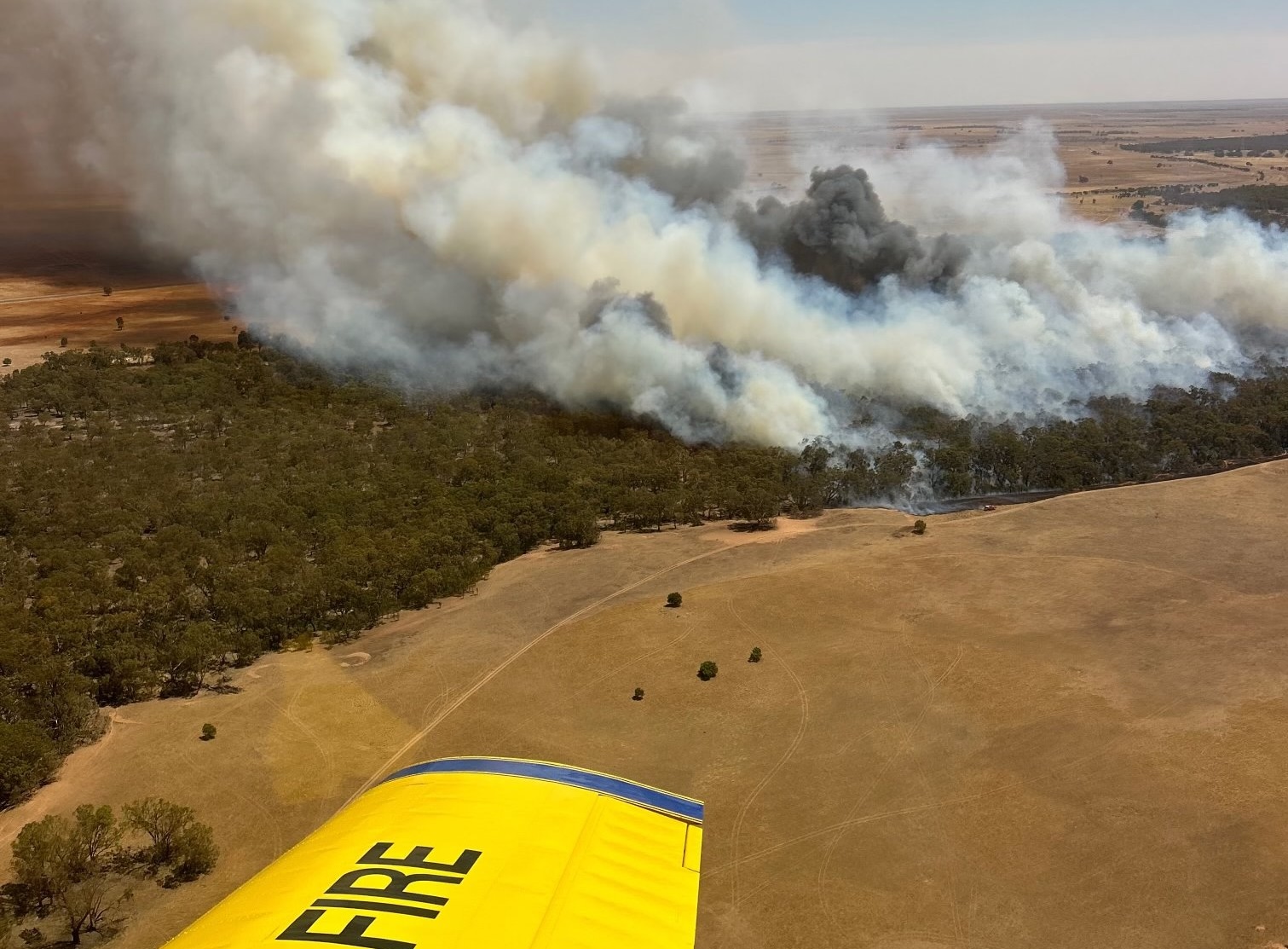
Bushfires – Australia: More than 30 uncontrolled bushfires have destroyed nearly 860,000 acres in Victoria, Australia, since last week. Hundreds of buildings have been destroyed, and thousands of homes have lost power. At least one person has died, but that number is expected to rise.
Authorities report that these are the worst fires since the Black Summer fires of 2019-20. Air quality warnings are in effect in Melbourne and surrounding areas.
Flooding – Albania: On Jan. 8, rescue workers evacuated dozens of people in boats from flooded homes in Durres, Albania. Heavy rainfall led to landslides, road closures, rail cancellations, and cut power and water to homes. At least one person died, and about 800 homes were damaged or destroyed. Neighboring Kosovo and Bosnia also experienced flooding from rain followed by snow.
Previous/Ongoing Disasters
Complex Humanitarian Emergency – Venezuela: Nearly eight million people in Venezuela require humanitarian assistance, and almost eight million more live abroad as refugees or migrants.
Years of economic collapse, hyperinflation, weakened public services and climate disasters continue to drive shortages of food, medicine and basic services, while new political instability in early 2026 has heightened risks for already vulnerable communities. Airstrikes on Jan. 3 killed 25 people and injured 90 others, causing blackouts and communication disruptions.
Wildfires – Los Angeles: Last year, on Jan. 7, 2025, wildfires ignited in Los Angeles, burning 58 square miles of land over three weeks, killing 30 people. More than 13,000 properties were destroyed, but one year later, only six homes have been rebuilt.
About 70% of residents from the Eaton Canyon and Palisades neighborhoods have not been able to return home due to slow insurance payouts and bureaucratic hurdles. Governor Gavin Newsom declared Jan. 7, 2026, a Day of Remembrance, ordering flags to half-staff and reaffirming the state’s commitment to long-term recovery.
Complex Humanitarian Emergencies – Yemen
Many places worldwide are experiencing conflict, climate change, drought, famine, economic challenges and other conditions which, when combined, create complex humanitarian emergencies (CHEs). CDP maintains complete profiles on several CHEs that are highlighted here weekly to build awareness and philanthropic response.
At the start of 2026, about 20 million people in Yemen require humanitarian aid. However, by late December, only 25% of the humanitarian response plan for 2025 was funded, compared to 56% at the same time in 2024. Health, food, nutrition and protection services have all undergone major cuts and closures.
Key facts:
- An estimated 19.5 million people need humanitarian assistance and protection in 2026, including about 4.8 million IDPs and over 61,000 refugees and asylum seekers.
- Over 80% of the population lives below the poverty line.
- Recurrent floods in 2025 affected more than 460,000 people, worsening shelter and protection needs.
- By November 2025, 61% of households could not meet basic food needs, and 35% faced acute food gaps. In some southern areas of the country, 66% of households resort to crisis/emergency strategies and 49% limit adult food intake to feed children.
- Since January 2025, 453 health facilities across 22 governorates have partially or fully closed, including 177 primary health centers, 200 health units, 76 hospitals and 18 mobile clinics.
- Millions of people now face reduced access to basic, maternal and emergency care, while outbreaks of cholera, measles, polio and other diseases recur due to contaminated water and low immunization coverage.
UNHCR assessments of 189,214 IDPs and host community members in 2025 uncovered the compounding risks for families in Yemen from conflict, economic collapse, public service failures and severe funding cuts, with many displaced families surviving in extremely dire living conditions.
What We’re Reading
- These numbers tell the story of the Los Angeles wildfires one year later – NBC News
- The western US is in a snow drought, and storms have been making it worse – The Conversation
- Trump quits pivotal 1992 climate treaty, in massive blow to global warming effort – Politico
A moment of hope… Indigenous women in India’s Odisha state are documenting shrinking forests, declining water sources and reduced biodiversity using hand-drawn “dream maps.” The Odisha project aims to use this evidence to advocate for land rights, restoration funding and greater recognition of Indigenous lies in regions controlled by Indigenous peoples.
According to the Associated Press, “This is the first time that many of the women are formally leading an outward-facing community effort. They say it’s giving them more confidence in speaking up about community needs.”
India is currently working on a national adaptation plan for climate change, and the work of Odisha women could be critical in deciding where India’s efforts should be focused. United Nations reports state that 80% of the world’s biodiversity lies in regions controlled by Indigenous peoples.