
What we’re watching: Weekly disaster update, July 13
Some disasters make headlines; others do not. Here at the Center for Disaster Philanthropy (CDP), we monitor the status of disasters worldwide and compile a list of the ones we’re tracking weekly.
Here’s what we’re watching for the week of July 13, 2026.
New or Emerging Disasters
Wildfires – Spain: A wildfire in southern Spain has killed 12 people, with 23 people still missing. The fire ignited Thursday evening, and by Friday, July 10, had burned more than 7,900 acres in a semi-arid region of the country undergoing a heat wave. As of July 10, the fire is mostly contained.
Flooding – Bangladesh: A landslide caused by heavy rains has killed 22 people in Bangladesh, including three children in Cox’s Bazar, a displacement camp for Rohingya refugees. Flooding has submerged croplands, homes, businesses and roads, leaving at least 300,000 people stranded.
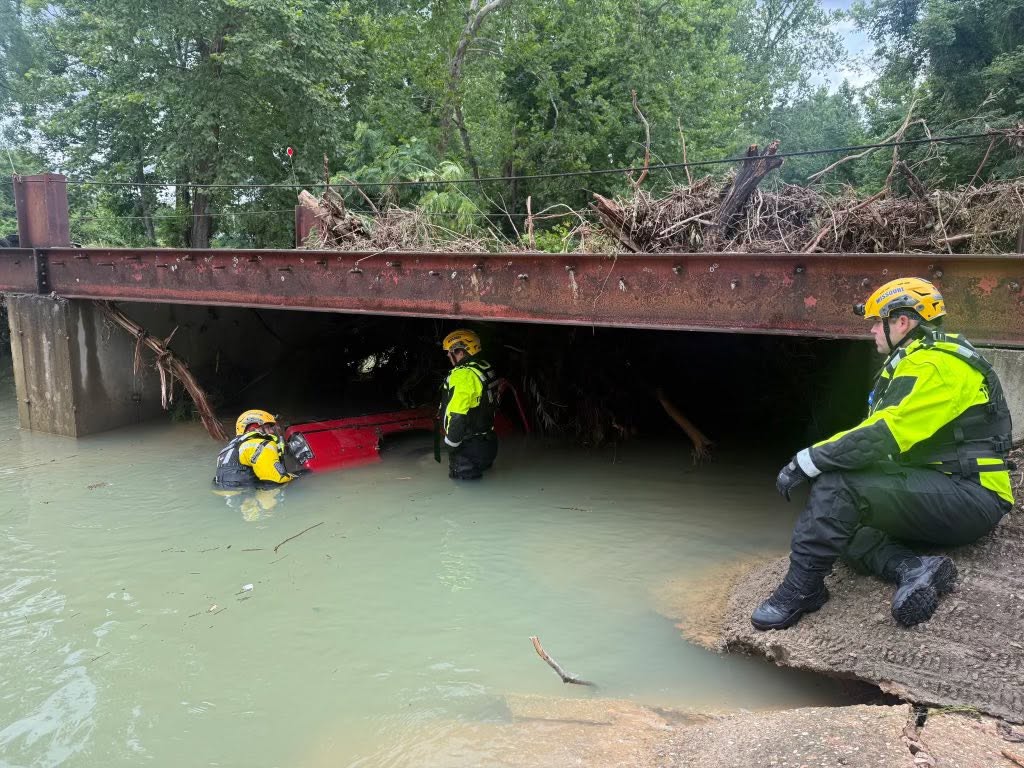
Flooding – Missouri: Extreme rainfall in Lesterville, Missouri washed away all roads leading to Camp Taum, necessitating the evacuation of 200 campers and counselors by helicopter. Nearby, the one in 1,000-year rainfall event caused a building to collapse and swept 17 people into floodwaters; all were rescued or later accounted for.
Crews performed 90 water rescues after the Black River rose to a record 28.7 feet. One person died but no major injuries were reported.
Previous/Ongoing Disasters
Typhoon Bavi – Multiple countries: After moving east of the Mariana Islands last week, Typhoon Bavi caused massive destruction in multiple countries. At least 15 people died from flooding caused by heavy rainfall in the Philippines, 2.8 million people were evacuated from China’s east coast, and 134 people were injured in Taiwan.
Escalation of Complex Humanitarian Emergency – Sudan: The Rapid Support Forces (RSF) has besieged El Obeid in Kordofan since late May 2026, fully surrounding it by early July, sparking fears of a mass atrocity similar to the October attack on El Fasher.
Western governments and UN officials warn that roughly 500,000 civilians face imminent risk amid intensifying bombardment, displacement, and severe shortages of food, water and medicine, while humanitarian access remains blocked. Without urgent intervention and funding, aid groups warn the crisis will worsen sharply in the coming months.
Complex Humanitarian Emergencies – Myanmar
Many places worldwide are experiencing conflict, climate change, drought, famine, economic challenges and other conditions which, when combined, create complex humanitarian emergencies (CHEs). CDP spotlights one CHE each week to spread awareness and develop a philanthropic response.
Myanmar is experiencing one of the world’s most severe humanitarian crises, driven by widespread armed conflict, mass displacement, protection violations and recurrent climate disasters. Since the 2021 military takeover, escalating fighting between the military and resistance groups has devastated civilian infrastructure, restricted humanitarian access and left nearly 16.2 million people in need of humanitarian assistance.
Key facts:
- Fighting has spread to nearly every state and region.
- More than 4 million people have been forced to flee their homes. Civilians face frequent airstrikes, artillery attacks, village burnings and forced displacement, while many remain trapped in areas that humanitarian organizations cannot safely access.
- Civilians are exposed to indiscriminate attacks, arbitrary detention, torture, extrajudicial killings, forced recruitment, landmines and explosive remnants of war.
- Women and girls face widespread conflict-related sexual violence, while children have been killed, injured, recruited by armed groups and denied access to education.
- The Rohingya people remain at extreme risk. Approximately 600,000 Rohingya continue to face severe restrictions on movement, limited access to health care and livelihoods and ongoing persecution.
- Communities affected by conflict are still recovering from Cyclone Mocha and the 2025 earthquake, while seasonal flooding and severe weather repeatedly destroy homes, crops and infrastructure.
- Farmers have abandoned land because of fighting and landmine contamination, while supply chain disruptions and rising prices have reduced access to food and essential goods across much of the country.
With millions of people displaced, civilian casualties rising and humanitarian access increasingly restricted, the crisis in Myanmar is intensifying while humanitarian needs far outpace available resources.
Join us Thursday, July 23
Before disasters strike: Rethinking philanthropy for a changing climate
 House submerged in orange, polluted water in Romania, May 2026. (Photo credit: iuliu illes on Unsplash.)
 What We’re Reading
-
The world must wake up to the horrors in Sudan – The New York Times
-
How the Iran war worsens the climate crisis – TIME
-
Chronic illness and diarrhea surge in quake-hit Venezuelan communities as humanitarian crisis builds – Associated Press
-
At least one million women and girls lose access to critical support as aid cuts dismantle women’s organizations working in humanitarian crises – Zawya
A moment of hope… Burmese cuisine is gaining international visibility as refugees continue to establish restaurants and food businesses abroad. More than 4 million people have fled Myanmar since the 2021 military coup, and many people have brought their culinary traditions to their new homes.
Signature dishes such as mohinga (a fragrant fish noodle soup), laphet thoke (fermented tea leaf salad) and other regional specialties have become popular. Displaced chefs are preserving Myanmar’s diverse food culture while introducing it to new audiences, even as many remain unable to safely return home because of the country’s ongoing civil war.

Gina DeLuca
Content Development Associate