
What we’re watching: Weekly disaster update, July 20
Some disasters make headlines; others do not. Here at the Center for Disaster Philanthropy (CDP), we monitor the status of disasters worldwide and compile a list of the ones we’re tracking weekly.
Here’s what we’re watching for the week of July 20, 2026.
New or Emerging Disasters
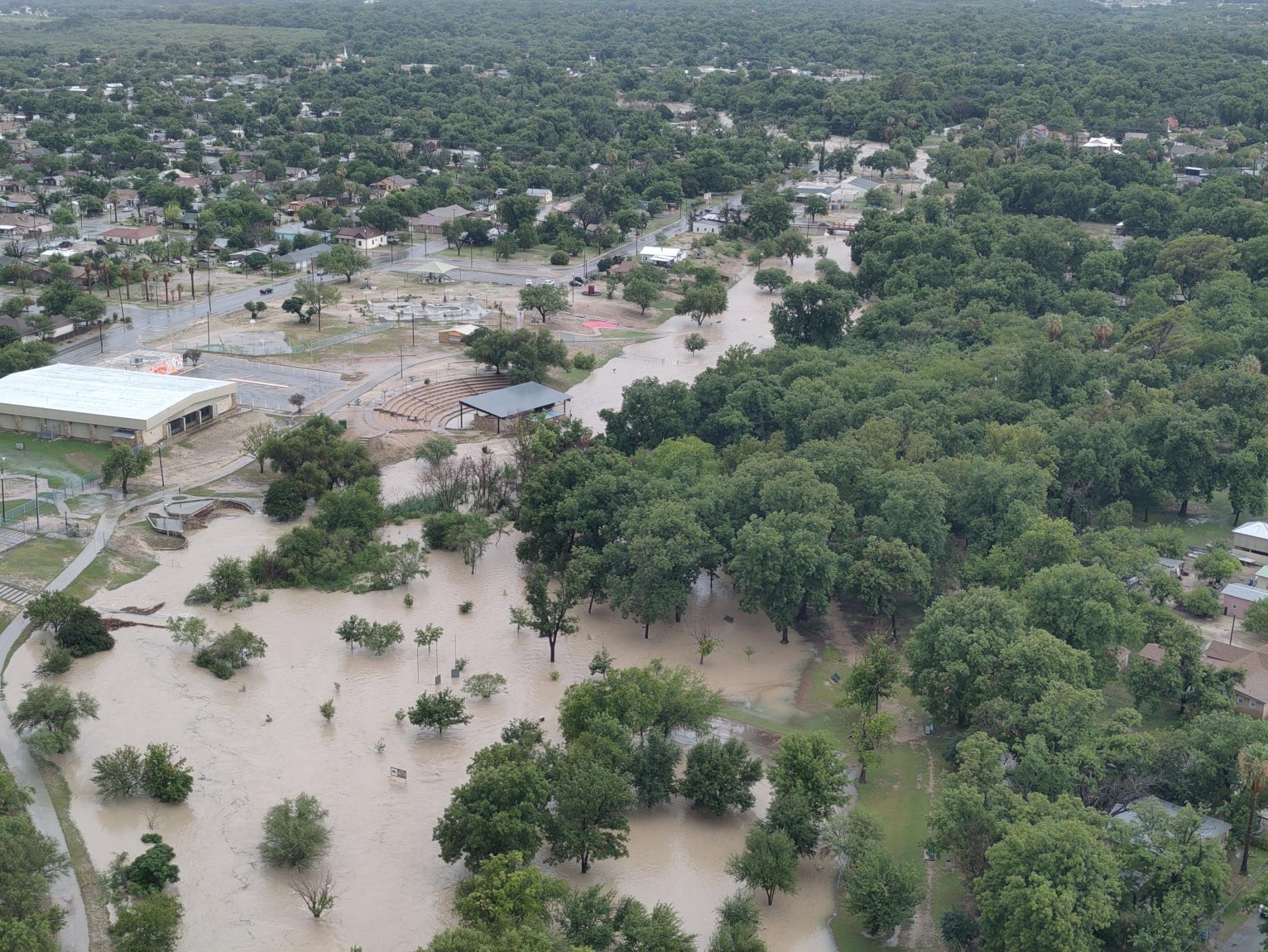
Flooding – Texas: Between July 13 and 17, a year’s worth of rain fell in south Central Texas, creating dangerous flood waves that killed two people. At least 230 water rescues were performed in the same area where flooding killed 130 people last July.
After the catastrophic flooding of 2025, Central Texas improved early warning systems which helped prevent a worse disaster this time.
Wildfires – Canada: More than 800 fires are burning in Ontario, Canada, causing the evacuation of thousands of people. About 60 of these fires are burning out of control, requiring a full response. The Namaygoosisagagun (Collins) First Nation urgently evacuated by boat minutes before a fire destroyed the entire community in under an hour.
This year, wildfires in Canada have burned approximately 7.5 million acres. The smoke from these fires is causing hazardous air quality in the Midwest and northeast United States, forcing the closures of pools and camps and the cancellations of outdoor activities. On July 17, Detroit, Michigan had the worst air quality in the world.
Most wildfires in Canada are impossible to extinguish because of a lack of road access.
Previous/Ongoing Disasters
Flooding – Bangladesh: Landslides and catastrophic flooding in the last week have caused 51 deaths in Bangladesh, with at least 28 of the fatalities occurring in Cox’s Bazar, a refugee camp for the Rohingya people. Flooding has submerged croplands, homes, businesses and roads, leaving at least one million people stranded. At least 38,000 people have been displaced and 1.1 million people have been affected overall.
Ebola – Democratic Republic of Congo: More than 2,000 cases and 828 deaths have been recorded since the Ebola outbreak began.
“The outbreak has grown by approximately 70% in just two weeks, with an average of more than 40 new cases reported each day,” said International Organization for Migration (IOM) Regional Director Frantz Celestin.
Much of the spread is due to the transportation of bodies for burial, though no bodies have yet crossed country borders.
Complex Humanitarian Emergencies – Syria
Many places worldwide are experiencing conflict, climate change, drought, famine, economic challenges and other conditions which, when combined, create complex humanitarian emergencies (CHEs). CDP spotlights one CHE each week to spread awareness and develop a philanthropic response.
Fifteen years after the outbreak of civil war, Syria remains one of the world’s largest humanitarian crises. Although the overthrow of Bashar al-Assad’s government in late 2024 ended one phase of the conflict, humanitarian conditions remain catastrophic. Years of war, economic collapse, climate shocks, damaged infrastructure and ongoing localized violence have left millions dependent on aid.
- The United Nations estimates that more than 70% of Syria’s population requires humanitarian assistance in 2026.
- Only 18% of Syria’s population is considered food secure, while more than 7 million people are experiencing acute hunger.
- UN estimates that 650,000 severely food-insecure Syrians lost regular monthly food assistance due to funding cuts.
- About 5.5 million people remain internally displaced.
- Many of the 1.6 million returnees discover that electricity, water systems, health care facilities and schools remain nonfunctional.
- Years of displacement have left millions of children with interrupted or incomplete schooling.
- UNICEF estimates that 600,000 children under five are suffering from wasting (acute malnutrition).
- Landmines and unexploded ordnance continue to kill and injure children returning to former conflict zones.
- Many households face chronic unemployment, rapidly rising prices, declining purchasing power and limited livelihood opportunities.
- More and more families cope by reducing meals, selling productive assets, withdrawing children from school or relying entirely on humanitarian aid.
- Localized clashes continue, periodically displacing civilians and interrupting humanitarian operations.
Syria’s health care system, economy, infrastructure and public services continue to struggle after more than a decade of conflict. While humanitarian organizations are increasingly supporting recovery and reconstruction, persistent insecurity and major funding shortfalls leave millions of Syrians without adequate food, health care, shelter, education or protection.
Join us this Thursday, July 23
Before disasters strike: Rethinking philanthropy for a changing climate
 House submerged in orange, polluted water in Romania, May 2026. (Photo credit: iuliu illes on Unsplash.)
 What We’re Reading
- Repeated storms are turning disaster recovery into a way of life, and leaving communities facing disaster fatigue – The Conversation
- Sudan’s aid crisis is also a crisis of accountability – The New Humanitarian
- The Dire Lengths Florida Farmworkers Go to Keep Working in ‘Scorching’ Heat – Inside Climate News
A moment of hope…Researchers in the Democratic Republic of the Congo launched the fastest-ever Ebola treatment trial, enrolling patients just six weeks after the Bundibugyo Ebola outbreak was declared a global health emergency. The trial is testing the experimental drugs remdesivir and MBP134, alone and in combination, in response to an outbreak that reached more than 1,700 confirmed cases and 625 deaths by July 9, while also overcoming major obstacles including conflict, attacks on health workers and logistical challenges.

Gina DeLuca
Content Development Associate