
What we’re watching: Weekly disaster update, July 27
Some disasters make headlines; others do not. Here at the Center for Disaster Philanthropy (CDP), we monitor the status of disasters worldwide and compile a list of the ones we’re tracking weekly.
Here’s what we’re watching for the week of July 27, 2026.
New or Emerging Disasters
Flooding – West Virginia: On Tuesday, July 21, about seven inches of rain fell in northwest West Virginia, causing devastating floods and killing at least two people. Some areas received 4.5 inches in just 37 minutes. Dozens of people became trapped in submerged vehicles while waiting for rescue.
The floods washed out roads and bridges and inundated homes and businesses. Gov. Patrick Morresey declared a state of emergency for all 55 counties.
Flooding – Afghanistan: At least 23 people died and 125 people were injured on July 20 after flash floods inundated Parun City, a remote area in Nuristan Province, along with eight additional provinces. Roads, businesses and farmlands flooded. Access to markets and health clinics was disrupted, and 92 homes were destroyed.
Afghanistan has faced repeated flooding in 2026, affecting at least 82,000 people so far. According to the International Organization of Migration (IOM), “This is the reality of climate vulnerability layered on top of years of conflict and fragile infrastructure. People simply do not have the resources or resilience left to absorb repeated shocks.”
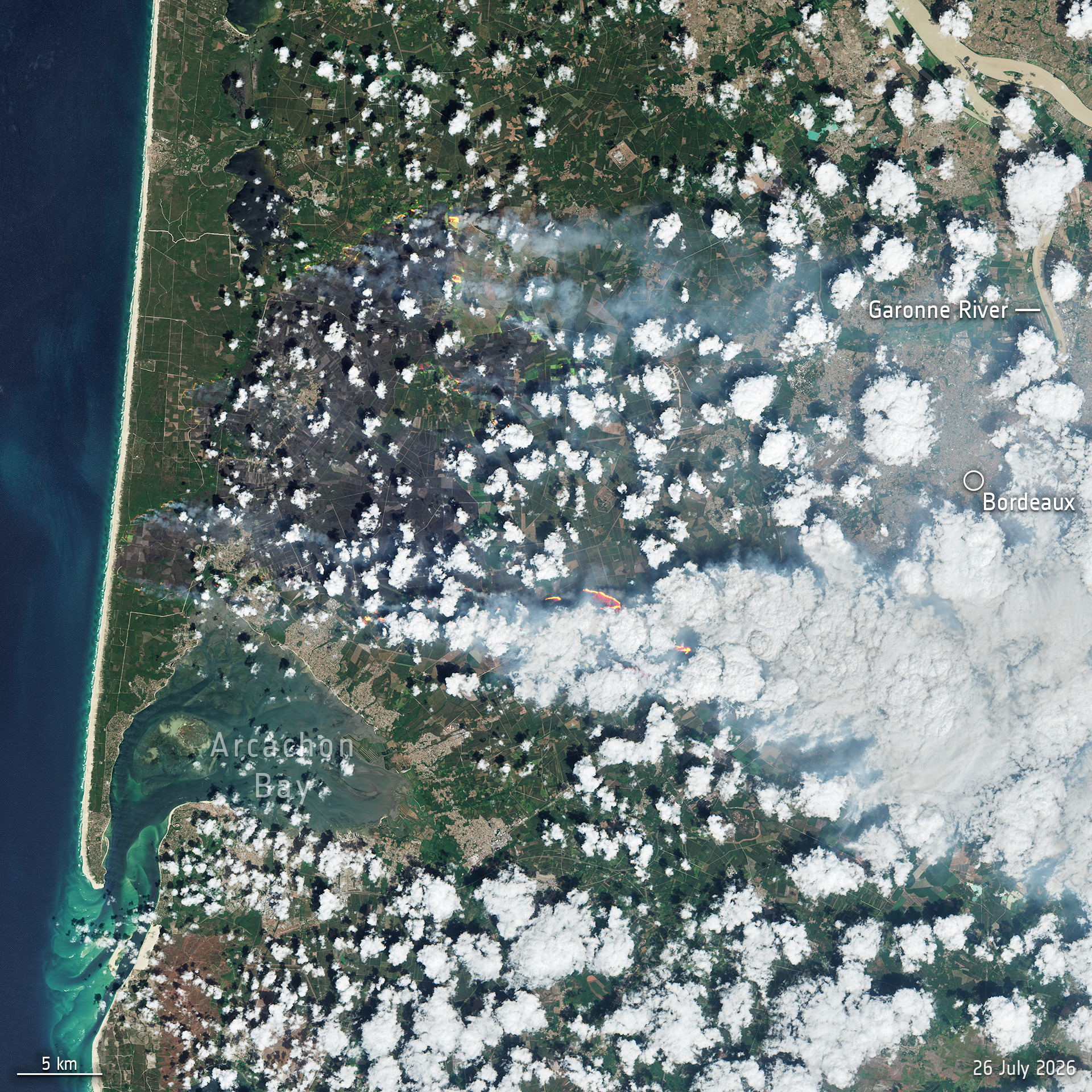
Wildfires – France, Spain: Hundreds of thousands of people in Spain and France have been forced to evacuate from communities experiencing massive wildfires. Both countries are seeing the highest number of acres burned in wildfires on record, with 242,000 acres burned in France so far this year and over 300,000 burned in Spain.
At least two people died from the fires in Spain this past weekend. Another round of extreme heat is forecast in Europe this week and is expected to worsen existing fires while potentially fueling new ones.
Previous/Ongoing Disasters
Complex Humanitarian Emergency – Middle East: The 2026 Iran war began on Feb. 28 when US-Israeli strikes killed Iran’s Supreme Leader and hundreds of civilians, then spread into a regional crisis involving Lebanon, Iraq, the Gulf states and Yemen.
So far, at least 1,500 people in Iran and more than 1,000 people in Lebanon have been killed. Tens of thousands of buildings have been destroyed. Both the ceasefire in April and subsequent peace deal collapsed.
The war has also driven a global food and energy crisis, and the UN World Food Program now expects to reach 1.5 million fewer people this year, pushing vulnerable populations like Afghan refugees deeper into crisis. UN Secretary-General Guterres has called the situation “out of control” and is urging immediate de-escalation as fighting continues to expand.
Support CDP’s Middle East Crisis Fund here.
Earthquake – Venezuela: On June 24, two catastrophic earthquakes struck Venezuela, causing massive damage and thousands of deaths. The government has recorded 5,546 fatalities and more than 16,740 people injured as of July 24. However, government officials have not updated the number of missing people since the day after the quakes, which stands at 157.
There are several citizens initiatives collecting names of the missing. One, called Desaparecidos de Terremoto puts the number of missing people at more than 29,000. The United Nations estimates the number of missing people to be between 40,000 and 50,000. In some cases, people have gone missing after being rescued alive.
Complex Humanitarian Emergencies – Afghanistan
Many places worldwide are experiencing conflict, climate change, drought, famine, economic challenges and other conditions which, when combined, create complex humanitarian emergencies (CHEs). CDP spotlights one CHE each week to spread awareness and develop a philanthropic response.
Nearly half of Afghanistan’s population requires humanitarian assistance in 2026, including 11.6 million children. Years of conflict, economic crisis, climate shocks, funding shortfalls and extreme restrictions on women continue to deepen humanitarian needs.
Key facts:
- Women in Afghanistan must cover their entire bodies in public, their voices are restricted in public spaces, and they may not travel without a male guardian in many circumstances.
- The newest major legal restriction targeting women recognizes marriages arranged during childhood, making it significantly harder for women who were forced into child marriages to challenge those unions.
- Aid agencies warn that limits on female humanitarian, rescue and health workers make it harder for women and girls to receive life-saving assistance after disasters, reproductive health care or humanitarian assistance in general.
- Roughly 17 million people are experiencing acute food insecurity, driven by poverty, climate-related crop losses, unemployment, reduced international funding and the return of hundreds of thousands of Afghans from neighboring countries.
- Decades of conflict have left Afghanistan with one of the world’s largest populations of people living with disabilities, including many survivors of landmines and explosive remnants of war. People with disabilities face significant obstacles accessing health care, education, livelihoods and humanitarian assistance.
The United Nations, UN Women, Amnesty International, Human Rights Watch and many governments have described the Taliban’s policies restricting women as part of a systematic campaign to eliminate women’s rights. Many legal scholars and human rights experts argue that the cumulative effect of these laws amounts to institutionalized gender persecution.
What We’re Reading
- The women’s rights crisis in Afghanistan is an ongoing humanitarian calamity – The Conversation
- Fires, floods and record heat: This is the summer of compounding disasters – CNN
- Officials warn that wildfires could still be burning in November – The Guardian
A moment of hope…With more than 2.2 million Afghan girls barred from school under the Taliban, an Afghan NGO secretly runs five underground schools across the country, with 28 teachers educating around 1,000 students aged 13 to 45. Tactics like staggered class times and changing routes help to avoid Taliban informants.
Teachers and students describe the classes as a sanctuary where girls find hope, confidence and connection despite the constant risk of arrest, imprisonment or corporal punishment if discovered. The schools operate against the broader backdrop of Taliban restrictions on women (banned from work, sports and public life) and growing international normalization of the regime despite ICC arrest warrants against its leaders.