
What we’re watching: Weekly disaster update, June 22
Some disasters make headlines; others do not. Here at the Center for Disaster Philanthropy (CDP), we monitor the status of disasters worldwide and compile a list of the ones we’re tracking weekly.
Here’s what we’re watching for the week of June 22, 2026.
New or Emerging Disasters
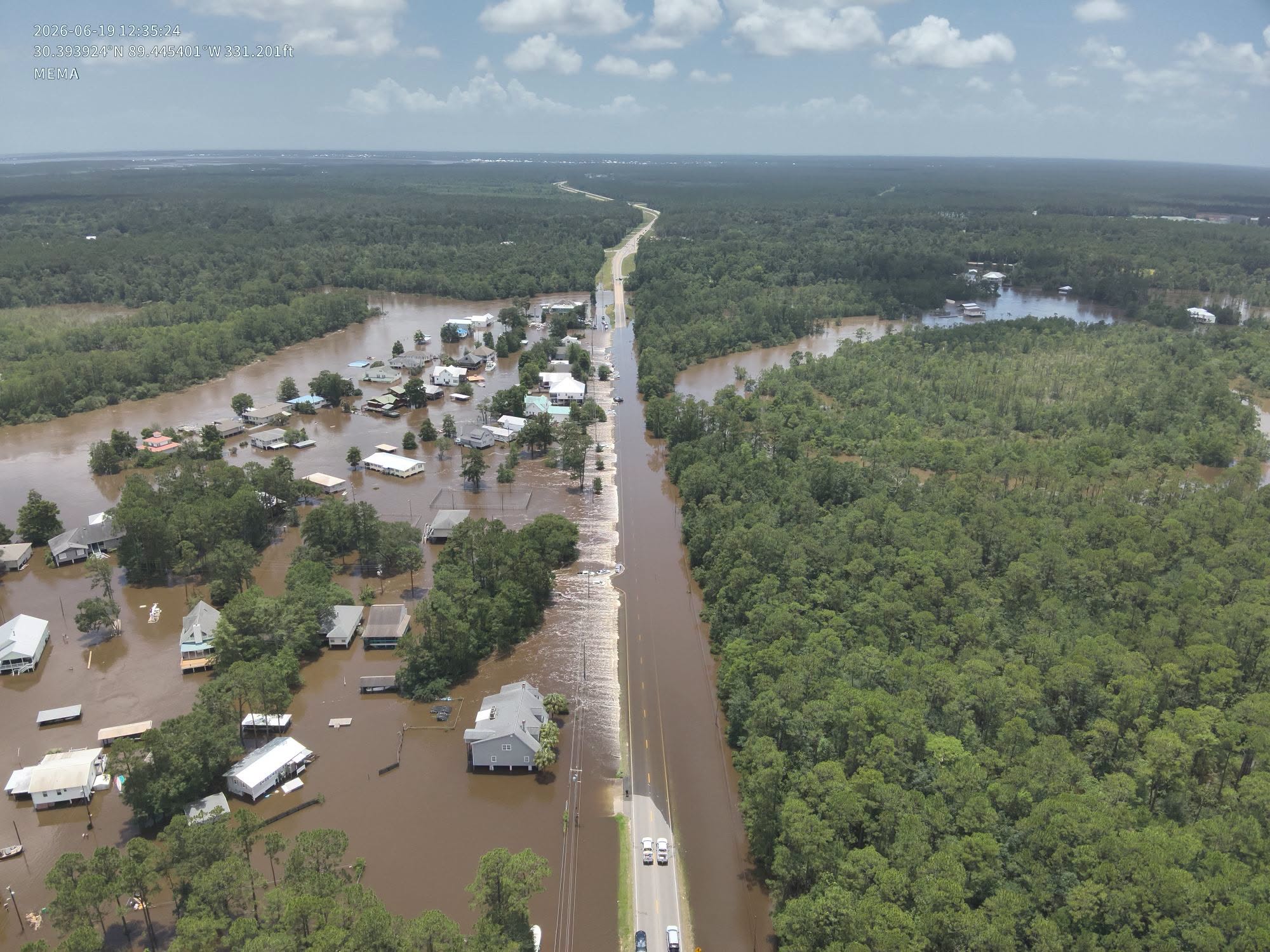
Tropical Storm Arthur – Multiple states: Tropical Storm Arthur came ashore in Texas on Wednesday, June 17 and was quickly downgraded to a post-tropical cyclone. However, the storm caused catastrophic flooding from Texas to the Carolinas, causing the deaths of three people.
Parts of Louisiana received up to 31 inches of rain, inundating homes and requiring high water rescues. Extreme heat and humidity hampered recovery efforts after the storm passed through Louisiana and Mississippi.
Earthquake – Indonesia: A 6.7 magnitude earthquake struck Central Sulawesi Province, Indonesia, the same area devastated by a powerful quake and tsunami eight years ago that killed more than one thousand people.
One person died, at least 38 people were injured, and 312 people were displaced according to a preliminary assessment. The earthquake caused widespread damage to infrastructure, homes, critical roadways and buildings.
Wildfires – Washington State: Since June 16, the Upriver fire has burned 222 acres just one mile east of Spokane, destroying at least 15 homes and forcing the evacuation of 1,500 residents. Authorities believe the fire was caused by humans, but not necessarily intentionally.
According to the National Interagency Fire Center, “…So far this year, 33,349 fires have burned more than 2.6 million acres, exceeding the 10-year average for both fires and acres burned to date.”
Previous/Ongoing Disasters
Earthquake – The Philippines: On June 8, a 7.8 magnitude earthquake struck the southern region of the Philippines. The official death toll has risen to 46 people, with hundreds more injured. More than 20,000 people remain displaced, while approximately 88,000 people have been affected overall.
Thousands of people sought refuge in evacuation centers after repeated strong aftershocks. More than 14,000 buildings were destroyed and many people are displaced in encampments living in makeshift evacuation tents.
Complex Humanitarian Emergencies – The Sahel: Chad
Many places worldwide are experiencing conflict, climate change, drought, famine, economic challenges and other conditions which, when combined, create complex humanitarian emergencies (CHEs). CDP spotlights one CHE each week to spread awareness and develop a philanthropic response.
Small, landlocked Chad is one of the poorest countries in the world, but it is the largest refugee host per capita in all of Africa. According to the UN, “…Chad has welcomed more than 900,000 Sudanese refugees across its eastern border since the start of the conflict, [while] 40 per cent of its own population already needs humanitarian assistance.”
The European Commission reports that 4.5 million people in Chad need humanitarian aid in 2026.
Key facts:
- Chad hosts 1.8 million refugees, the majority of whom arrived from Sudan since the war there began in April 2023.
- Lake Chad is shrinking due to climate change, and the country has endured catastrophic floods that have devastated food security.
- Malnutrition rates are climbing at a time when the country’s needs far exceed its resource capacity.
- United Nations Population Fund (UNFPA) says 85–87% of the Sudanese refugee population are women and children.
- A safety assessment in Lac Province found that 96% of displacement camp sites lacked adequate nighttime lighting, 60% of water sources were inoperative and 68% of residents lacked access to latrines.
- Humanitarian partners warn that poor lighting, weak sanitation and overcrowded sites are increasing Gender Based Violence (GBV) risks for women and girls.
- According to the UN, “Violent extremist groups, including Boko Haram and its affiliates, have continued to drive insecurity in the Lake Chad Basin, displacing over 250,000 people.”
- About 2 million children aged 6 months to five years are suffering or expected to suffer acute malnutrition between October 2025 and September 2026.
The UNFPA has raised only $1.9 million of $18.7 million needed for Chad, a 90% funding gap.
Join us Thursday, July 23
Before disasters strike: Rethinking philanthropy for a changing climate
 House submerged in orange, polluted water in Romania, May 2026. (Photo credit: iuliu illes on Unsplash.)
 What We’re Reading
-
Kansas and Missouri are surprised by tornadoes after weather service cuts reduce early warnings – NPR KMUW
-
Malawi’s education choices in the wake of aid cuts – The Conversation
-
Ebola’s spread fueled by cuts in humanitarian aid – Harvard T.H. Chan School of Public Health
A moment of hope… In eastern Chad, Sudanese refugee women are rebuilding their lives through entrepreneurship. In Aboutengue settlement, Fatima Zakaria organized an umbrella association that helps refugee women earn income by producing handicrafts, traditional incense, perfumes and woven baskets.
In Farchana, Radwa Abdelkarim used UNHCR cash assistance to start baking bread from home before expanding into two grocery shops and a restaurant that now employs 12 fellow refugees. She told UNHCR that she supports other women “so that we can grow together, and no one is left behind.”

Gina DeLuca
Content Development Associate