What we’re watching: Weekly disaster update, March 9
Some disasters make headlines; others do not. Here at the Center for Disaster Philanthropy (CDP), we monitor the status of disasters worldwide and compile a list of the ones we’re tracking weekly.
Here’s what we’re watching for the week of March. 9, 2026.
New or Emerging Disasters
Landslide – Democratic Republic of Congo: At least 300 people were killed when heavy rains triggered a landslide in the mining area of Rubaya in North Kivu, burying artisanal miners and more than 40 families in surrounding homes. This is the third deadly collapse in the same area in less than two months, increasing the total number of fatalities from recent mining disasters to more than 700.
The DRC is home to 60% of the world’s reserve of coltan, a key mineral in the electronics industry, which is widely mined there. However, there are few protections for miners, especially in areas controlled by M23.
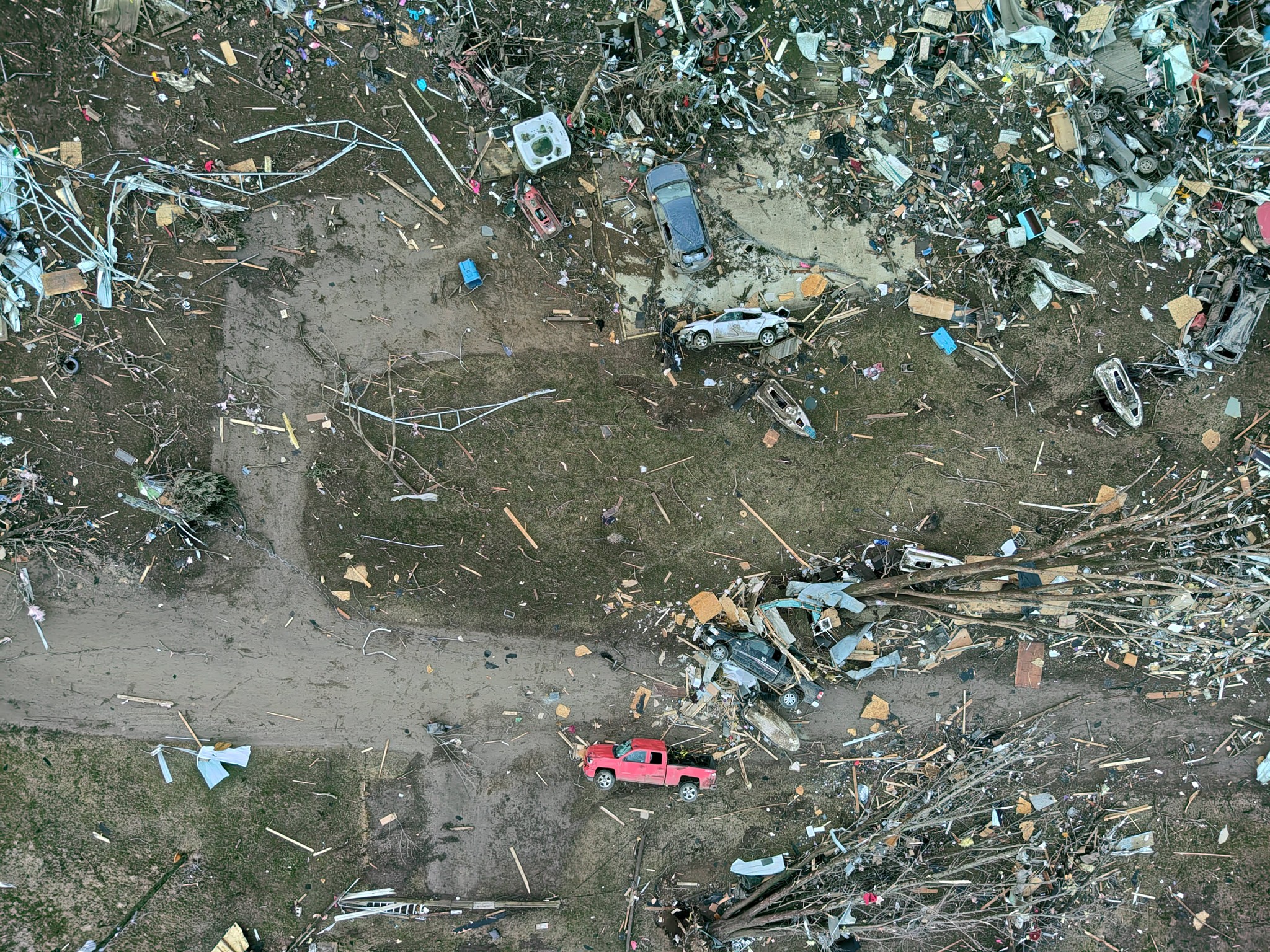
Severe storms – Multiple states: Tornadoes, heavy rain and hail battered states from Texas to Michigan this past weekend, killing eight people and injuring many others. Homes and buildings were damaged and destroyed by an EF3 tornado in southwest Michigan, with wind speeds of 160 mph. Governor Whitmer has declared a state of emergency in several counties.
Flash floods in Dallas submerged homes in 5 feet of water and inundated roadways. More than 500 flights were canceled. Texas and Missouri declared states of emergency ahead of more severe weather expected later this week.
Middle East crisis – Multiple countries: Recent internal conflict within Iran and airstrikes beginning on Feb. 28 by the U.S. and Israel in Tehran have resulted in new and exacerbated humanitarian crises in the region.
Mass displacement of civilians and thousands of casualties have already been reported across several countries. Iranian civilians are experiencing a total communications blackout.
Read this blog post from CDP’s President and CEO Patty McIlreavy, which offers guidance for donors considering philanthropic aid to the region.
War – Pakistan and Afghanistan: Pakistan declared war on Afghanistan on Feb. 27. Airstrikes in Kabul and Islamabad have resulted in hundreds of casualties on both sides of the conflict. Afghanistan is already experiencing one of the world’s most severe humanitarian crises, with widespread food insecurity, gender apartheid, and political repression in addition to recent earthquakes and an ongoing drought.
Previous/Ongoing Disasters
Wildfires – Oklahoma, Kansas, Texas: In mid-February, wildfires in Oklahoma, Kansas and Texas destroyed homes and prompted disaster declarations amid extreme wind and drought conditions.
In northwest Oklahoma, wildfires burned more than 300,000 acres across Beaver, Texas, Woodward and neighboring counties, damaging at least eight structures, injuring multiple firefighters and triggering a state of emergency as Red Flag conditions covered nearly the entire state. In Kansas, the fires burned an area larger than New York City.
Complex Humanitarian Emergencies – Democratic Republic of Congo
Many places worldwide are experiencing conflict, climate change, drought, famine, economic challenges and other conditions that, when combined, create complex humanitarian emergencies (CHEs). CDP spotlights one CHE each week to raise awareness and encourage philanthropic support.
The Democratic Republic of the Congo (DRC) is facing one of the world’s largest and fastest deteriorating humanitarian crises, driven by conflict in the east, record displacement and the country’s worst levels of acute food insecurity to date.
Key facts:
- By the end of 2026, around 9 million people are expected to be displaced.
- Approximately 26.6 million people will face crisis levels of food insecurity in 2026.
- Half of all children under five in DRC are stunted due to chronic malnutrition.
- Civilians face systematic exposure to shelling, looting of health and water infrastructure, and recurrent epidemics.
- M23 and aligned forces have killed civilians, attacked hospitals, abducted patients and forcibly disappeared or tortured civil society members, human rights defenders, and journalists in areas under their control.
- Children face heightened risks of forced recruitment, abduction and family separation in unstable displacement sites and besieged urban areas like Bukavu, where UN human rights offices recently confirmed summary executions of children by M23 following their entry into the city.
- Pervasive poverty and school dropout in Kinshasa and the Kasai region are driving increased child sexual exploitation and early marriage, social norms and weak justice discourage reporting and allow impunity.
The UN warns that “all warning signals are flashing red” and that, without increased international support and secure access, humanitarian needs will skyrocket and regional stability will be further jeopardized.
What We’re Reading
- UN Relief Chief warns of ‘moment of grave peril’ as humanitarian crises escalate in Middle East – UN OCHA
- On the farm, the hidden climate cost of the broken U.S. health care system – Inside Climate News
- Nature report, killed by Trump, is released independently – The New York Times
A moment of hope… India has developed a single-dose dengue vaccine, which has shown strong immune responses against all four dengue strains and is now in Phase 3 trials. Limited access to testing for dengue, overburdened hospitals and delayed treatment lead to dozens of deaths in India each year, with hundreds of thousands more infected with the mosquito-borne disease. The vaccine could be approved for use as early as 2027.

Gina DeLuca
Content Development Associate