
What we’re watching: Weekly disaster update, May 4
Some disasters make headlines; others do not. Here at the Center for Disaster Philanthropy (CDP), we monitor the status of disasters worldwide and compile a list of the ones we’re tracking weekly.
Here’s what we’re watching for the week of May 4, 2026.
New or Emerging Disasters
Wildfire – Italy: Approximately 3,000 residents have been evacuated in Tuscany due to a large forest fire in Lucca and Pisa that has burned nearly 2,000 acres. Officials believe the fire may have started accidentally. Containment has been difficult due to high winds.
Flooding – Kenya: At least 18 people died in catastrophic flooding affecting Kenya since last week. More than 54,000 households have been affected, and dozens of hospitals, schools and other infrastructure have been flooded.
Thousands of people have evacuated the western Rift Valley due to the risk of mudslides. Heavy rainfall is forecast through the second week of May.
Hailstorm – Missouri: Softball–sized hail caused power outages for thousands of customers in Missouri on April 29 in one of the worst hailstorms to hit the state. The hail injured drivers after busting through windshields. The hail also damaged houses and airplanes. An emu at Dickerson Zoo died in the storm and other animals were injured.
Hail forms when strong wind shear keeps raindrops aloft in a supercell thunderstorm, causing them to freeze together. Strong wind shear causes the raindrops to stay aloft longer, freezing into each other to create larger hailstones.
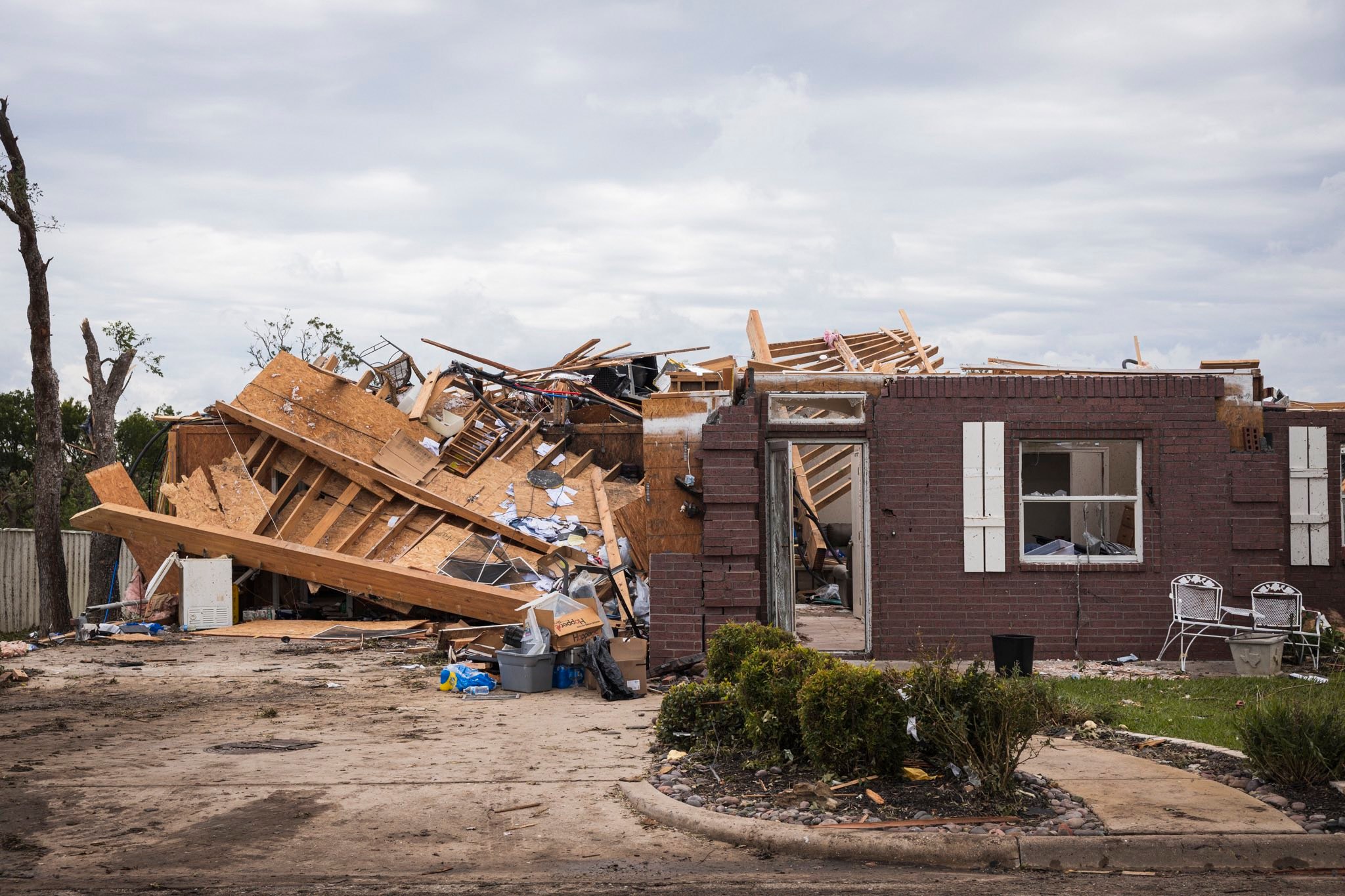
Tornado – Texas: A violent, EF-3 tornado tore through Mineral Wells, Texas on April 29 bringing 145 mph winds. Houses were flattened, trees uprooted and roofs were ripped from buildings. Five people were injured but no deaths were reported. At least 132 buildings were damaged or destroyed.
Previous/Ongoing Disasters
Super Typhoon Sinlaku – Guam, Northern Mariana Islands: A catastrophic Category 5 cyclone devastated islands in the western Pacific Ocean during the second week of April. As of May 2, 9 deaths were reported in Chuuk State (in the Federated States of Micronesia) and its entire population of 34,000 people has been affected by the storm.
At least 72,000 homes across Micronesia were damaged or destroyed. The Northern Mariana Islands, especially Saipan, experienced the most damage from the storm. Because of the remote locations of these islands, aid and other supplies to support recovery are being staged in Guam before moving out to other islands.
Wildfires – Georgia: Although fire conditions persist, crews have contained large swaths of wildfires in South Georgia. Schools in Brantley County have reopened as of May 4.
The Pineland Road Fire is only 44% contained and is continuing to hold, but evacuation orders have been lifted in Echols County. The populations in the areas affected by these fires are less–resourced than in other parts of Georgia. Echols County, in particular, has a very high concentration of people living with disabilities, people over age 65 and people of color, making the impact to this community greater and recovery harder than for better-resourced counties.
Complex Humanitarian Emergencies – Haiti
Many places worldwide are experiencing conflict, climate change, drought, famine, economic challenges and other conditions which, when combined, create complex humanitarian emergencies (CHEs). CDP spotlights one CHE each week to spread awareness and develop a philanthropic response.
Haiti is currently facing one of the world’s most severe humanitarian crises, driven by gang violence, political instability, economic collapse and weak state capacity.
Key facts:
- More than 6 million people (more than half the population) need humanitarian assistance.
- Armed groups control up to 90% of the capital and key infrastructure.
- Violence is extreme: massacres, sexual assaults and kidnappings are common.
- Gangs recruit children with the promise of food and security.
- The state has limited ability to provide security, and many areas are effectively ungoverned.
- More than 1.4 million people are displaced and living in dire conditions. Women and children face profound protection risks, widespread malnutrition and hunger. Gender based violence is ubiquitous and increasing.
- More than 1,600 schools have closed, and a quarter of a million children are out of school.
Join us this Thursday, May 7
Beyond the headlines: What mobilizes philanthropy to act in complex crises
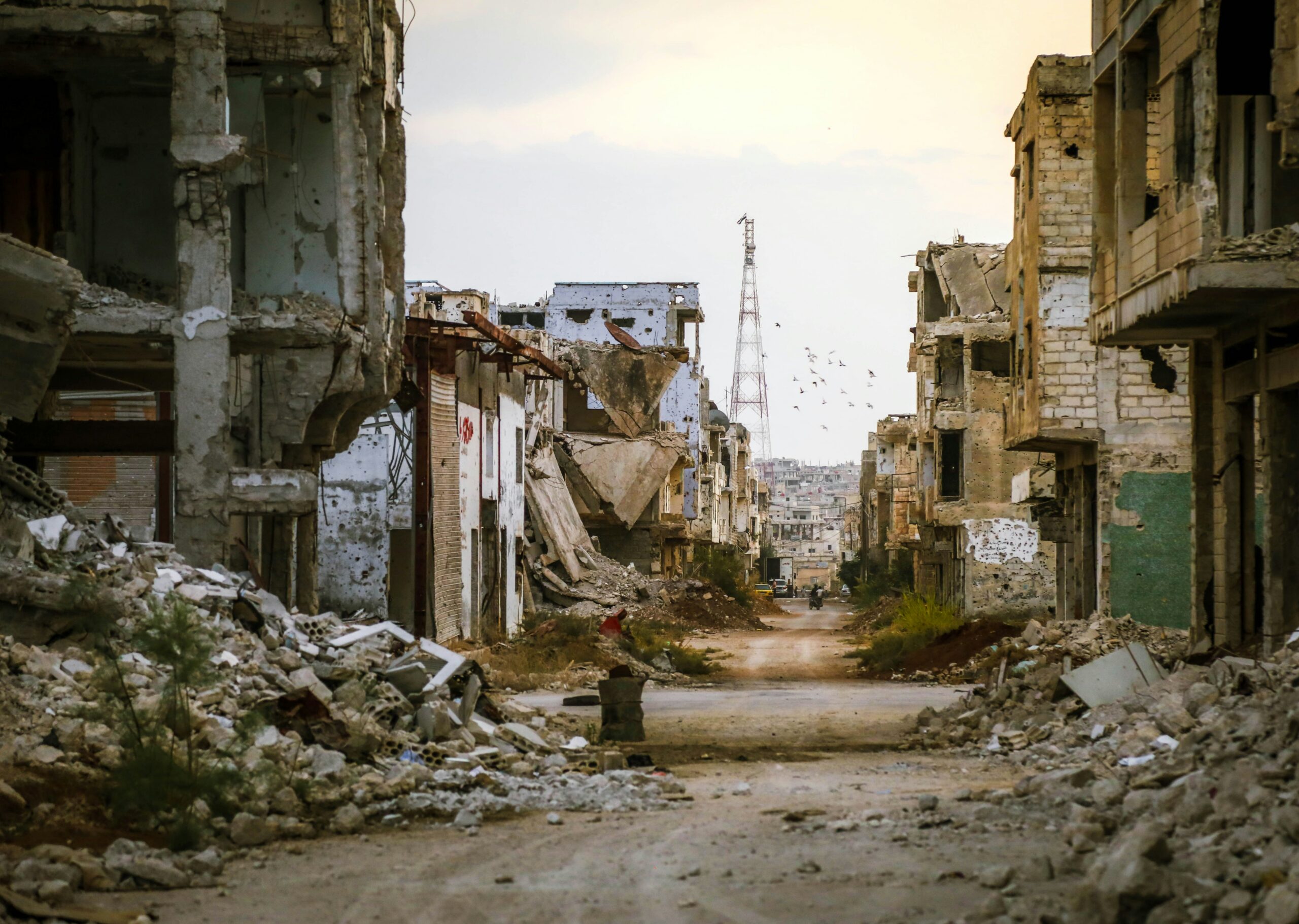 Photo by Mahmoud Sulaiman on Unsplash
 What We’re Reading
-
Opinion | In a Small Iowa Town, a Solution to a National Crisis – The New York Times
-
Climate change is already showing up in the cost of living – Los Angeles Times
-
From Hormuz to Lebanon, crisis reverberates through trade routes, upending humanitarian networks – UN News
A moment of hope… The Nivishe Foundation received $50,000 from CDP’s Sudan Humanitarian Crisis Recovery Fund to strengthen community-based mental health and psychosocial support through Emergency Response Rooms (ERRs). This grant will be used to train frontline volunteers in Psychological First Aid, establish peer support groups and provide trauma-informed counseling for responders.
The initiative will expand access to culturally grounded mental health support, reduce distress among conflict-affected populations, and strengthen the capacity and resilience of community-led response systems across Sudan.

Gina DeLuca
Content Development Associate