
What we’re watching: Weekly disaster update, September 21, 2026
Some disasters make headlines; others do not. Here at the Center for Disaster Philanthropy (CDP), we monitor the status of disasters worldwide and compile a list of the ones we’re tracking weekly.
Here’s what we’re watching for the week of Sept. 21, 2026.
New or Emerging Disasters
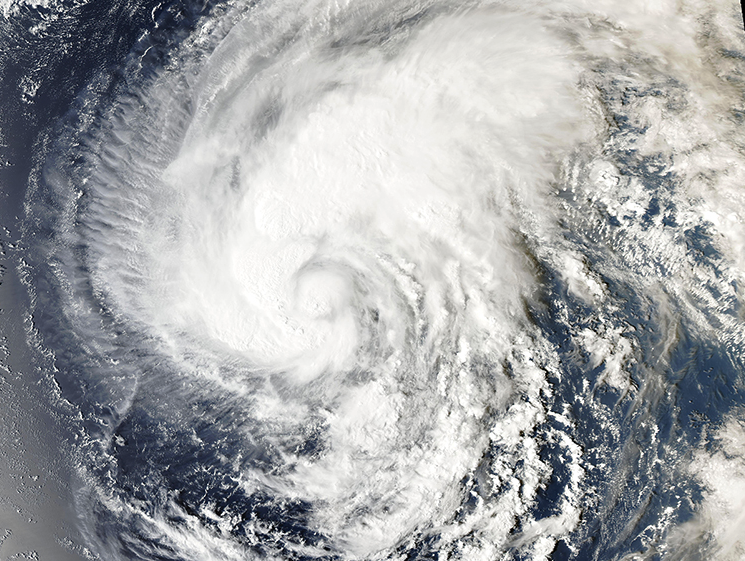
Typhoon Dujuan – Japan: On Monday, Sept. 21, more than 1.9 million people were under evacuation orders after record-breaking rainfall across the east coast of Japan. The intensity of the typhoon has been exacerbated by the ongoing super El Niño, which is causing ocean temperatures to rise.
More than 50,000 households have lost power as a result of sustained rain and winds reaching over 80 mph. The extent of the damage remains to be seen once the rainfall ends.
Flooding – Vietnam: On Friday, Sept. 18, following several days of heavy rain, authorities reported that more than 16,000 homes have been affected by flooding and landslides across northern and central Vietnam. So far, at least four people have died as a result of the heavy rains, and approximately 24,475 acres of agricultural land have been submerged or damaged.
Vietnam is especially prone to flooding and is widely considered to be one of the world’s most climate-vulnerable countries. Experts have been investigating new ways to manage flooding.
Previous/Ongoing Disasters
Earthquakes – Venezuela: On June 24, two catastrophic earthquakes struck Venezuela, causing massive damage and thousands of deaths. The government has recorded 6,509 fatalities and more than 226,696 hospitalizations after the quakes. However, government officials have not updated the number of those missing, which stands at 157 people, since the day after the disaster.
Following a post-disaster needs assessment presented on Tuesday, Sept. 15, the UN estimated that Venezuela will need $21 billion to recover from the June earthquakes, which caused $14.8 billion in damage and losses. The country has now moved from rescue to the early stages of recovery, which needs to address displacement, subsequent health impacts, reconstruction and income recovery, among other considerations.
Complex Humanitarian Emergencies – Horn of Africa (Somalia)
Many places worldwide are experiencing conflict, climate change, drought, famine, economic challenges and other conditions which, when combined, create complex humanitarian emergencies (CHEs). CDP spotlights one CHE each week to spread awareness and develop a philanthropic response.
Somalia is facing one of its most severe humanitarian emergencies in years, driven by prolonged drought, armed conflict, mass displacement, disease outbreaks and a sharp drop in international funding. Furthermore, due to the effects of El Niño, Somalia is in a critical preparedness window before a likely high-impact October-December rainy and flood season. Funders have an opportunity to consider anticipatory action, flood preparedness, local response capacity, protection of vulnerable and displaced groups, and other strategies to act ahead of this potential exacerbation of an existing disaster.
Key facts:
- 2.6 million people will be at immediate risk of severe flooding if El Niño combines with a positive Indian Ocean Dipole, as is currently projected by the International Rescue Committee’s models.
- Roughly 30% of Somalis face acute hunger, including 2 million people who are at risk of famine.
- Food prices have surged by as much as 70% in some areas, worsened by global economic shocks linked to conflict in the Middle East.
- In February 2026, drought-driven displacement escalated sharply, with nearly 80,000 people newly displaced across the Mudug and Banadir regions.
- More than half of the 300,000 people newly displaced between February and September 2026 have fled due to conflict and insecurity. Additionally, authorities carried out waves of forced evictions in Mogadishu, including displaced people already settled in camps.
- Sustained urban conflict in Mogadishu risks accelerating displacement, disrupting aid delivery and deepening food insecurity among 6 million people already experiencing crisis levels of hunger or above.
- Al-Shabaab activity and interclan clashes over land, water and political influence continue to drive localized violence, displacement and access constraints.
- Water scarcity and displacement are fueling cholera and other disease outbreaks, disproportionately affecting unvaccinated children, while an under-resourced health system struggles to treat malnourished children and pregnant women.
Humanitarian partners have estimated that they need USD $852 million to carry out the necessary humanitarian work in Somalia this year. This amount is a 40% reduction from the funding requirement in 2025. Critically, this reflects a narrower scope under severe funding constraints, rather than reduced need. A study estimated that roughly 71,000 excess deaths related to drought occurred in Somalia between 2022 and 2024, underscoring the human cost of underfunded responses.
What We’re Reading
-
Six Strangers Connected By Disaster – The New York Times
-
This El Niño Has Reached ‘Super’ Status. Here’s What That Means – CNET
-
What 13 minutes in Nepal can teach us about acting before disaster strikes – The New Humanitarian
A moment of hope…At least 540,000 children [paywall] returned to school in Gaza on Saturday, Sept. 19. This is many children’s first time receiving in-person instruction in three years, and students have expressed their happiness at this return. This is a significant milestone for students, educators and the Ministry of Education who have been working with local and international organizations to set up temporary schools to facilitate a return to learning.

Nicol La Cumbre-Gibbs
Education Initiatives Manager