Recovery isn’t just rebuilding homes — it’s remembering people
As 2025 draws to a close, communities across the Midwest continue to rebuild after a series of severe storms, tornadoes and floods that struck from 2022 through 2025. While the headlines have faded, the work of recovery continues quietly and determinedly across both rural towns and urban neighborhoods alike.
From Missouri’s spring 2025 tornadoes to Minnesota’s June 2024 flooding and the 2024 and 2025 storms in Nebraska and Iowa, families are still repairing homes, restoring livelihoods and reclaiming stability. The needs remain significant, but so does the resilience of those leading recovery on the ground.
More than $577K in grants awarded to support Midwest recovery
Center for Disaster Philanthropy is honored to announce this year’s round of grants from the Midwest Early Recovery Fund, awarding $577,242 across 10 organizations working tirelessly to support long-term recovery in their communities.
These grants address the persistent needs of impacted families, including disaster case management, mental health and emotional wellness, housing repair and rebuilding, and recovery coordination. The organizations funded this year are trusted local partners that ensure survivors in both small towns and urban neighborhoods have equitable access to resources.
2025 Midwest Early Recovery Fund grants
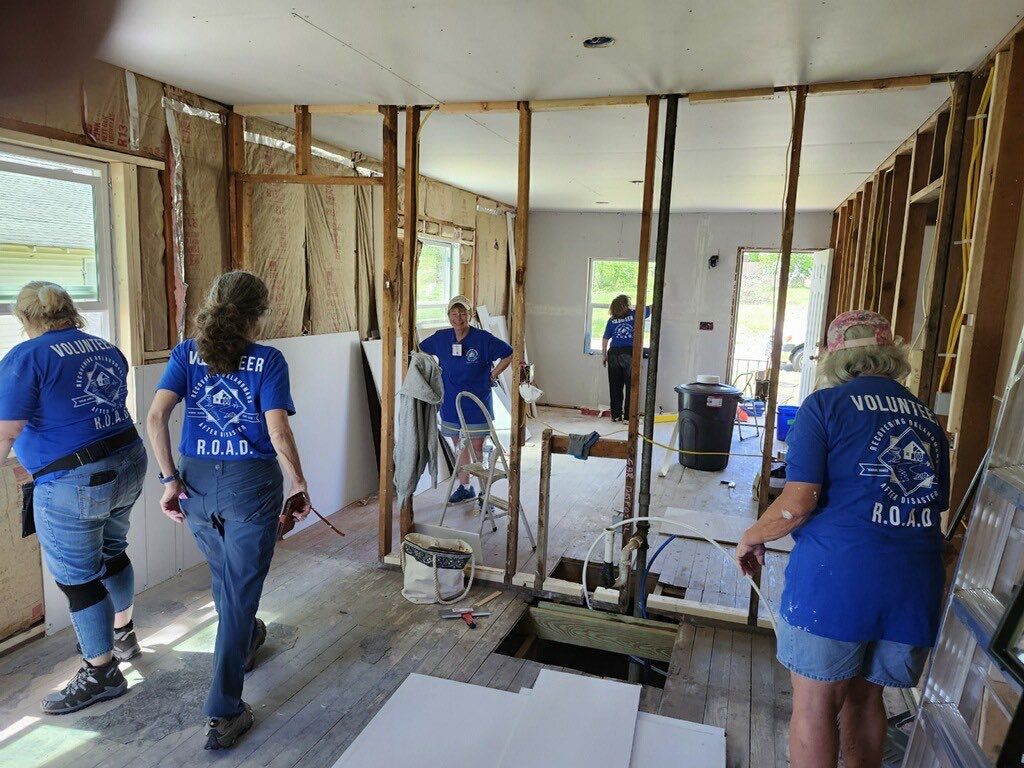
- Recovering Oklahomans After Disaster (ROAD) received $75,000 to complete critical home repairs for survivors from 2022 and 2023 disasters in Eastern Oklahoma. Using a shared-cost labor model, SBP AmeriCorps support and an upgraded DIRRT database, ROAD will provide safe, stable housing while promoting equitable recovery.
- Minnesota Seeds of Justice was awarded $103,592 from the Midwest Early Recovery Fund, along with $100,000 from our Disaster Recovery Fund, to provide recovery coordination to families affected by the June 2024 flooding in Worthington, Minnesota.
- Greater Greenfield Community Foundation received $104,192 to continue its work in Greenfield, Iowa, in response to the May 2024 tornado. This grant supports a disaster case manager who will transition into a recovery coordinator role to focus on housing, infrastructure, cleanup and serving as a liaison for residents navigating FEMA, SBA and insurance challenges.
- Catholic Charities of St. Louis was awarded $44,500 to retain a disaster case manager assisting families impacted by the Spring 2025 Missouri tornadoes. Serving about 200 people across six counties, the program connects survivors to resources, addresses insurance and housing needs, and strengthens local recovery efforts.
- East Missouri Action Agency received $82,500 to support long-term recovery coordination in Southern Missouri following the Spring 2025 storms. The funding supports a disaster case manager to coordinate services, connect families to resources and prioritize rural, low-income and marginalized households.
- United Way of Greater St. Louis was awarded $82,500 to support long-term recovery coordination in St. Louis city and county following the May 2025 tornado. The funding provides project management and administrative support to strengthen the local COAD, build partner capacity and ensure effective recovery planning.
- Northwest Minnesota Foundation received $90,000 to support recovery coordination and disaster case management in response to the June 21 wind storm. The funding strengthens long-term recovery efforts by connecting households to resources and fostering regional recovery leadership.
- Crisis Care Ministries was awarded an additional $10,000 for their Trauma-Informed Faith Communities Project through April 2026. The funds cover technology for the Spring 2026 Disaster Emotional Spiritual Care Academy and expand training and webinars for faith communities and disaster case managers.
- Heartland Hope Mission received $38,651 to expand disaster case management services in Blair, Nebraska, following severe straight-line winds. The project adds staff hours, accounting support and new outreach partnerships to reach Spanish-speaking and immigrant households, ensuring equitable recovery for all.
- Spencer Chamber of Commerce received an additional $55,000 from the Midwest Early Recovery Fund and Disaster Recovery Fund to strengthen the capacity of the Clay County Long Term Recovery Group. This funding supports disaster case management and expands training for their team.
Standing with communities long after the headlines fade
During a recent visit to Missouri, I met with local partners who discussed the challenge of feeling forgotten once national attention fades. It was an important reminder that is central to our mission of mobilizing philanthropy so that recovery continues long after the headlines disappear.
Across the Midwest, our grantee partners are rebuilding more than homes — they’re restoring connection, belonging and hope. These efforts demonstrate what it means to truly remember people in recovery.
CDP remains committed to uplifting local leadership and ensuring an equitable recovery in communities that are too often overlooked. We are proud to stand with these organizations and the communities they serve by helping families find stability, resilience and the reassurance that they have not been forgotten.

Juanicia Crump
Domestic Funds Program Manager