
What funders should know about recovery in Hawaii, Pacific Islands
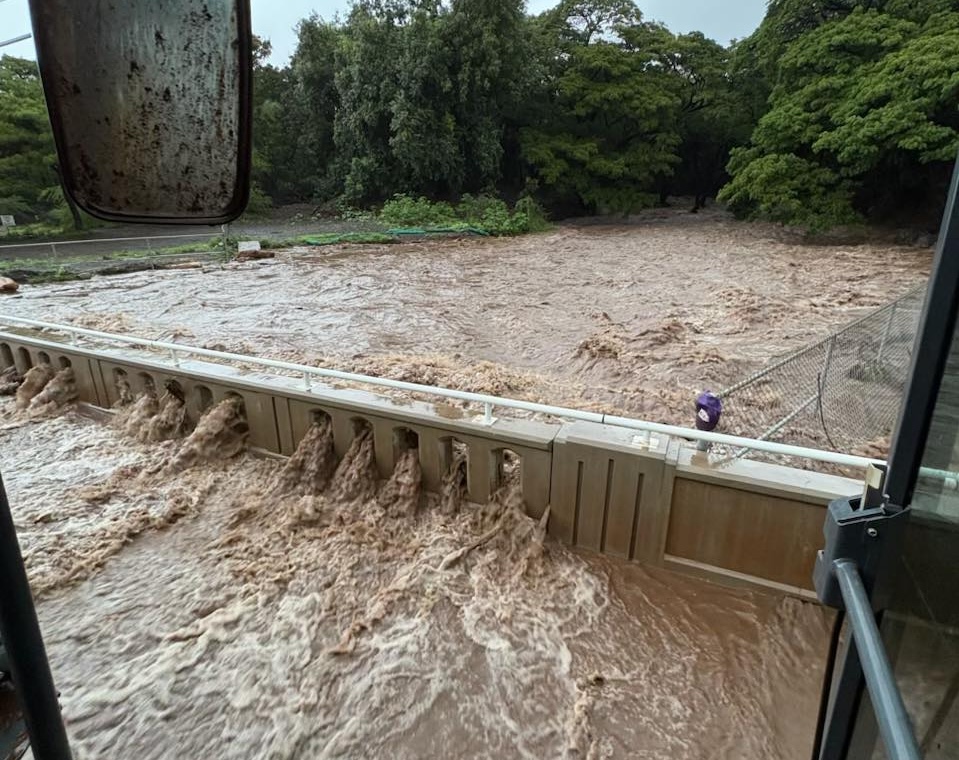
April has not been an easy month for Pacific Island communities. While Hawaii recovers from a series of unusually devastating Kona low storms, twin cyclones wrought destruction in other Pacific regions. At least 22 people in Papua New Guinea lost their lives to Cyclone Maila, and Super Typhoon Sinlaku flooded homes and left parts of the Northern Mariana Islands without power for what could be weeks.
These spring disasters are affecting islands, where distance and infrastructure constraints make recovery uniquely challenging. And all are in a region where Native and Indigenous communities tend to face even more recovery barriers. Many live in substandard housing, leaving them more vulnerable to severe damage or the total destruction of their family homes.
Although these disasters were caused by three separate weather systems, they were all part of what climate scientists predict could become a “Super El Niño” weather pattern. A Super El Niño is expected to bring more frequent and more intense disasters to Asia and the Pacific Islands. The road to recovery for affected communities will be long and require sustained investment to ensure the most vulnerable aren’t left behind.
Compounding disasters
To make matters worse, many Pacific Island communities are still recovering from previous disasters. On Maui, where CDP has developed deep relationships over the past three years, residents are still recovering from the catastrophic 2023 Lahaina and Kula fires.
When disasters layer on top of each other, recovery challenges increase. Displaced survivors are displaced again. People may lose homes for a second time in just a few years. Livelihoods and economies that were beginning to be rebuilt face major setbacks, and recovery-related construction projects are delayed. Woven through all of this is heartbreak: People wake up every day and face the reality that they have no choice but to start the recovery process all over again.
How to help
With this knowledge and insights gained from our Hawaii Wildfires Recovery Fund in mind, we’ve compiled a list of recovery issue areas funders should consider supporting to make a lasting impact on communities most in need in Hawaii and beyond:
- Legal services and insurance support. “Our [building’s] long-term damage was minimal compared to a lot of others! Miracle. [But] many business owners have some legal fights ahead,” wrote Jennifer Gladwin of Kelea Foundation, a CDP Hawaii Wildfires Recovery Fund grantee partner, in an email to CDP staff checking in after the first Kona storm in early March. Low- to-moderate income small business owners who rent retail or office space and underinsured property owners whohave to manage flood repairs will need help navigating their options.
Furthermore, people on Maui are continuing to face other disaster legal questions. Amelia Hoppe of Emergency Legal Responders, who is helping Hawaii residents navigate vehicle-loss insurance claims in the wake of the Kona low flooding, recently told CDP staff, “I’ve been getting recurring questions about how the wildfire settlement payments may affect people receiving SSI or Medicaid. These eligibility risks can shape how survivors actually experience settlement support.”
- Emotional and mental wellness, resilience resources for “the helpers.” “We are beyond grateful to have no significant injuries or loss of life across the state, and we now know really well how to respond to disasters! Our community has activated all the systems that we had in place from the fires and we are in ‘go’ mode,” wrote Gladwin. Still, “Now comes the disaster recovery on top of the disaster recovery. It’s a bit of an extra struggle on top of the heads of people who are exhausted.”
First and second responders, organizational staff, and even place-based funder staff are navigating their own recoveries while participating in emotionally-heavy conversations around community recovery. They are also frequently interacting with neighbors and fellow survivors who find themselves in unimaginable situations as a result of the disasters. Resources that help them cope with secondary trauma and avoid burnout are critical.
- Cash assistance for displaced residents. Survivors have different needs in the months following a disaster, and many have lost wages at a time when their financial needs are increasing. Cash assistance allows households to make the spending choices they need to stabilize their circumstances and replace necessary belongings as they work toward recovery.
Federal disaster declarations sometimes open up cash assistance programs from FEMA, known as individual assistance, or IA, but many of those funds are restricted. And sometimes IA is not deployed at all. Philanthropy can step in more nimbly, supporting local organizations that provide more flexible emergency cash to low- to-moderate income survivors.
- Programs that include Hawaii residents experiencing homelessness. Hawaii has the highest per capita rate of residents experiencing homelessness or unstable housing conditions in the U.S., and that was true before any recent disaster. Too often, disaster recovery programs focus only on returning previously housed residents to stable housing, but disasters make life harder for people who were already struggling to find places to spend their days and nights.
Native Hawaiians are more likely to experience homelessness than their non-Native neighbors. Funders should support programs that address the needs of people experiencing homelessness.
- Housing. Affordable housing is in short supply across all of the flood-affected islands. On Maui, it was already difficult for fire survivors to find places to live. Flood damage will only make it tougher.
Funders should consider supporting community-led housing projects, like community land trusts, that keep homes affordable and keep property in the hands of Hawaiians, not investment-focused developers who intend to attract only the wealthiest buyers.
CDP will share emerging recovery needs specific to the islands impacted by Cyclone Maila and Super Typhoon Sinlaku as we learn more from community leaders on those islands.
Natalie Thielen Helper of Civil Beat, a CDP Hawaii Wildfires Recovery Fund grantee partner, said it best: “As always, disaster recovery is an issue of equity. The two most impacted towns [on Oʻahu] both have steep economic inequality and a roughly 10% poverty rate. Both towns are majority-people of color. The area has many small farmers, most of whom are underinsured and may now face bankruptcy.”
Equitable recovery will require targeting resources to ensure that the people who start furthest from the finish line can rebuild their lives.
If CDP can help you determine how you can best support the people recovering from any recent Pacific Island disasters, please e-mail info@disasterphilanthropy.org.
Laura Lynn Taylor
Domestic Funds Program Manager