
What we’re watching: Weekly disaster update, June 1
Some disasters make headlines; others do not. Here at the Center for Disaster Philanthropy (CDP), we monitor the status of disasters worldwide and compile a list of the ones we’re tracking weekly.
Here’s what we’re watching for the week of June 1, 2026.
New or Emerging Disasters
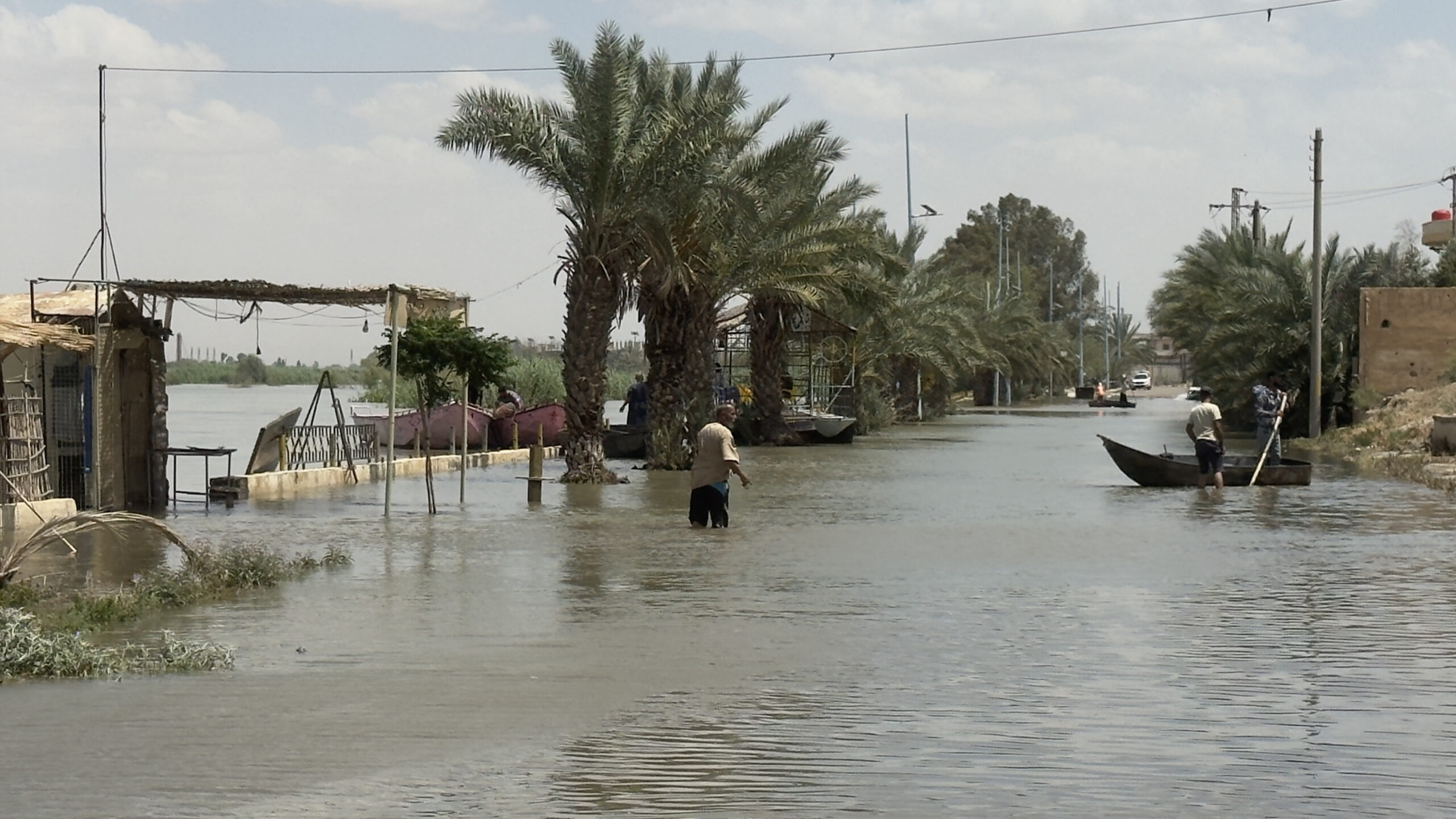
Flooding – Syria: Heavy rainfall in eastern Syria caused the worst flooding in decades following a severe and prolonged drought.
Officials in Turkey opened the Euphrates dam to release pressure, causing massive flooding of the Euphrates River, affecting 2,400 families in Syria and inundating informal IDP camps.
Businesses near the river and agricultural land were also flooded, and many homes and bridges were damaged or destroyed. The damage to farmland comes at a critical time, during the height of wheat and barley season.
Extreme Heat – Europe: The U.K. recorded its hottest day in history twice last week during a severe heat wave in Western and Central Europe. At least 15 people died in the U.K. and seven people in France, many from seeking relief from the heat in open water. Only around 5% of homes in the U.K. have air conditioning.
Previous/Ongoing Disasters
Ebola – DRC and Uganda: On Sunday, May 31 in DRC, four nurses were released from the hospital after recovering from Ebola, and one laboratory worker was discharged last week.
According to DRC’s Institute of Public Health, “This encouraging milestone bears witness to the effectiveness of field interventions: early detection, medical care, contact tracing and community engagement.”
Many of the 246 deaths from the current outbreak have been frontline workers.
Complex Humanitarian Emergencies – The Sahel: Burkina Faso
Many places worldwide are experiencing conflict, climate change, drought, famine, economic challenges and other conditions which, when combined, create complex humanitarian emergencies (CHEs). CDP spotlights one CHE each week to spread awareness and develop a philanthropic response.
The humanitarian emergency in Burkina Faso is largely driven by armed conflict, causing community blockades, reduced or no access to healthcare, mass displacement and hunger. Groups linked to ISIS and al-Qaeda have expanded control across the Sahel, Est, Centre-Nord and Boucle du Mouhoun regions, forcing 2.5 million people from their homes.
Key facts:
- Many displaced families are sheltering in overcrowded urban centers without adequate sanitation, health care or protection services.
- In Djibo, Kaya and surrounding towns, displaced women report sexual violence, exploitation and survival sex linked to extreme poverty and overcrowding.
- Adolescent girls are increasingly vulnerable to forced marriage and trafficking after families lose their livelihoods or become separated during displacement.
- More than 5,300 schools remain closed due to insecurity, leaving over 818,000 children without access to formal education.
- Armed groups have targeted teachers, occupied schools and threatened families that attempt to send children to class.
- Hundreds of health facilities are either closed or operating at minimal capacity due to insecurity and staff displacement.
- In parts of the Sahel region, pregnant women must travel long distances through insecure territories to reach emergency obstetric care.
- Vaccination campaigns have been disrupted, increasing the risk of measles and other preventable disease outbreaks among displaced children.
- In eastern Burkina Faso, erratic rainfall and land degradation are intensifying tensions over water and grazing land, particularly affecting Fulani pastoralist communities that face both insecurity and discrimination.
Despite security incidents remaining high in Burkina Faso, the first four months of 2026 saw modest improvements, including a 4% decline in incidents, a 45% reduction in conflict-related deaths, and significant decreases in security alerts and newly-displaced populations compared with previous years. Improved conditions encourage people to return, which may support greater participation in agricultural production during the current season.
What We’re Reading
- Climate Change Is Here—and America’s most marginalized communities are on the front lines – Center for American Progress
- War and displacement in Gaza are fueling a rise in early marriage – Associated Press
- Africa has been managing climate volatility for decades: What the rest of the world can learn from it – The Conversation
A moment of hope… Garden plots beside displacement camps in Burkina Faso give women the dignity of providing for their own families and a chance to heal after the trauma of displacement.
In Fada N’Gourma, eastern Burkina Faso, displaced women and members of host communities grow vegetables for both household consumption and income at government-developed irrigated farming sites, using new infrastructure such as water systems, storage basins and fenced plots.
**Pathway for Protection Consortium members: Olive Branch, El Furat Social Assistance and Solidarity Association, Space of Peace, Salam Humanitarian Foundation, Freedom Jasmine Organization, SARD

Gina DeLuca
Content Development Associate