
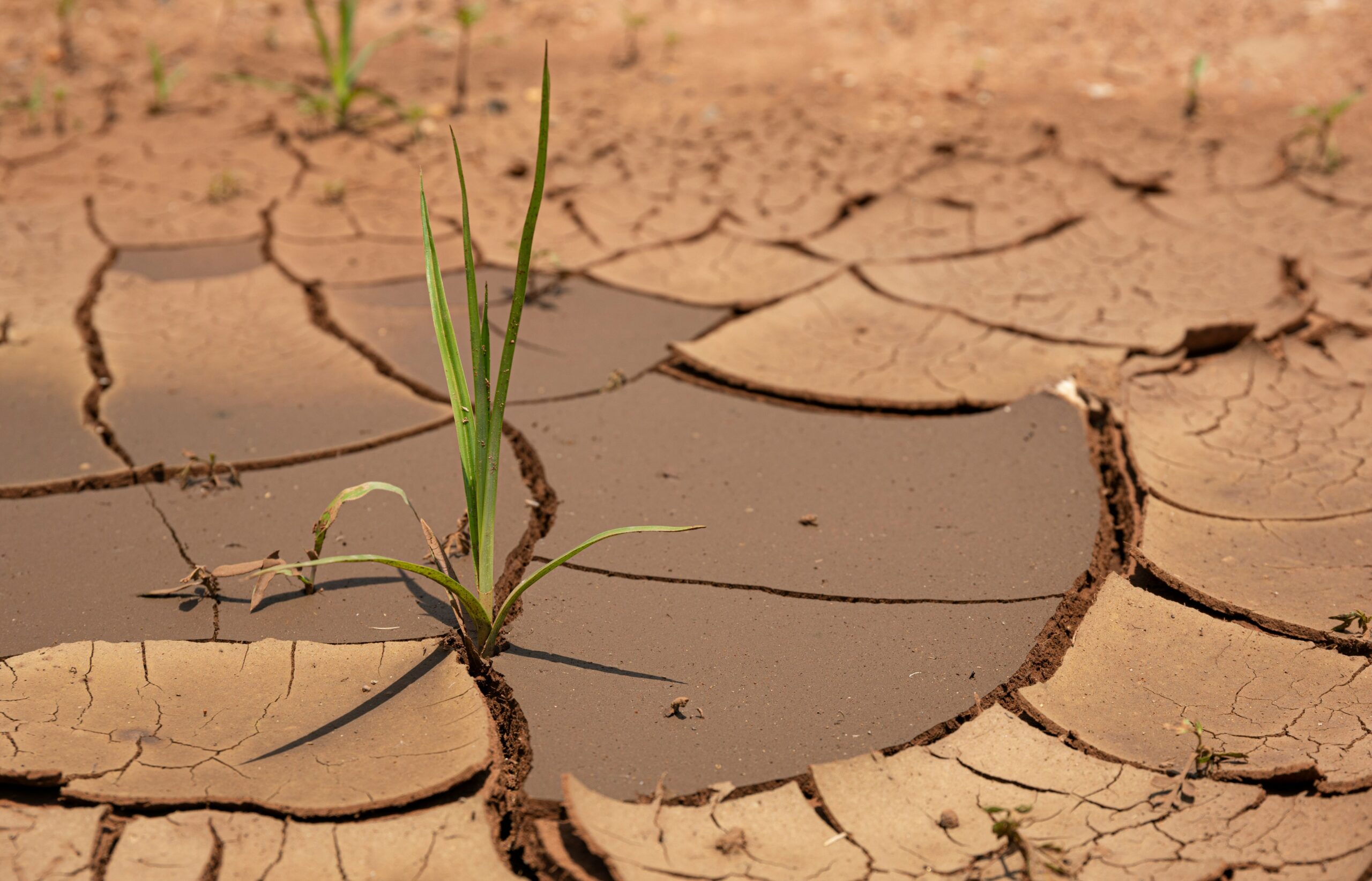
Drought
Experts describe drought as a slow-moving global catastrophe. Recent years have seen some of the most widespread and damaging droughts in recorded history, driven by climate change.
What is drought?
- Until recently, a drought was defined as a prolonged period with less-than-average amounts of rain or snow in a particular region.*
- New research shows that a region can experience drought if temperatures are high enough, even without reduced rainfall.**
- Drought can both cause and exacerbate humanitarian crises and subsequent disasters.***
Whether from a lack of rainfall and/or extreme temperatures, drought sucks moisture from the ground and air, leading to water shortages. Water shortages lead to crop failures, which in turn increase the risk of hunger, as well as economic and trade losses.
Furthermore, when it rains, dangerous floods are more likely in drought-affected areas because the dry ground cannot absorb the influx of water, causing further devastation.
Between 2015 and 2019, 250 million acres of healthy land were lost each year due to drought and desertification, destabilizing markets, communities and entire ecosystems.

Where does drought occur?
- The past two decades have been the driest in the American Southwest in at least 1,200 years.*
- In the Amazon rainforest, deforestation accounts for 75% of reduced rainfall.**
- The most severe droughts typically occur 30 degrees north and south of the equator, as high pressure in these areas results in minimal rainfall.***
Drought can happen anywhere, and its effects are devastating. For example:
- In 2025, over 90 million people in Africa faced acute hunger reaching catastrophic levels, with drought causing crop failures, livestock deaths and energy crises.
- In 2023, Spain’s olive crop was halved, causing olive oil prices to skyrocket around the world.
- Between 2022 and 2024, Latin America’s Amazon basin experienced drought so severe that it threatened its role as a carbon sink.
- Southeast Asia’s droughts have strained food production, driving up global prices for staples like rice, coffee and sugar.
Deforestation causes drought because reduced vegetation means there is less moisture circulating in the atmosphere, resulting in less rainfall. Additionally, removing trees means there is less water stored in the soil.


- 1,600+ estimated number of sinkholes in Türkiye due to groundwater depletion*
- 21 hours/day power outages in Zambia
- 37% decrease in daily Panama Canal transits during drought
When does drought occur?
- Drought usually occurs during a region’s dry season, but can persist for years throughout all seasons.*
- The Western U.S. has entered a new era** in which drought intensity and size are driven more by extreme heat than by a lack of precipitation.
- Recent research found that since 2000, evaporative demand, or the thirst of the atmosphere, has been a more significant cause of drought than reduced precipitation, upending what scientists previously thought.***
The current megadrought in California and the Colorado basin states has lasted 25 years, increasing the severity of wildfires in the American Southwest.
According to Jeremy Klavans of CU Boulder’s Department of Atmospheric and Oceanic Sciences, “…The drought and ocean patterns we’re seeing today are not just natural fluctuations—they’re largely driven by human activity.”
In 2025, a study from the University of Texas at Austin predicted that this drought, which spans from California to Mexico, may persist for several more decades.
UNCCD Executive Secretary Ibrahim Thiaw
“Drought is a silent killer. It creeps in, drains resources, and devastates lives in slow motion. Its scars run deep.”***

Who is affected by drought and how?
- At least 72% of women and 9% of girls are burdened with collecting water, expending as much as 40% of their caloric intake carrying it.*
- Drought increases the risk of cholera outbreaks, acute malnutrition and dehydration due to exposure to contaminated water.**
- Drought causes an average of $11 billion USD in damage every year.***
Second only to flooding, drought inflicts the greatest amount of suffering on women and girls in developing countries, negatively affecting their education, health, sanitation and safety. In Eastern Africa, child marriages more than doubled during drought as families sought dowries to survive. In Zimbabwe, entire school districts saw mass dropouts due to hunger, rising costs and sanitation issues for girls.
“Girls pulled from school and forced into marriage, hospitals going dark, and families digging holes in dry riverbeds just to find contaminated water — these are signs of severe crisis,” says Paula Guastello, National Drought Mitigation Center’s drought impacts researcher.

How can funders help?
Support efforts to:
- Strengthen early warning systems and real-time drought impact monitoring.*
- Implement nature-based solutions such as watershed restoration and Indigenous crop use.**
- Develop more resilient infrastructure, such as off-grid energy and alternative water supply systems.***
“The evidence is clear,” said Andrea Meza Murillo, Deputy Executive Secretary of the United Nations Convention to Combat Desertification (UNCCD). “We must urgently invest in sustainable land and water management, nature-based solutions, adapted crops, and integrated public policies to build our resilience to drought–or face increasing economic shocks, instability and forced migration.”
Funders can also:
- Advocate for and invest in drought planning. Planning for drought is crucial, and effective solutions demonstrate the return on investment.
- Support proactive interventions. Don’t just react when disaster strikes; invest in early warning systems that combine Indigenous knowledge and forecasting, restore and protect landscapes, and adopt proactive drought policies that support affected communities. Climate adaptation must address atmospheric evaporative demand-driven drying alongside rainfall deficits.
- Educate young people. Youth are key stakeholders in climate action. Initiatives like the Alliance for Climate Education and the National Wildlife Federation’s Eco-Schools USA equip and empower young people fighting for their futures.
- Support integrated water resources management (IWRM). IWRM is “an approach to managing water that looks holistically at the planning and management of water supply, wastewater, and stormwater systems.” It is accepted internationally as a path forward for managing limited water resources and resolving conflicting demands.
- Fund initiatives that encourage efficient water use. Public education campaigns that encourage efficient water use are crucial. Programs that subsidize or fund native plants, efficient appliances and other water-saving investments can reduce costs, particularly for low-income communities.
Learn More
Additional resources
Sources
Overview
- * UNCCD
What is drought?
- * U.S. Geological Survey
- ** NOAA Research
- *** UN News
Where does drought occur?
Impact Highlight
- * UNCCD
When does drought occur?
- * National Environmental Satellite, Data, and Information Service
- ** NOAA Climate.gov
- *** UNCCD Executive Secretary Ibrahim Thiaw quote
Who is affected by drought and how?
How can funding help?
We welcome the republication of our content. Please credit the Center for Disaster Philanthropy
(Photo by Carlett Badenhorst on Unsplash)