Improving the integration and resiliency of Ukrainian refugees in Poland

Story by Ruja Entcheva

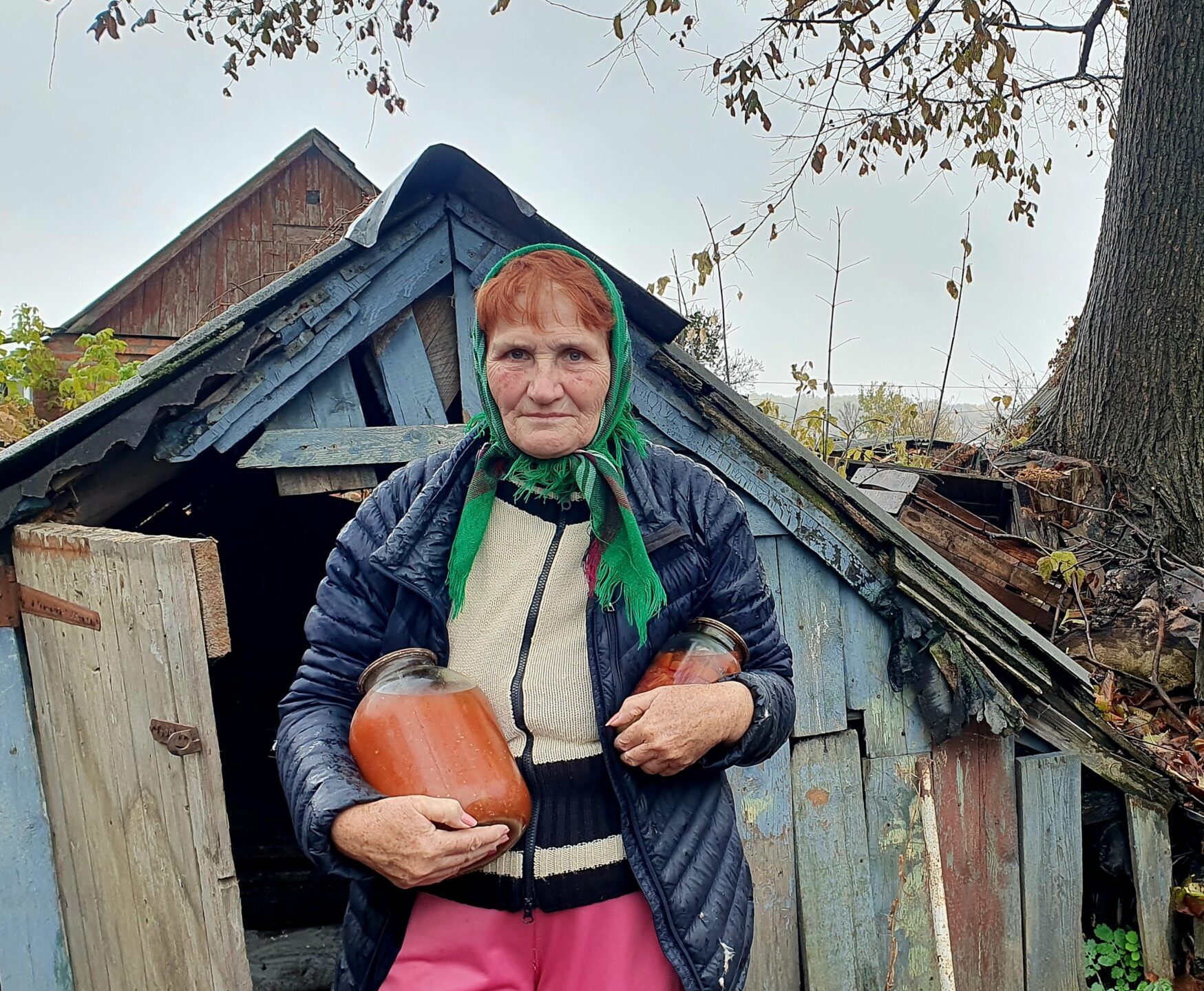
“Before the war, we were in a sense already prepared. Everyone was saying something was going to happen. So we had an emergency bag packed with some money and identification documents, and kept it next to the bed. And on the first morning at 4:30 a.m., I went into the kitchen and heard explosions. We live in the district of Kyiv near to Irpin and Vorzel, where Russian troops had already entered.

I went and woke my daughter, saying, ‘Wake up, it’s war.’

She said, ‘It’s impossible!’

And I said, ‘The war has started, we’ve got to leave.’

‘Where to?’

‘To Liza’, my granddaughter who lives in Warsaw.

The bags with some money and documents were already standing there, so we threw in whatever we could lay our hands on: some clothes and so on. We stuck it out for a day, but on the second morning, the apartment was shaking with explosions and a tank came into our district. I said, ‘We’ve got to leave. Because our child is there alone, and she’s terrified [knowing that] war has started in Kyiv, in Ukraine, and [her] mum and granny are there. We’ve got to go.’

When we left, we ran to the metro, but there were so many people. We were lucky because we saw a bus that said ‘Kyiv to Warsaw’ that just came out of nowhere. We ran for the bus and got on.

It took us almost 30 hours to get to Warsaw because there were rockets coming from Belarus while we were driving, so we laid on the floor. When the rockets stopped, we got back up and the bus kept moving.”

Olena is a Ukrainian refugee living in Poland. Like thousands of other refugees, Olena faced many challenges and needed support and resources to adjust to life in Poland and integrate into society.

In the aftermath of the full-scale invasion of Ukraine by Russia in February 2022, the Ukrainian House, an organization dedicated to supporting the Ukrainian community in Poland through information, educational and cultural activities, underwent a rapid transformation. It significantly expanded its activities to help thousands of war-displaced people. Unfortunately, by 2024, funding had largely dried up due to international cuts to humanitarian assistance.

In 2024, CDP awarded a grant from the CDP Ukraine Humanitarian Crisis Recovery Fund to Ukrainian House to increase and improve the participation, integration, and effective social and economic inclusion of Ukrainian refugees in society, better enabling them to reach their potential and counteract social exclusion and discrimination.

The grant from CDP came at a pivotal moment. It provided the Ukrainian House with much-needed resources to continue its work as a holistic support center for Ukrainians in Poland. From their support center in Warsaw, the Ukrainian House operates a consultation point and virtual infoline that offers tailored individual information, advice and assistance on a wide range of everyday issues Ukrainian refugees face.
The grant was used to finance key activities for refugees at a time of political, social and economic precarity: informational support via the consultation point and infoline, employment services, and Polish-language learning. The services offered by Ukrainian House were invaluable in maintaining stability for refugees, providing them with a place to turn and an institution on which they could rely for continued, personally tailored support.

“This organization has helped me immensely; it’s become a big part of my life. I signed up for Polish classes, and I started to make friends. If it wasn’t for this organization, it would have been a lot harder for me to live my life in Poland and to adapt to this country,” shared Olena.

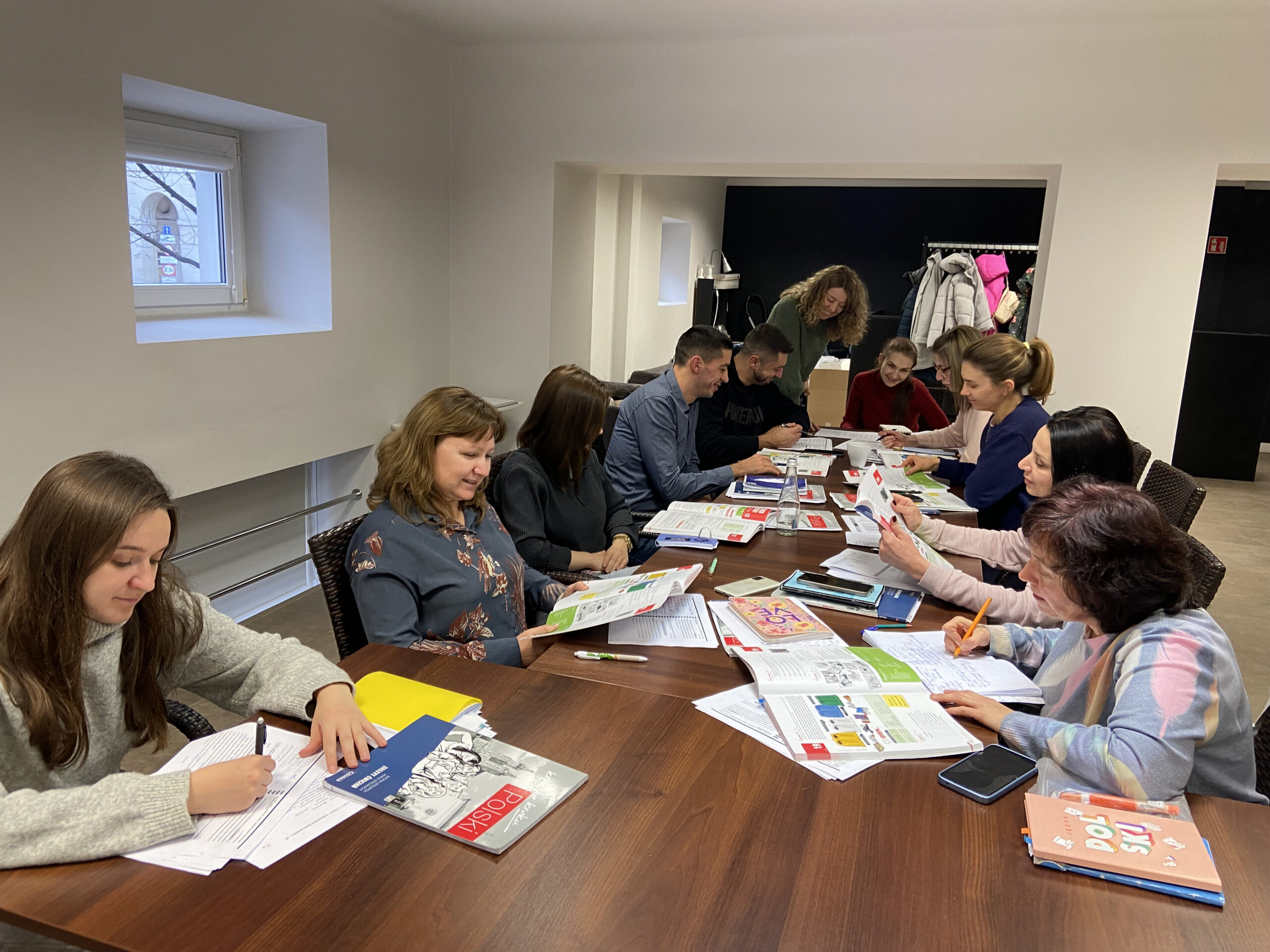
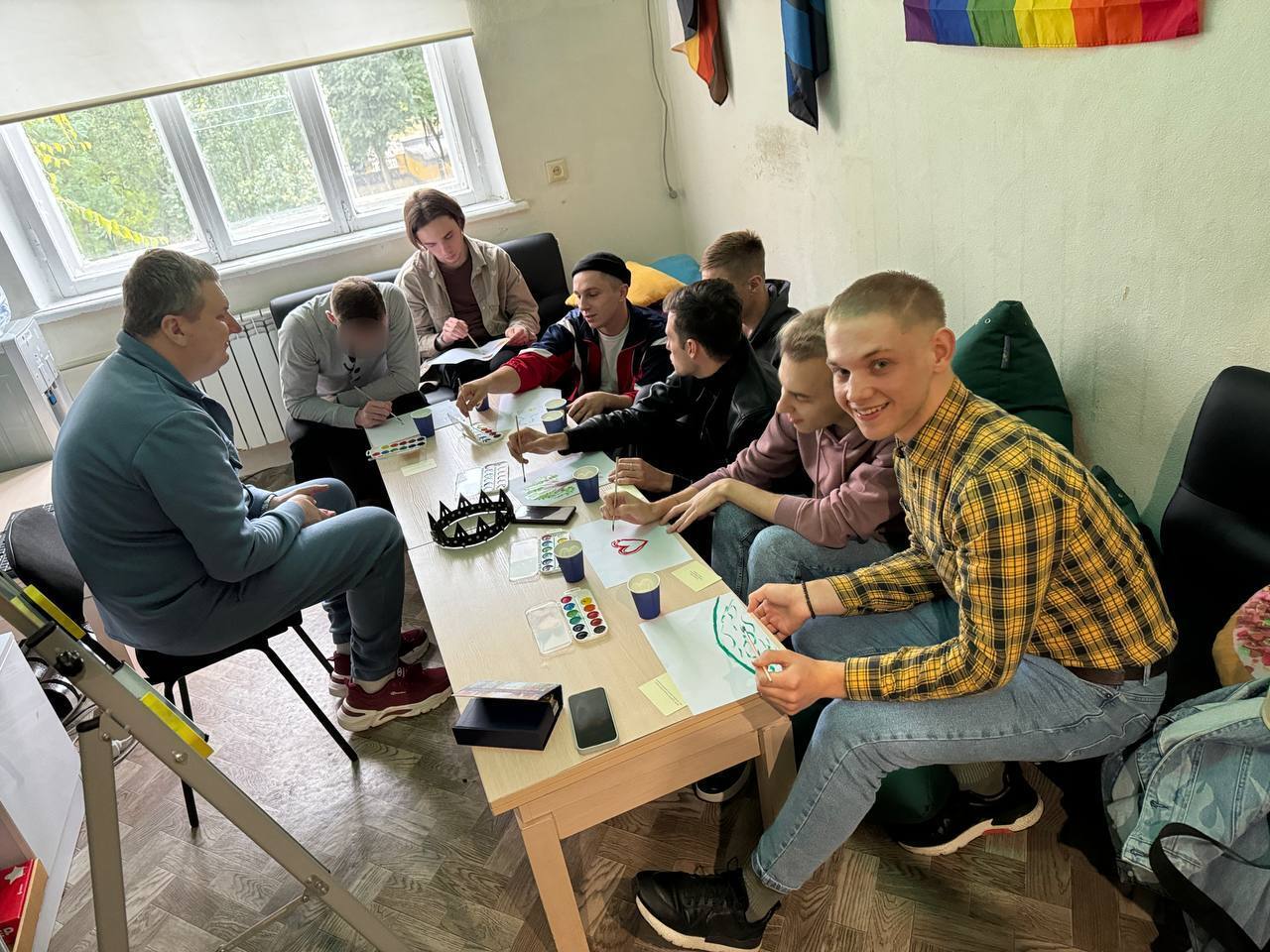
Participants in a 2024 Polish language course provided by Ukrainian House. Thanks to the financial support from CDP, about 528 people in 42 groups were able to improve their Polish language skills in 2024. Credit: Ukrainian House

The community-based nature of the support provided by the Ukrainian House, an organization founded by Ukrainians in Poland, is a key aspect of the foundation’s work because the support is rooted in a common understanding of the challenges that refugees face. Across all of their programming, the Ukrainian House is seeing an unexpected benefit of their work: creating a supportive environment where participants can be connected with each other, share common experiences and feel more secure navigating life in a new country.

Olena is just one of more than 150,000 displaced people Ukrainian House has helped since the start of the war. As the conflict continues, the consultation point and infoline continue to receive an average of 1,000 calls per month, demonstrating the sustained and high demand for reliable and easily accessible advice and support, especially during a time of legislative changes. In response to this continued need and demand, CDP provided a second grant to the Ukrainian House in 2025 to support the consultation point and infoline in offering advice to 2,100 displaced Ukrainians and to provide in-depth caseworker support for 150 of those with complex needs.

CDP is proud to support Ukrainian House’s efforts to ensure the long-term integration and resiliency of Ukrainian refugees in Poland.

More Impact Stories

See All Impact Stories