Fund: Global Recovery Fund
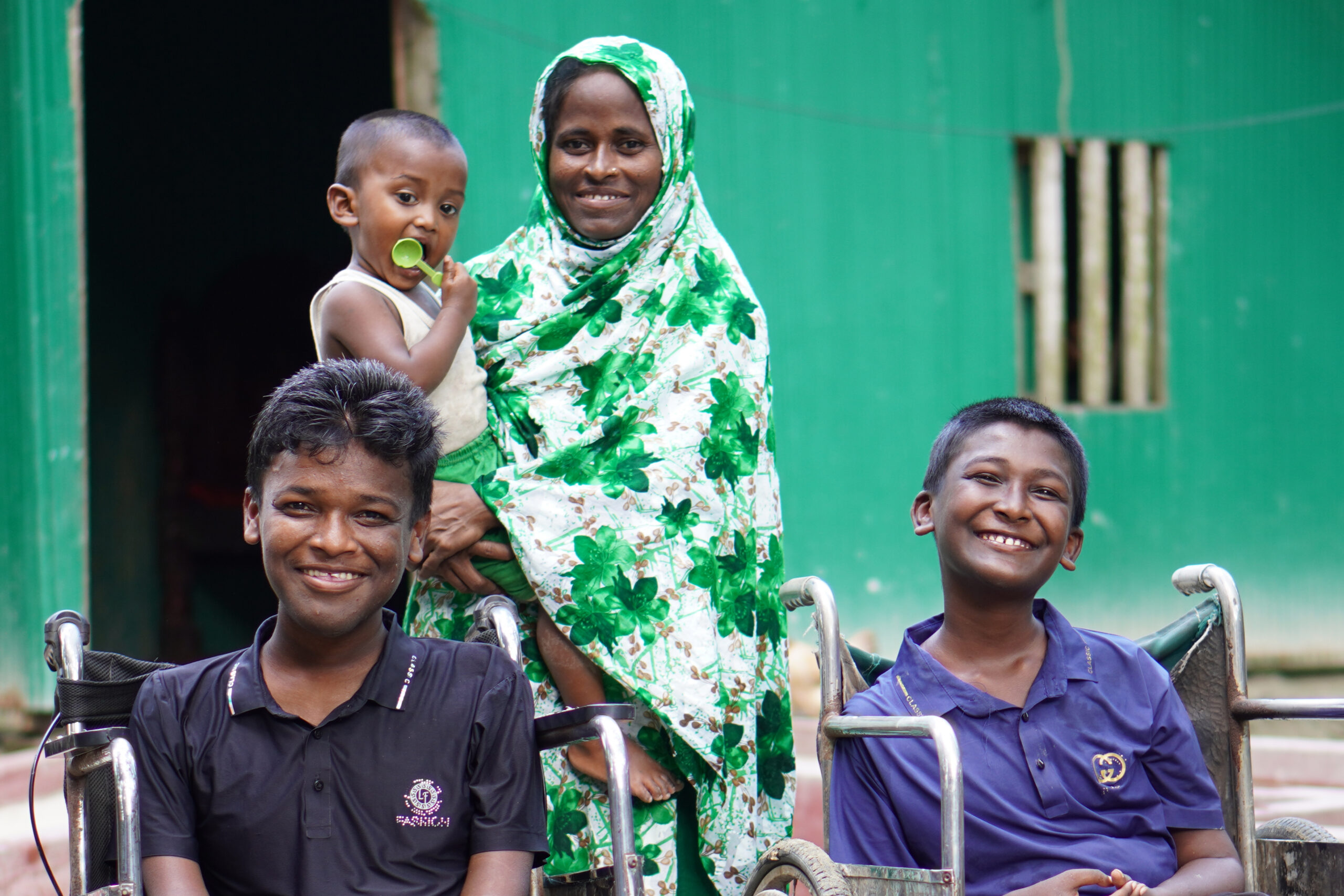
“I felt helpless watching them suffer,” recalled Johura, a mother of four in a remote village in Noakhali, Bangladesh, who lives with the daily reality of poverty and disability.
When floodwaters surrounded her home in 2024, Johura and her family were trapped for nearly a month. Three of her children live with disabilities—two use wheelchairs and one has a physical disability—and her husband’s irregular income as a day laborer barely covers the family’s basic needs.
Living without a water well, survival meant constant risk. Johura depended on neighbors for drinking water, and was often forced to leave her children alone to fetch water because she had no other choice. Her family used unsafe pond water for cooking and bathing, and their fragile mud latrine offered little safety or dignity.
Two years later, severe monsoon flooding has once again exposed communities to many of the same risks. Heavy rainfall beginning in early July 2026 triggered flash floods, waterlogging and landslides across southeastern and northeastern Bangladesh.
For persons with disabilities, a disaster can make already inaccessible services even harder to reach, increasing dependence on caregivers and exposure to heightened health and protection risks. Johura’s experience shows why recovery cannot simply replace what was lost. It must reduce the risks families will face when floods return.
In response to the 2024 South Asia floods, CDP awarded a grant to the Centre for Disability in Development (CDD) to provide disability inclusive recovery support and strengthen flood-affected communities’ resilience and well-being through community-based disaster risk reduction and preparedness. One activity supported by the grant was installing disaster-resilient accessible water and sanitation facilities for flood-affected communities, including persons with disabilities, to ensure access to safe water, hygiene and accessible sanitation facilities and prevent waterborne diseases. The facilities were designed to withstand flooding and promote hygiene and public health.
Through the Disability-Inclusive Flood Recovery in Bangladesh project, implemented with support from CDP, Johura’s home received an accessible tube-well, a type of water well that provides clean water from deep aquifers, and a latrine — both with ramps. For the first time, children in the village using wheelchairs could access water and sanitation facilities independently.
“Now life is so much easier,” Johura said, smiling with relief. “I can collect water at my doorstep, bathe my children and cook without fear.”
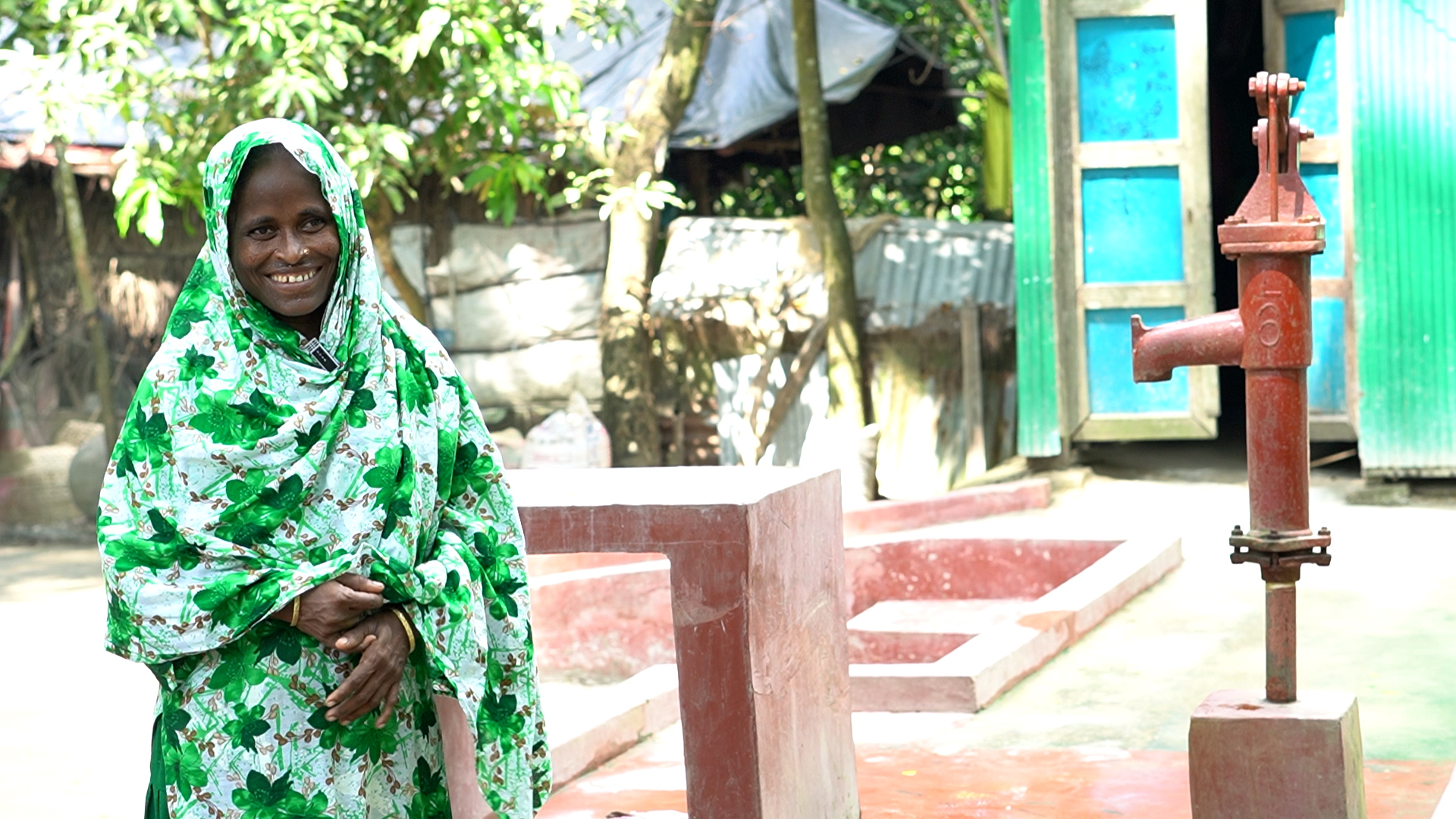
The facilities provided more than convenience; they restored safety, dignity and peace of mind.
Today, Johura raises ducks and chickens and shares care of a cow to support her family. Her strength remains unshaken. “I am thankful to everyone who made this possible,” she said softly. “If they ever come to my home, I will cook rice for them with my own hands.”
Across the project, CDD provided resilient household-level tube wells for 42 families and improved sanitation facilities for 46 households, 18 of which included accessible features. This resulted in tangible improvements in health, safety and dignity. Women and girls now travel shorter distances to collect water, reducing physical burden and exposure to risks, and allowing them to dedicate more time to participate in household well-being and income-generating activities.
Households with persons with disabilities reported greater independence in sanitation use, reduced caregiver workload, and improved privacy and safety. The resilient design of water and sanitation facilities has ensured continuity of access during flood periods, reducing exposure to contaminated water and minimizing waterborne disease risks. The project also strengthened preparedness at both individual and community levels through trainings and the development of contingency plans, and simulation drills to strengthen practical response capacity among local authorities, volunteers, communities and students, embedding disability inclusion into local disaster risk management systems.
As Bangladesh responds to another season of severe flooding, this project offers a practical example of what successful recovery can accomplish. Accessible, risk-informed infrastructure, with preparedness and inclusive community-based disaster risk reduction, can address immediate needs while helping families withstand the next disaster. It also demonstrates that disability inclusion is not an additional component of recovery; it’s essential for making recovery safer and more effective for the whole community.
CDP is proud to support the Centre for Disability in Development’s efforts to strengthen the resilience, dignity and inclusion of flood-affected communities in Bangladesh.
Written by: George Sarkar, CDD and Ruja Entcheva, CDP