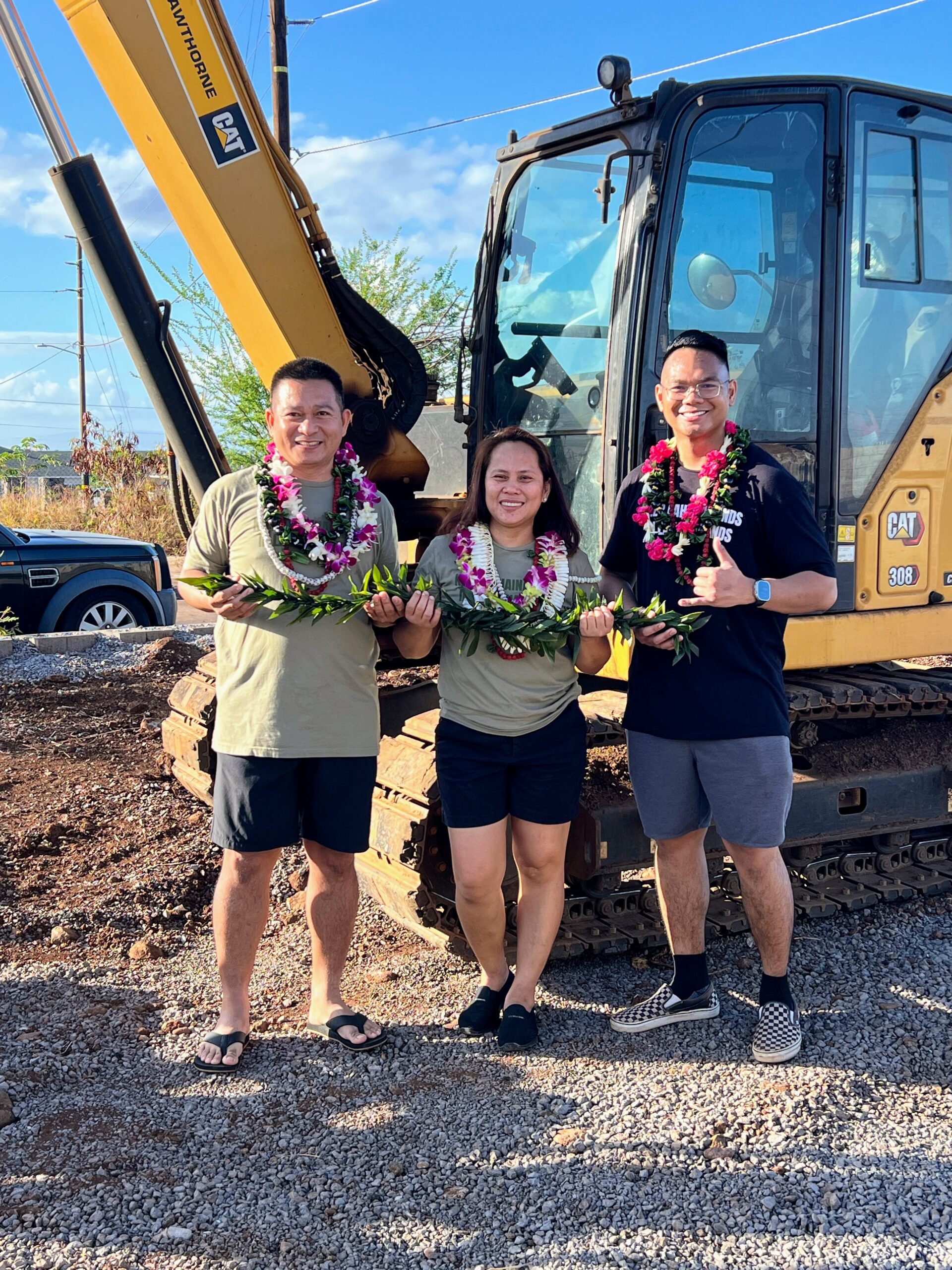
The support and funding that CDP has provided...helped put survivors living with disabilities at the forefront of the recovery instead of falling through the cracks.
Jenn Gladwin Executive Director, Kelea Foundation
“Honolulu Civil Beat is grateful for the Center for Disaster Philanthropy’s transformative grant, which allowed our newsroom to produce urgently needed journalism that informed and supported Maui communities in the aftermath of the devastating 2023 wildfires.” – Amy Pyle, Executive Editor-In-Chief, Honolulu Civil Beat
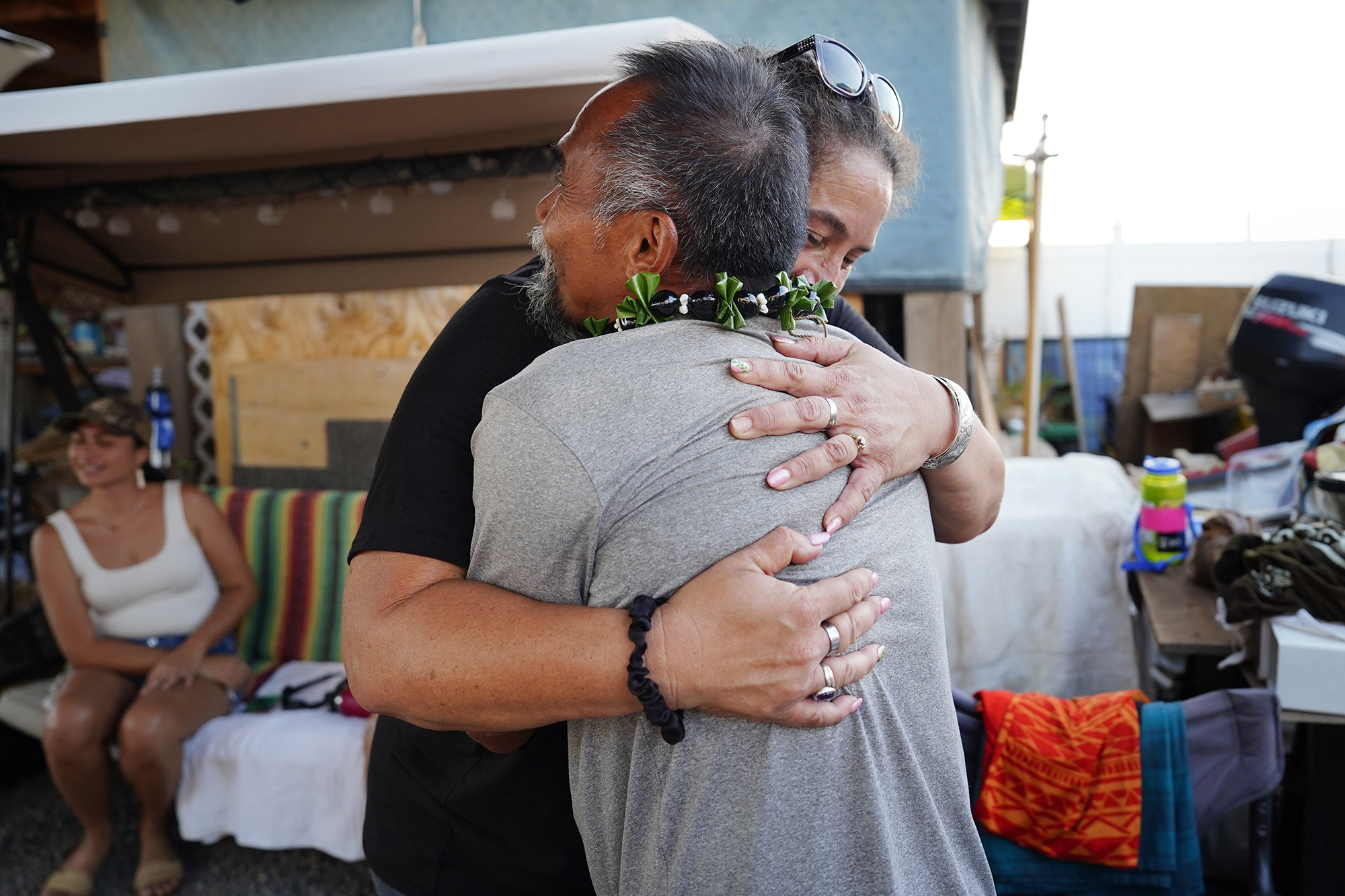
Mario Siatris, a master gardener who has called Lahaina home for 45 years, had just a few payments left on his mortgage when the 2023 Lahaina fire burned his century-old house down.
The blaze also destroyed Maui Grown 808, the plumeria orchard and native plant nursery that he’s operated since 2013 with Uʻi Kahue-Cabanting, his friend and business partner.
Two years after the fire, Mario and Uʻi were still living in a temporary shelter on the lot where his home used to be. Determined to rebuild, Mario faced complications: an insurance payout covering only two-thirds of the estimated cost and the challenge of building a home large enough for at least eight people, including his daughter’s five-person family, his son and Uʻi.
Mario and Uʻi are among those profiled in Honolulu Civil Beat’s series “The Long Road Home,” which uplifts the voices and experiences of displaced fire survivors as they seek to return to Lahaina. Funding from a CDP grant made these reporting efforts possible.
In late 2023, CDP awarded a grant from the Hawaii Wildfires Recovery Fund to Honolulu Civil Beat to support the formation of a local, dedicated journalism team focused on providing Maui with accurate and free community information, supporting informed debate, promoting leadership accountability and encouraging action.
The grant covered 39% of Civil Beat’s two-year budget to establish a Maui bureau. It funded a team focused on the Maui fires, comprising a locally-based Maui County reporter, an environmental health reporter, a dedicated editor and off-island support from reporters, photographers, designers and administrative staff.
Civil Beat rented a condo in Kahului, Maui, to serve as a base of operations and ensure a sustained presence on the island.
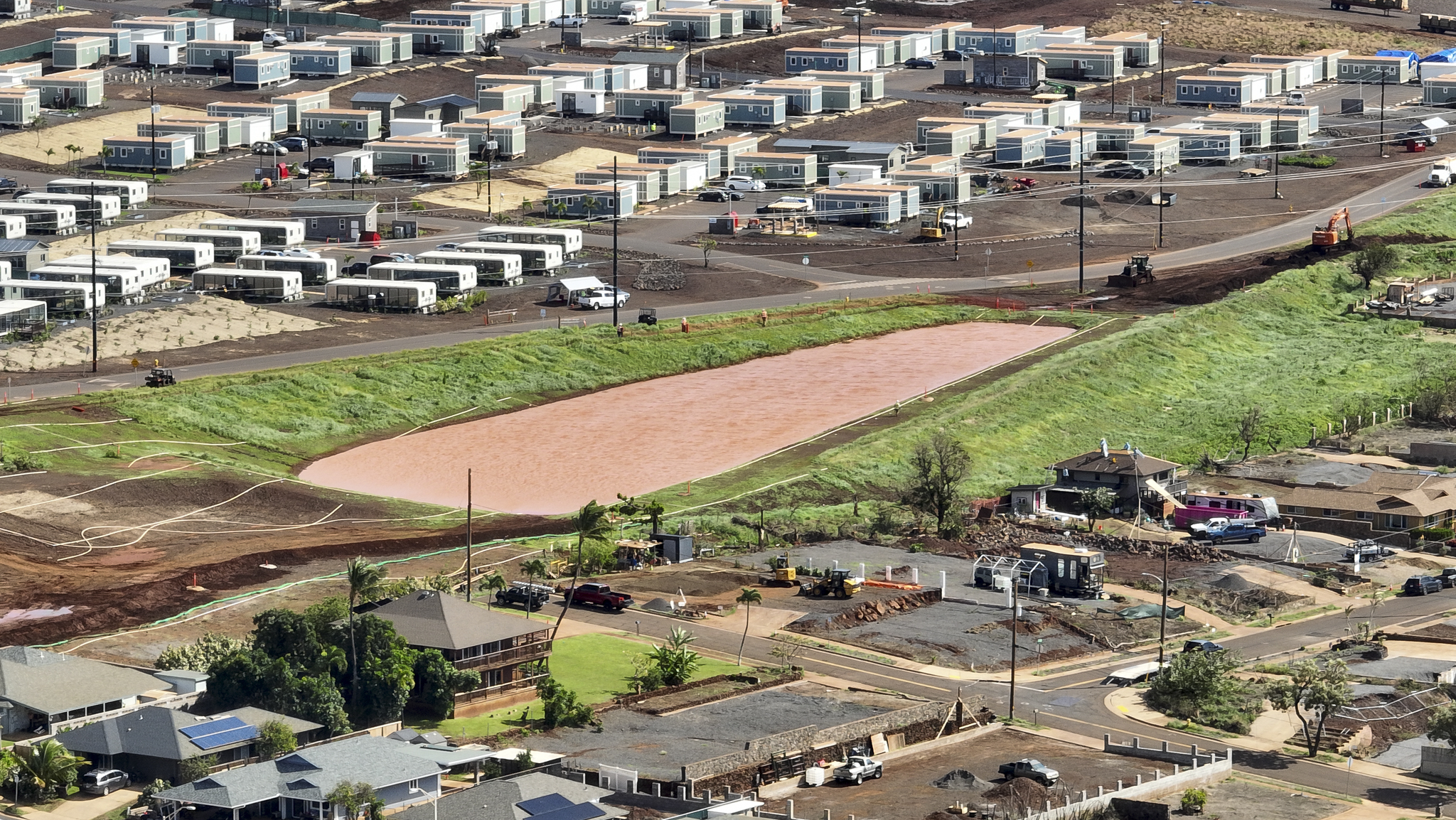
In total, Honolulu Civil Beat produced 589 articles, with more than 3.8 million pages views, focused on the Maui fires, their aftermath and the rebuilding process. Media outlets worldwide cited Civil Beat’s work and reached out for essential local context to inform their reporting on the fire and Maui’s recovery.
Perhaps most significantly, Civil Beat’s reporting on the root causes of the Maui fires contributed to a funding increase for the Office of the State Fire Marshal and the hiring of Hawaiʻi’s first fire marshal in more than 45 years. Civil Beat’s accountability journalism revealed the fires’ deeper causes — including inadequate financial support for the state fire marshal’s office.
Ultimately, the state legislature passed a bill providing $4 million to revive the office. The State Fire Council credited Civil Beat coverage with playing a role in this decision. The new fire marshal will oversee fire safety, education and prevention efforts across Hawaiʻi.
Finally, Civil Beat’s reporting helped Mario and Uʻi rebuild. Their article came to the attention of an architectural engineer in Oregon, who reached out to the Civil Beat reporter with an offer to help. Civil Beat connected him with Siatris and Kahue-Cabanting, who worked with him to finish and formalize their building plans – free of charge.
CDP’s investment in Civil Beat’s Maui fires reporting gave the organization the capacity to prove the value and impact it can provide to the people of Maui. This in turn inspired investment from other sources, including local Maui foundations, some of which had never made grants to journalism before; Maui-based individual donors; and two national funders that awarded major grants to support Civil Beat’s expansion to the neighbor (non-Oʻahu) islands, with the success on Maui serving as a model.
Throughout the grant period, Civil Beat also saw the vital importance of community engagement, listening and being present in person on Maui. While many news outlets parachuted in after the fires and left within weeks or months, Civil Beat stayed on the ground. The organization remains committed to serving Maui indefinitely as a core part of its mission.
“Looking back, Civil Beat has grown stronger because of this experience. Disaster reporting is uniquely trying, but we are now even more committed to our role and responsibility in the community. We combat the spread of misinformation, provide trusted resources and connection in times of crisis, and work to ensure that the plights of those affected are not forgotten. We are grateful to CDP for making us more resilient and equipped to report on the fires and their aftermath. Future disasters are inevitable, but we are confident that Civil Beat will rise to the occasion,” said Amy Pyle, Executive Editor-In-Chief of Honolulu Civil Beat
CDP is proud to support Honolulu Civil Beat’s Maui fires reporting. This work underscores the essential role that community-based journalism plays in disaster recovery, helping communities rebuild stronger and more resilient than before.
Story by Ruja Entcheva
The support and funding that CDP has provided...helped put survivors living with disabilities at the forefront of the recovery instead of falling through the cracks.