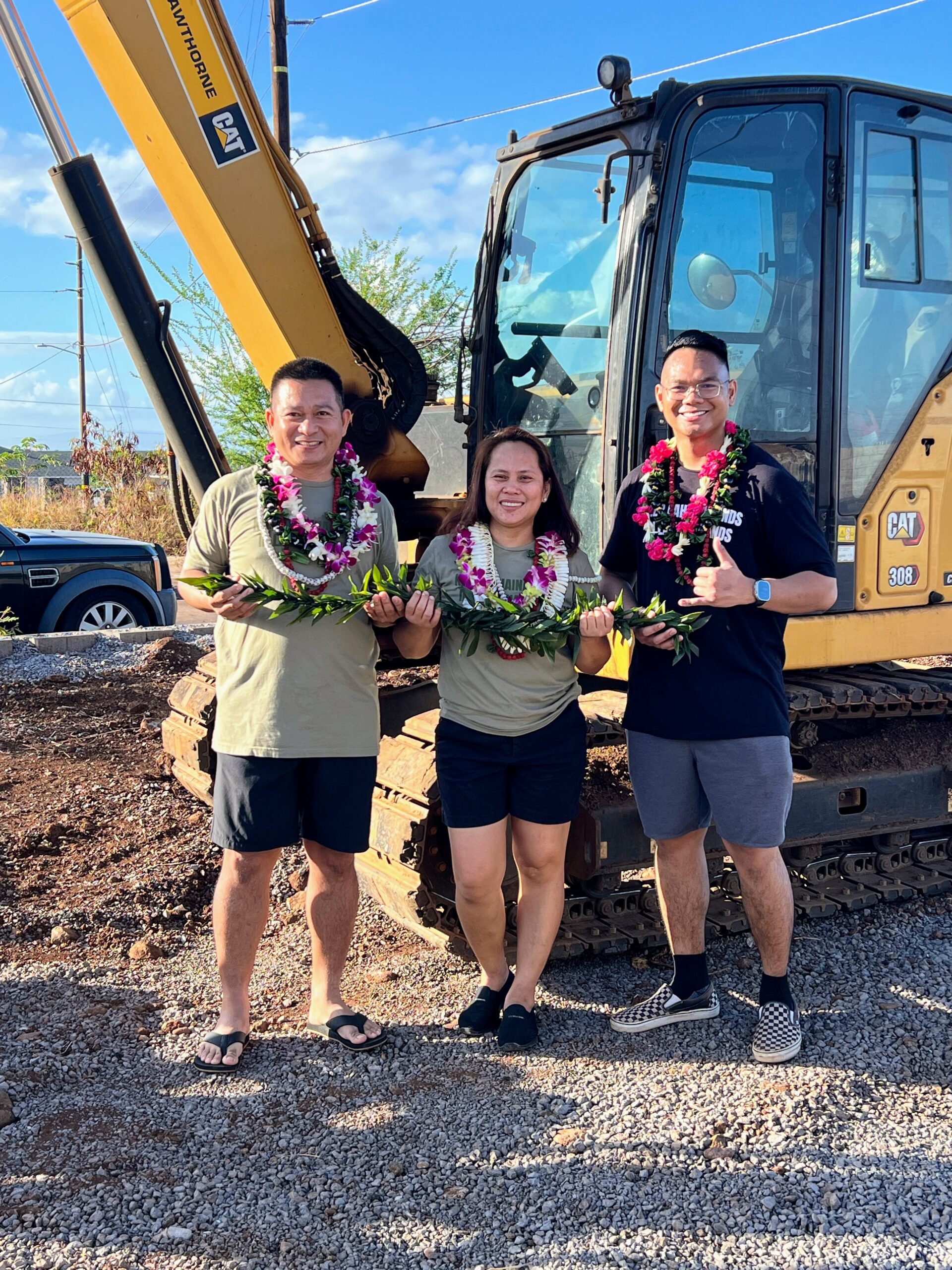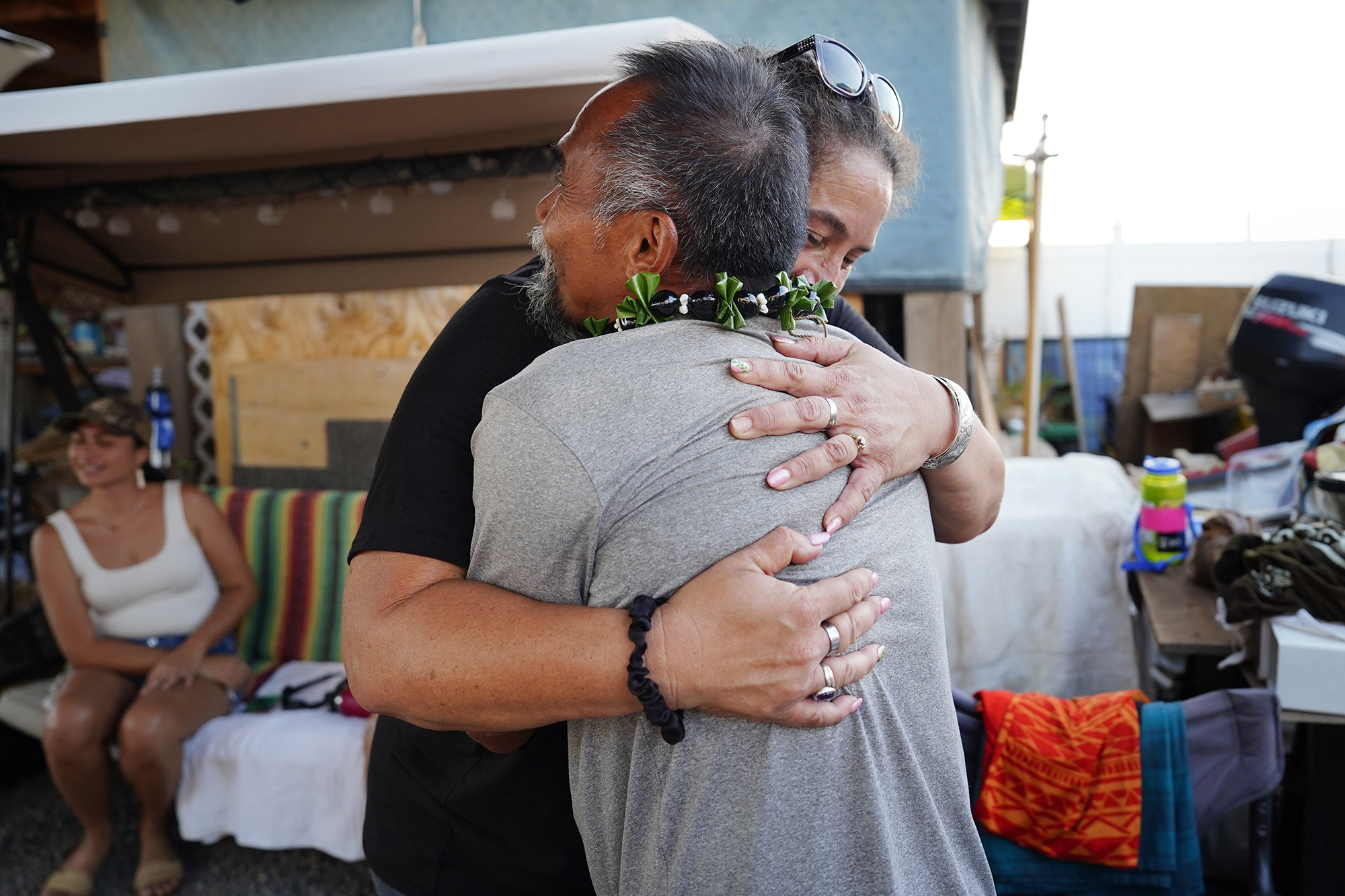
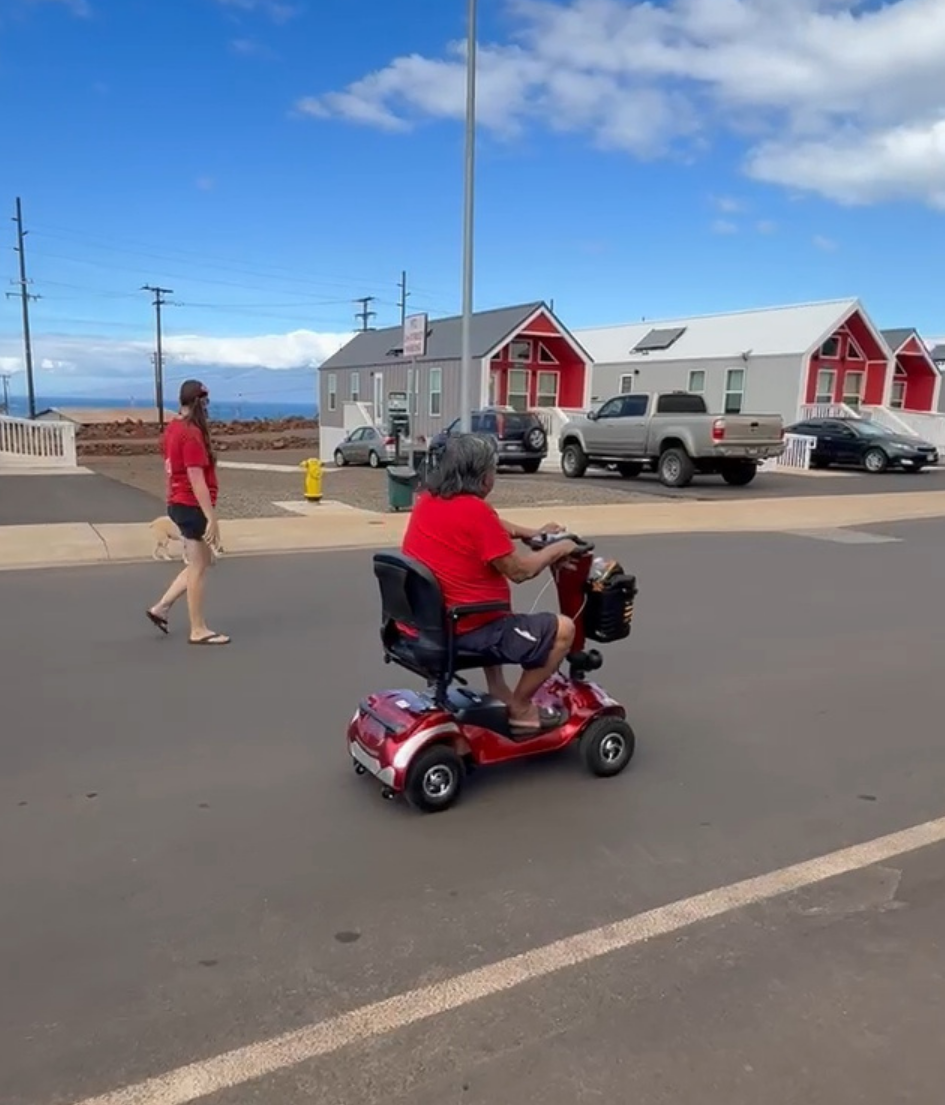

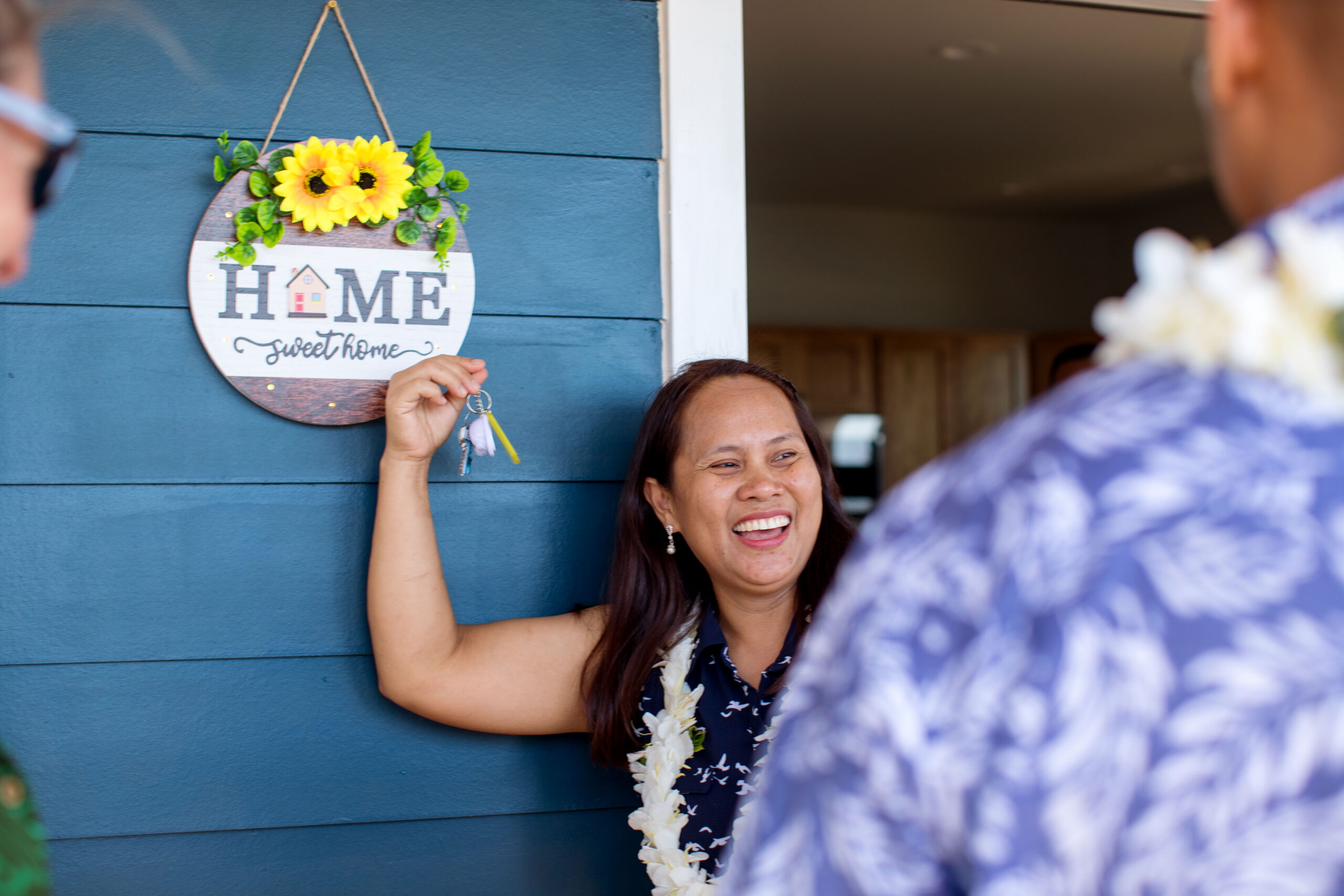
Nearly three years after the Lahaina fires upended their lives and destroyed their belongings, the Yadaos, a three-generation family, have finally moved back into their beloved home.
It was just one day after completing household renovations to make the home more accessible for their grandmother that fires swept through Maui and changed the lives of their seven-person household forever. In addition to destroying the Yadaos family home, the August 2023 fires, notably the worst disaster in Hawaii’s recorded history, destroyed half of the houses in Lahaina, a town on the island of Maui, Hawaii.
Following the fires, the Yadaos couldn’t afford to rebuild and considered moving away. Thankfully, through a collaboration of local nonprofits, including CDP grantee partner Lahaina Community Land Trust, their home has been rebuilt with the accessibility features needed to ensure the whole family can live comfortably. This marks not just a return, but a path forward for the Yadao family and their community.
The Yadaos are not alone in their experience. In the aftermath of the fires, families in Lahaina faced not only the devastation of losing their homes but the very real risk of losing their land as well. Damaged properties were vulnerable to foreclosure or sale, raising concerns that offshore investors could permanently reshape Lahaina’s cultural and economic fabric.
Even before the fires, Maui faced a severe housing shortage driven by high costs and a tourism-driven real estate market that strained local residents. The destruction from the fires intensified these pressures, dramatically reducing the housing supply and deepening fears that displaced families could be permanently priced out of their land. For a community with deep generational roots, recovery meant more than rebuilding structures – it meant protecting ‘āina (the land) and ensuring that Lahaina’s future remained with local ‘ohana (the community).
Lahaina Community Land Trust (LCLT) was created to ensure sustained local ownership of the fire-affected areas of Lahaina and to prevent displacement in the wake of disaster. The organization set an ambitious goal to secure $100 million worth of land parcels to preserve affordability and ensure that Lahaina locals could govern their own land and futures.
At a critical moment in LCLT’s early development, the Center for Disaster Philanthropy (CDP) provided a $644,000 grant from our Hawaii Wildfires Recovery Fund to support staff capacity building. LCLT had previously received a multi-million-dollar land acquisition grant from Maui County and needed the organizational infrastructure to manage and grow that opportunity.
The results have been significant.
Since receiving CDP’s support, LCLT has secured approximately $34 million in public and private funding as well as 23 parcels of land in Lahaina, the vast majority of which are within the footprint of the wildfire burn zone. These properties are zoned to accommodate up to 57 housing units, which LCLT will build and sell at truly affordable rates to community members. Three of these parcels were acquired through transactions that prevented families from losing their land to foreclosure. In those cases, LCLT is partnering with ‘ohana to create a right of first opportunity (ROFO), enabling families to return to homes rebuilt on their land. This approach protects generational ‘ike (knowledge) and ties to place, prioritizing local families over outside businesses and wealthy tourists.
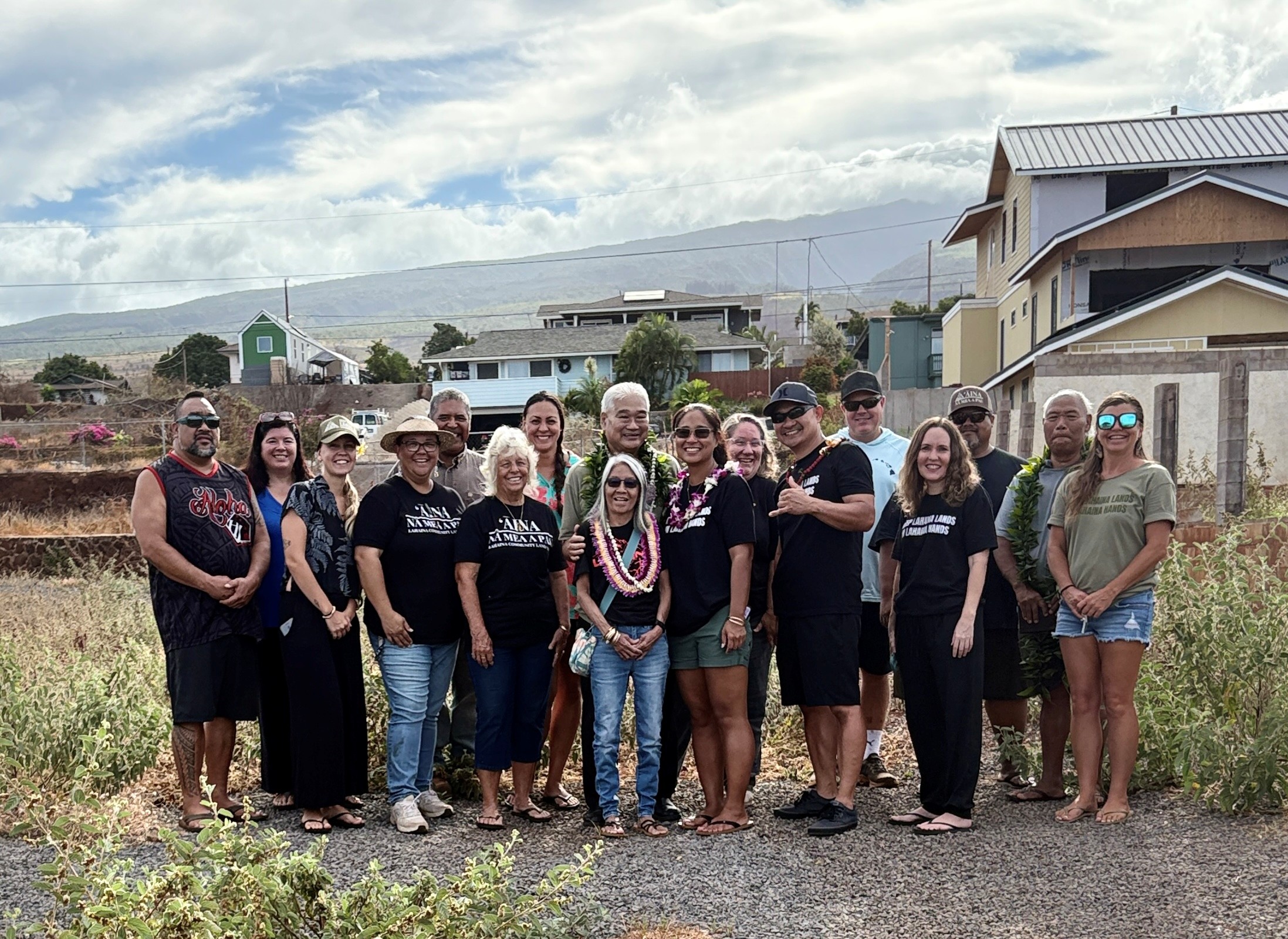
Recognizing that rebuilding requires more than land acquisition, LCLT also launched the Keep Lahaina Home Insurance Gap Program. Many homeowners discovered that insurance payouts were insufficient to cover the true costs of reconstruction. Without additional support, families risked being unable to rebuild and being forced to move away.
The Keep Lahaina Home program fills those financial gaps, ensuring that homes can be rebuilt while families retain their pre-fire affordability and equity. In exchange, a permanent deed restriction stewarded by LCLT is placed on each home, guaranteeing that it remains owner-occupied and attainable for Lahaina families in perpetuity. These deeds protect housing from being sold with the primary intent of making a profit and help ensure long-term affordability for local families.
The families initially supported by the Keep Lahaina Home program have a combined 1,685 years of living in Lahaina. Nearly 60 individuals make up these families, 20 of whom are children and 10 of whom are kūpuna (elders). Supporting their return is not simply about rebuilding houses; it is about sustaining the culture that has defined this community for generations.
Beyond land and housing, CDP’s support has enabled LCLT to build the governance and partnerships necessary for lasting recovery. LCLT formed an advisory board and a board of directors comprised entirely of community leaders with generational ties to Lahaina, ensuring that decisions remain rooted in lived experience and local priorities. LCLT has also formalized partnerships with Habitat for Humanity, Hawai‘i Community Lending, Ho‘ōla iā Mauiakama Disaster Long Term Recovery Group and Hawai‘i Housing Resilience to coordinate housing recovery efforts and maximize collaborative impact.
As Lahaina Community Land Trust approaches its third year, it is preparing to break ground on secured parcels and continue rebuilding homes for participating families. What started as a capacity-building grant has become a catalyst for community-led recovery. By supporting LCLT’s community-centered strategies, CDP’s grant helped leverage millions of dollars to prevent foreclosures and enable families to rebuild and remain in their community after disaster.
Through this investment, CDP has helped ensure that families, including the Yadaos, and their community are shaping Lahaina’s recovery, preserving land, housing and generational knowledge for generations to come.
Story by Taylor Chapman