
CDP awards $1.4 million in grants to strengthen Sudanese-led response, recovery and resilience
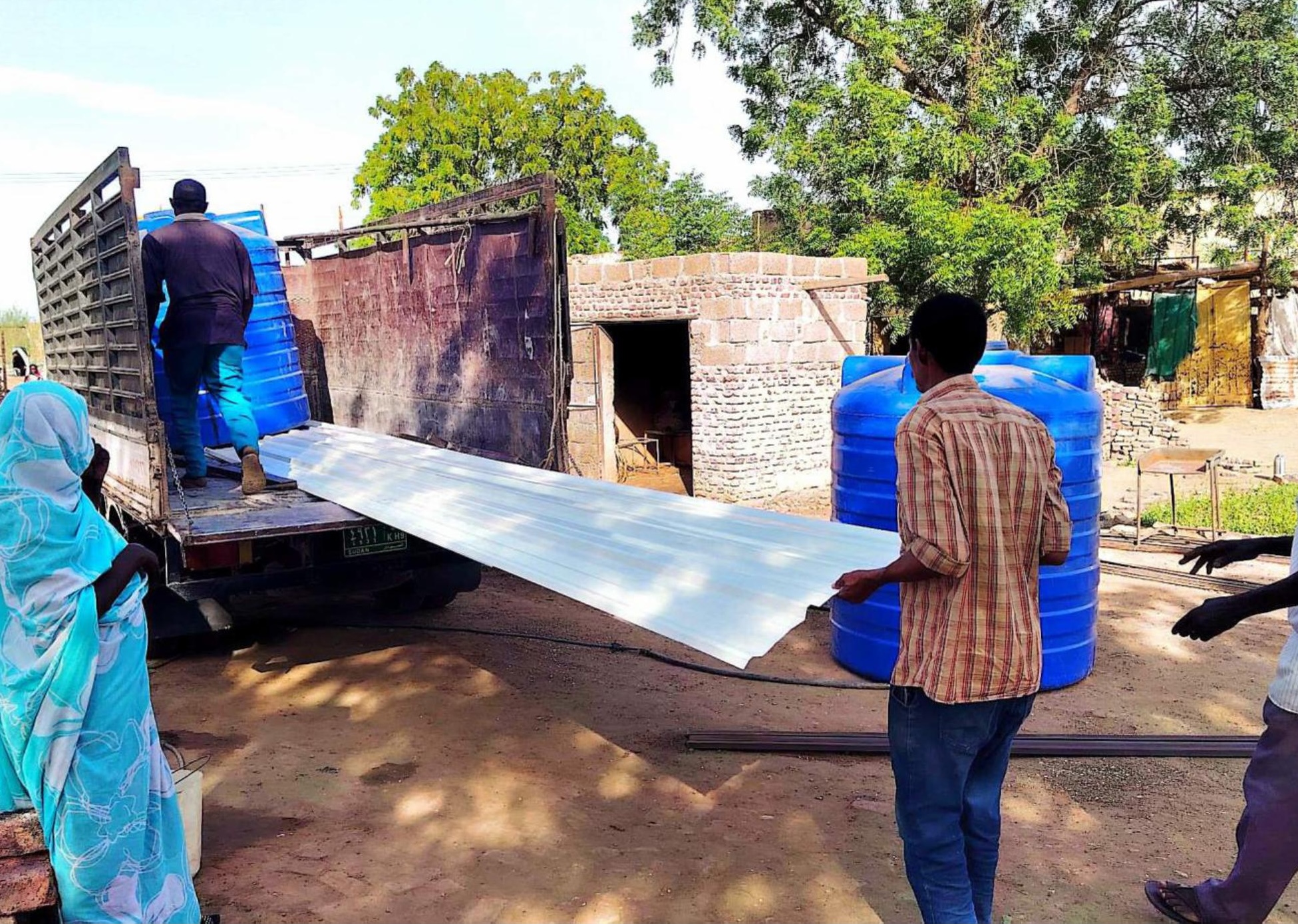
Across Sudan, Emergency Response Rooms (ERRs), mutual aid groups and local organizations have been leading an extraordinary community-driven humanitarian response to the widespread displacement, violence and the collapse of essential services resulting from conflict and famine. Supporting this work means investing not only in the assistance being delivered, but also in the people and organizations that make it possible.
The Center for Disaster Philanthropy’s latest grants from the Sudan Humanitarian Crisis Fund reflect this broader approach to supporting locally led humanitarian action. The grants provide direct and flexible resources to ERRs and mutual aid groups across Sudan, strengthening the safety, well-being and operational capacity of frontline responders, improving coordination among local organizations, and supporting locally led initiatives that address health, livelihoods, education and social cohesion.
Sudanese-led response, recovery and resilience-building
Built and sustained by local volunteers, the networks of Sudanese responders draw on deep community relationships, local knowledge, trust and resourcefulness to deliver food, water, health care, protection and other essential assistance, often reaching communities that conventional humanitarian systems cannot.
Beyond meeting immediate needs, their leadership extends to strengthening local coordination and accountability, supporting livelihoods, protecting essential services, and creating opportunities for women and young people to shape their communities’ recovery.
Despite working under immense pressure and significant personal risk, responders continue to build and sustain the systems, skills and relationships that will help communities withstand the current crisis and recover over the longer term.
Supporting Sudanese frontline responders and organizations
Frontline responders need practical resources, protection and mental health support to manage the risks, stress, burnout and trauma they face. They also need flexible, sustained funding that allows them to adapt as conditions change.
The latest round of grants from our Sudan Humanitarian Crisis Fund recognizes Sudanese responders and organizations not only as implementers of humanitarian assistance, but as leaders shaping their country’s resilience and recovery.
- Al Khatim Adlan Centre for Enlightenment and Human Development (KACE) received $100,000 to support ERRs in delivering basic needs, such as food, water, sanitation and hygiene (WASH) support, essential medical supplies, and dignity kits. KACE will also strengthen the ERRs’ capacity in implementation, monitoring and reporting, and social cohesion. Together, these activities address urgent humanitarian needs while reinforcing local response structures and promoting social cohesion in underserved and hard-to-reach areas. The approach builds KACE’s established partnerships with community-based networks, leveraging locally led systems to ensure effective, accountable and sustainable responses in a complex conflict setting.
- Crisis Coordination Unit – Sudan (CCU) received $100,000 to serve as a coordination hub in Sudan – connecting local responders, diaspora groups, NGOs and donors across relief, recovery and peacebuilding efforts. Operating across conflict-affected regions, including Khartoum, Darfur, East and West Sudan, the organization curates verified information, facilitates multi-sectoral coordination meetings, brokers technical assistance and amplifies local voices. The CCU plays an essential role in enabling infrastructure, breaking down silos, improving accountability and creating pathways from survival to long-term resilience.
- GESR Center for Development received $375,000, which will be channeled to Sudan’s ERR networks to deliver lifesaving emergency assistance across Khartoum, South Darfur, West Darfur, West Kordofan, River Nile, Sennar and Al Jazirah states. ERRs will deliver community-led assistance across food security, WASH, health and protection sectors. Resource allocation is governed by the locally developed calculator mechanism, ensuring equitable distribution to the the areas with the highest need.
- GESR Center for Development received $100,000 to provide training to 30 youth volunteers in Aljazeera state, Sudan, in governance principles, community engagement and leadership skills. Volunteers will then apply this training through community outreach activities, participatory needs assessments and facilitated dialogues. The project will support the co-design and implementation of small-scale community resilience projects selected through inclusive, community-driven processes. The dual objectives are to strengthen local governance capacity among emergency response volunteers and to offer youth meaningful alternatives to recruitment into armed groups.
- Malam Darfur Peace and Development received $375,000, which will be channeled to Sudan’s ERR networks to support multi-sector emergency assistance across seven states: North Darfur, North Kordofan, East Darfur, Kassala, South Kordofan, Central Darfur and Blue Nile. Working through ERRs, the project will deliver food, WASH, health, protection and alternative education support. The allocation of funds for this support is governed by the locally developed calculator mechanism, ensuring equitable distribution to highest-need areas. The project also invests in traditional Nafeer mutual aid systems to strengthen community-led resilience beyond the funding cycle.
- Malam Darfur Peace and Development received $100,000 to empower conflict-affected women and youth in Darfur through micro-financing, vocational training, educational support and conflict resolution training for community leaders. The project builds on Al Malam’s track record of community-rooted peacebuilding and women’s empowerment in the region, extending that work into the current crisis through locally owned, sustainability-focused programming.
- Nivishe Foundation received $150,000 to strengthen community-based mental health and psychosocial support within ERRs. The project will train frontline volunteers in psychological first aid, establish peer support groups and provide trauma-informed counseling for responders. Women response room volunteers will receive advanced training-of-trainers, enabling them to extend trauma-informed support across the wider network. Two Sudanese therapists will provide culturally and linguistically appropriate counseling and referrals for frontline responders experiencing distress, burnout, secondary trauma or other mental health challenges. The project will strengthen mental health resources, monitoring and learning to support future expansion, while improving the well-being and resilience of the frontline volunteers sustaining community-led humanitarian assistance across Sudan.
- Norwegian Refugee Council received $150,000 to strengthen the safety, protection and operational resilience of local humanitarian responders across Sudan’s 18 states. The project will establish a rapid and confidential Safety Box mechanism that provides emergency assistance to local responders facing arrest, detention, abduction, injury, forced displacement or other threats, while connecting cases with additional protection support through formal referral pathways. By developing clear operating procedures, coordinating referrals and documenting protection outcomes, the project will create a replicable safety mechanism that helps local responders continue delivering critical assistance to conflict-affected communities.
- Refugees International received $15,000 for a project that will convene diverse, underrepresented Sudanese responders, including mutual aid groups and ERRs, to establish a durable, Sudanese-led platform for coordinated reform, strengthening grassroots systems, reducing fragmentation, and enabling locally anchored aid delivery that is more resilient and responsive to future shocks.
Additionally, we awarded the Sudanese American Physicians’ Association a $100,000 grant from the Global Recovery Fund to support the recovery and rehabilitation of the only hospital providing care for communities in West Darfur, focusing on critical capacity needed for the surveillance, detection and management of disease outbreaks.
Support the Sudan Humanitarian Crisis Fund to help local responders meet the ongoing and ever-expanding humanitarian challenges posed by the conflict and famine in Sudan.

Ruwani Dharmakirthi
International Funds Program Manager